Contents — explore this biography
Mechanical work and experimental vehiclesFounding Ford Motor Company and introducing the Model TThe moving assembly line and the five-dollar dayOwnership, labour and the limits of industrial paternalismAntisemitism, succession and historical judgmentMechanical work and experimental vehicles
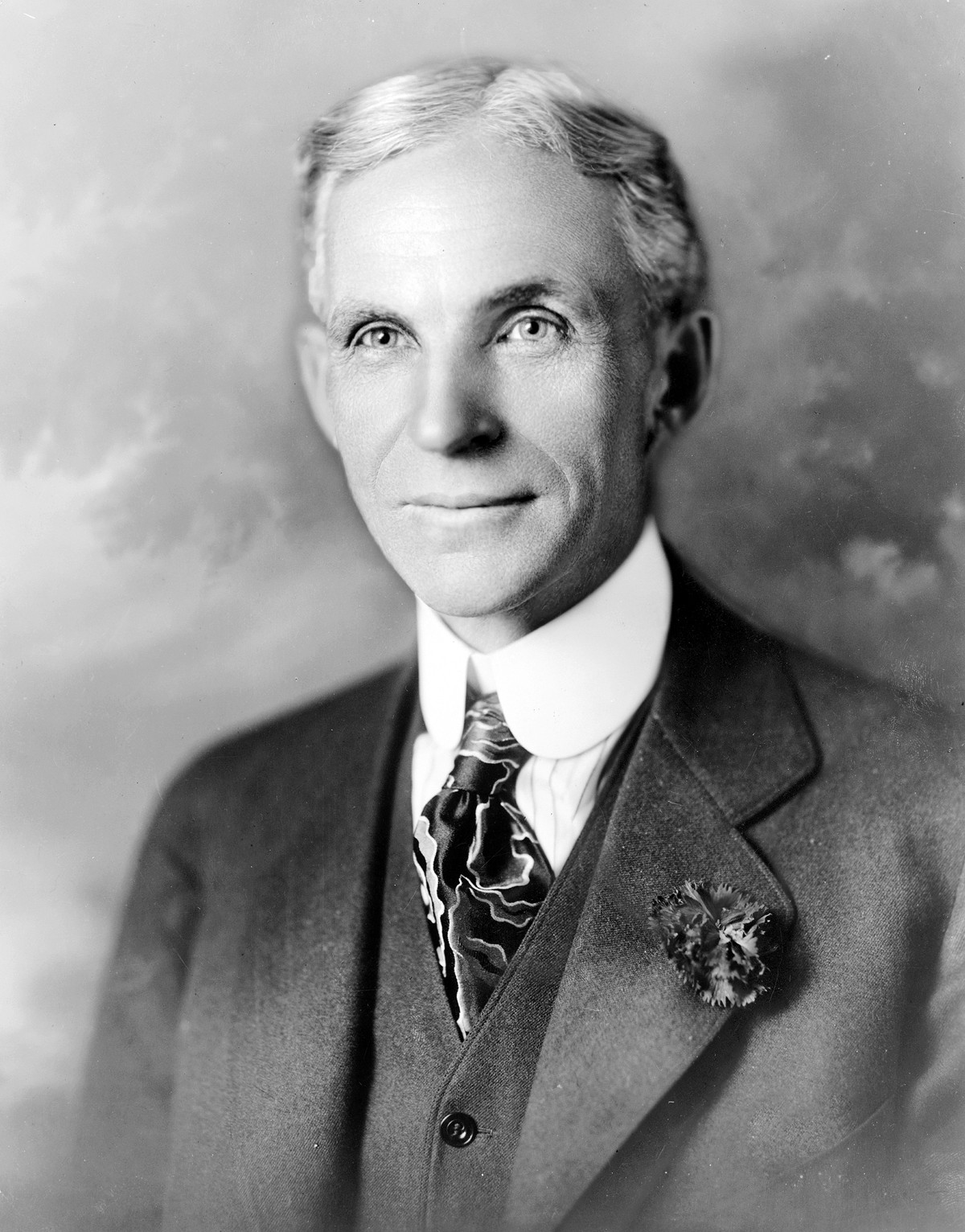
Henry Ford was born in Springwells Township, Michigan, in 1863 and developed a strong interest in machinery while growing up in a farming community. Apprenticeship and mechanical work in Detroit exposed him to industrial equipment, while employment at the Edison Illuminating Company provided another setting for technical experimentation. His Quadricycle of 1896 was an early practical vehicle, not the invention of the automobile itself. Several business ventures followed before Ford Motor Company succeeded. These beginnings place his achievement within an existing world of engineers, manufacturers and investors rather than presenting it as an isolated discovery by a single self-taught mechanic.
Founding Ford Motor Company and introducing the Model T
Ford Motor Company was founded in 1903 with a group of investors, and Ford became its president and controlling owner in 1906. The Model T, introduced in 1908, brought together design, durability and a widening capacity for economical production. Its importance was commercial and organizational as well as mechanical. A vehicle intended for a large market had to be serviceable, reproducible and available at a price buyers could manage. Ford’s business therefore linked the product with a manufacturing system and a distribution network. The Model T’s long production run made it a central object in the expanding role of motoring in American life.
The moving assembly line and the five-dollar day
At Highland Park in 1913, Ford’s organization developed a moving assembly-line system that greatly changed automobile production. The work drew on many people and earlier manufacturing methods; Ford did not invent the general idea of assembling products in sequence. Bringing work to the worker and dividing operations into repeatable tasks increased output while making the labour demanding and repetitive. The five-dollar day announced in 1914 responded in part to difficulties retaining workers. Its wage offer and shorter working day became famous, but eligibility initially involved conditions and scrutiny. Productivity, pay and managerial control were therefore connected features of the same industrial arrangement.
Ownership, labour and the limits of industrial paternalism
In 1919, Ford, his wife Clara and their son Edsel acquired the remaining minority interests in the company. Concentrated family ownership gave them unusual control over its direction, though it did not remove disagreements about products or management. The Model A eventually replaced the Model T. Labour relations also revealed the coercive side of the enterprise, including hostility to independent union organization. The company’s conflicts with the United Auto Workers became particularly visible in the 1930s. A serious account of Ford’s career consequently examines who bore the costs of production discipline, not only the large number of vehicles that his factories could produce.
Antisemitism, succession and historical judgment
Ford also financed and promoted antisemitic material through the Dearborn Independent and the publications collected as The International Jew. Museum and Holocaust scholarship document the harm and international reach of this propaganda; the episode cannot be separated from his public influence. After Edsel’s death in 1943, Ford returned to the presidency before Henry Ford II succeeded him in 1945. He died in 1947. His legacy combines a major contribution to mass manufacturing with grave failures of judgment and conduct. Understanding both is necessary: technical and commercial achievement explain his historical importance, while labour conflict and antisemitism explain why admiration alone is an inadequate description of it.
Career timeline
Born in Springwells Township, Michigan.
Founded Ford Motor Company with fellow investors.
Introduced the Model T.
Moving assembly-line production developed at Highland Park.
Died after transferring leadership to Henry Ford II.
Selected works & milestones
Quadricycle
An early experimental motor vehicle.
Model T
A mass-market car central to Ford’s expansion.
Highland Park assembly system
A major development in automobile mass production.
Five-dollar day
A wage initiative connected with labour retention and production.
- Ford Motor Company — Henry Ford biography
- The Henry Ford — research guide
- The Henry Ford — Henry Ford and antisemitism
- United States Holocaust Memorial Museum — Ford’s propaganda
Published 2026-11-07. Sources reviewed for this edition. Independent coverage of public professional activity.