Contents — explore this biography
A Scottish childhood and an American working lifeRailroads, investment and the construction of a steel businessHomestead and the conflict within the success storySelling the enterprise and developing philanthropyLibraries, institutions and an unsettled legacyA Scottish childhood and an American working life
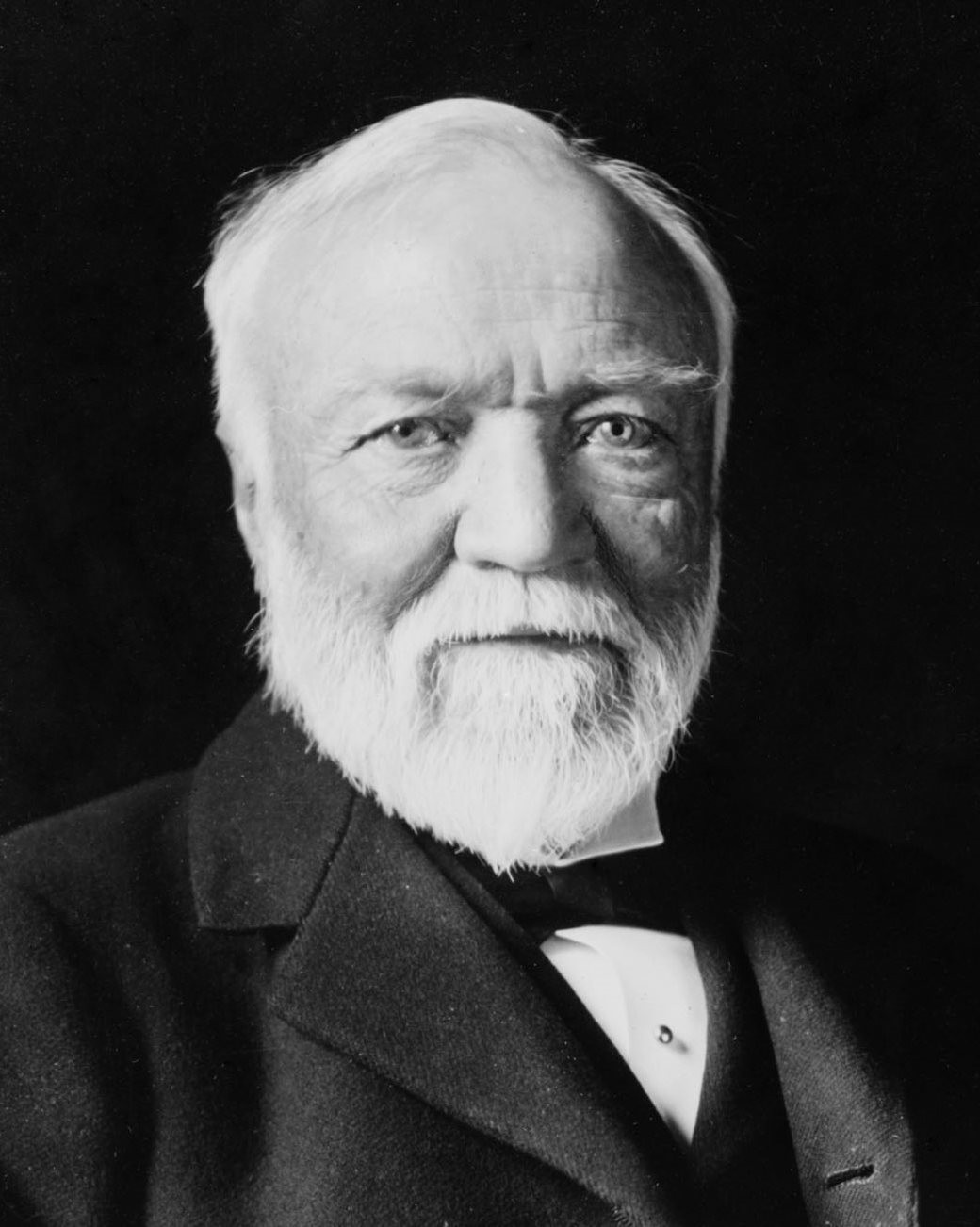
Andrew Carnegie was born in Dunfermline, Scotland, in 1835, into a family whose weaving livelihood faced pressure from industrial change. The family emigrated to the United States in 1848 and settled in Allegheny, Pennsylvania, near Pittsburgh. Carnegie worked in a cotton factory before becoming a telegraph messenger and operator. Employment with the Pennsylvania Railroad brought further responsibility and contact with a rapidly expanding industrial economy. His early access to a local private library also became a lasting point of reference. These experiences connected work, self-education and the networks through which an ambitious employee could learn about investment and enterprise.
Railroads, investment and the construction of a steel business
Carnegie’s progress from railroad employment to industrial ownership involved investments in transportation, bridges and eventually steel. The business that became associated with his name benefited from expanding demand for railroads, buildings and infrastructure. It also pursued modern equipment, cost control and integration across stages of production. Understanding that combination is more useful than treating wealth as the automatic result of individual determination. Steelmaking required capital, technical expertise, raw materials, transport and a large workforce. Carnegie’s achievement involved organizing those relationships and backing expansion, while partners and managers carried substantial responsibility for the operation of an increasingly complex industrial system.
Homestead and the conflict within the success story
The 1892 conflict at the Homestead steel works exposed a profound contradiction in Carnegie’s reputation. While he was in Scotland, his manager and partner Henry Clay Frick directed a confrontation with organized labour. The attempt to bring Pinkerton guards into the works led to a violent clash, and the strike ended in a major defeat for the union. Carnegie’s absence did not detach him from ownership or responsibility for the company’s direction. The episode remains central because it places claims about opportunity and public benefit beside the conditions under which industrial profits were produced. Philanthropy cannot by itself resolve that historical tension.
Selling the enterprise and developing philanthropy
Carnegie sold his steel interests in 1901 in the transaction that helped create United States Steel. The sale allowed him to devote more attention and resources to philanthropic work, though his interest in giving predated retirement. In the 1889 essay commonly known as The Gospel of Wealth, he argued that wealthy people should administer surplus resources for public purposes during their lifetimes. His preferred approach emphasized institutions and opportunities for learning rather than simply transferring money without an intended structure. This was an influential theory of stewardship, but it also left major decisions about public priorities in the hands of those who had accumulated private fortunes.
Libraries, institutions and an unsettled legacy
Libraries became the most recognizable expression of Carnegie’s giving, alongside universities, scientific research, cultural institutions, peace organizations and funds recognizing civilian heroism. Carnegie Corporation of New York was established in 1911, providing a durable organization for further philanthropic work. He died in 1919. His legacy consequently extends beyond either the steel mills or the buildings bearing his name. It includes a model of institutional philanthropy that remained influential, as well as unresolved questions about wealth, labour and public authority. Reading the industrial and philanthropic careers together gives a fuller picture of how economic power could be converted into educational and cultural influence.
Career timeline
Born in Dunfermline, Scotland.
Emigrated with his family to Pennsylvania.
The Homestead labour conflict damaged his reputation.
Sold his steel interests in the transaction creating U.S. Steel.
Established Carnegie Corporation of New York.
Selected works & milestones
The Gospel of Wealth
An influential essay on the responsibilities of wealth.
Carnegie Steel Company
A major industrial enterprise associated with his fortune.
Carnegie Hero Fund
An institution recognizing acts of civilian heroism.
Carnegie Corporation of New York
A philanthropic foundation supporting knowledge and public benefit.
- Carnegie Corporation — Andrew Carnegie’s story
- Carnegie Council — biography
- Library of Congress — Homestead Strike
- Carnegie Hero Fund — Andrew Carnegie
Published 2026-11-07. Sources reviewed for this edition. Independent coverage of public professional activity.