Contents — explore this biography
Childhood and the arrival of Anne SullivanA college education built through collaborationAn author describing experience and ideasAdvocacy beyond a single symbolic storyInternational work and a continuing legacyChildhood and the arrival of Anne Sullivan
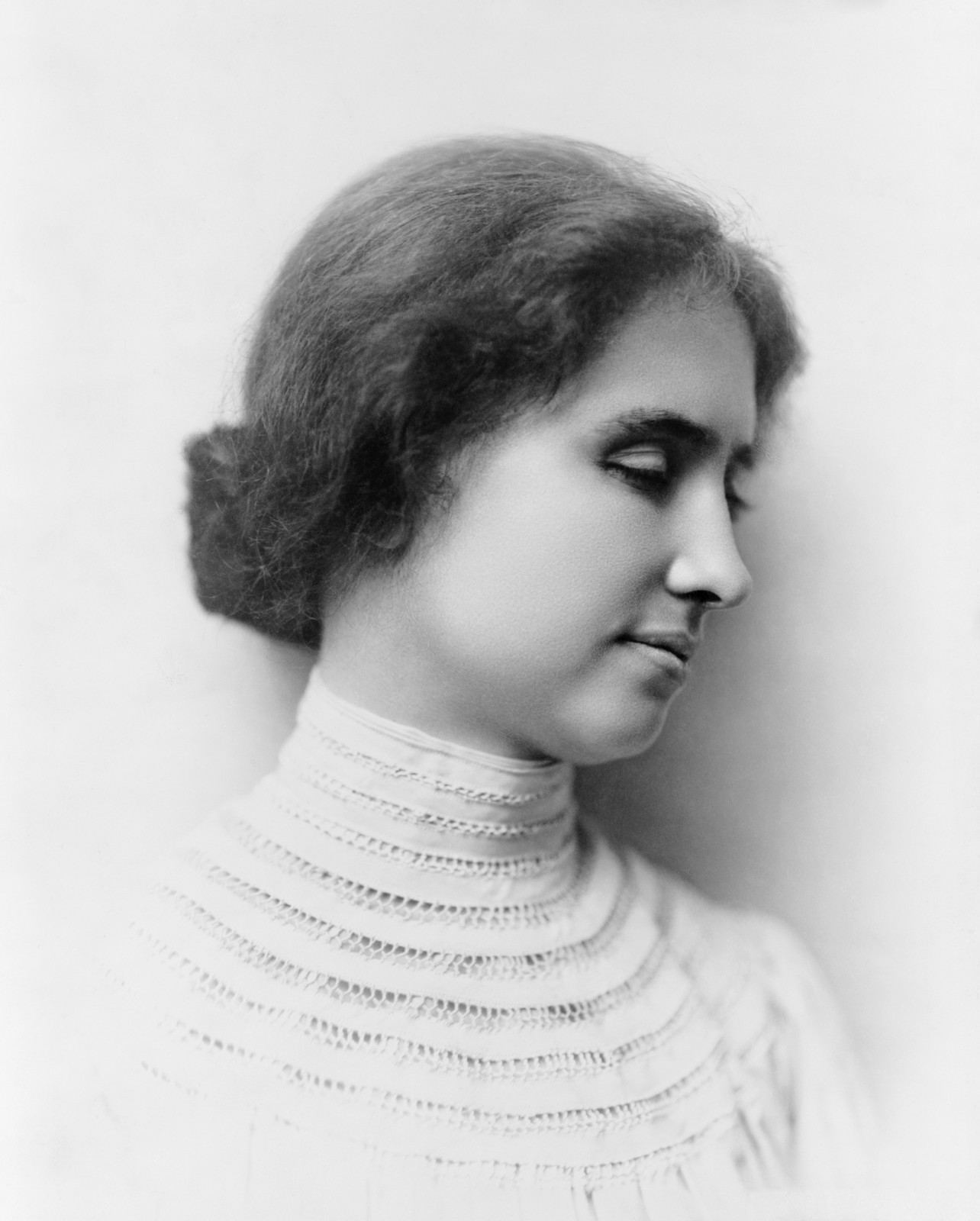
Helen Adams Keller was born in Tuscumbia, Alabama, in 1880. An illness in early childhood left her deafblind. In 1887, Anne Sullivan arrived to teach her, beginning an educational partnership that became central to both women’s lives. Sullivan’s use of tactile spelling helped Keller connect language with the world she experienced through touch and other senses. The familiar story of the water pump captures one important moment, but sustained learning involved years of instruction, practice and adaptation. Keller’s achievements depended on access to language and education as well as on personal determination.
A college education built through collaboration
Keller attended schools and worked with teachers who helped her prepare for university study. She entered Radcliffe College in 1900 and graduated cum laude in 1904, becoming the first deafblind person to earn a Bachelor of Arts degree. Sullivan and other supporters made lectures and texts accessible through demanding daily work. This was an intellectual achievement within a system that had not been designed around Keller’s needs. The history is therefore also an account of educational arrangements: accessible materials, skilled communication and institutional opportunity enabled a student to demonstrate abilities that exclusion could easily have concealed.
An author describing experience and ideas
The Story of My Life appeared in 1903, while Keller was still a student, and became the best-known introduction to her life. She also wrote essays and books on perception, belief and society, including The World I Live In. Her writing invited readers to consider how experience could be understood without treating sight and hearing as the only routes to knowledge. Keller was not merely the subject of an inspirational narrative produced by others. She developed arguments, chose public causes and used published work to participate in debates about the conditions under which people could learn and live independently.
Advocacy beyond a single symbolic story
Keller’s public commitments included disability access, women’s rights, labor and opposition to war. Her political opinions could be controversial, and accounts that omit them leave out an important part of her agency. In 1915 she co-founded the organization that became Helen Keller International with George Kessler, initially responding to blindness associated with the First World War. She began working with the American Foundation for the Blind in 1924. Through speeches, fundraising and public visits, she helped make the needs and capabilities of blind people visible to audiences who often encountered them mainly through stereotypes.
International work and a continuing legacy
Keller traveled widely and became an internationally recognized advocate, supported in later decades by colleagues including Polly Thomson. She received the Presidential Medal of Freedom in 1964 and died in 1968. Her archival record preserves correspondence, speeches and evidence of sustained organizational work. Her legacy is strongest when understood through both achievement and access: she challenged assumptions about deafblindness, while her education demonstrated the importance of support, communication and opportunity. Remembering her as an author and political participant also restores complexity to a life too often reduced to childhood and a single successful lesson.
Career timeline
Born in Tuscumbia, Alabama.
Began studying with Anne Sullivan.
Graduated cum laude from Radcliffe College.
Began working with the American Foundation for the Blind.
Died after decades of writing and international advocacy.
Selected works & milestones
The Story of My Life
Autobiographical account published during her student years.
Radcliffe graduation
Earned a Bachelor of Arts degree cum laude.
Helen Keller International
Co-founded the organization with George Kessler.
Presidential Medal of Freedom
Recognition of her public contribution.
- American Foundation for the Blind — biography
- Perkins School for the Blind — Helen Keller FAQ
- Harvard Library — Helen Keller research guide
- Helen Keller International — life and legacy
- American Foundation for the Blind — chronology
Published 2026-11-09. Sources reviewed for this edition. Independent coverage of public professional activity.