Contents — explore this biography
Learning animation through collaborative workFrom a first feature to Studio GhibliChildhood, labour and inhabited worldsConflict without a simple moral divisionA long career and continuing recognitionLearning animation through collaborative work
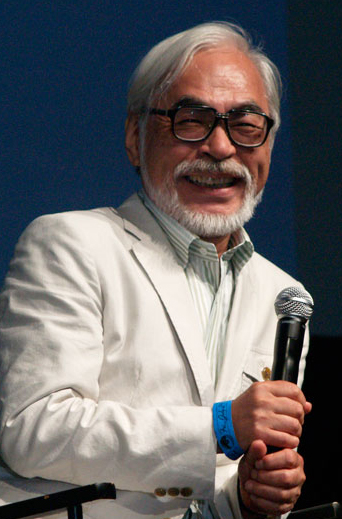
Hayao Miyazaki was born in Tokyo in 1941 and entered professional animation after graduating from Gakushuin University in 1963. At Toei Animation, his work developed through the practical disciplines of drawing, movement and the construction of scenes. Collaboration with Isao Takahata became an important thread across several studios and productions. Television work, including planning and layout for Heidi, Girl of the Alps, gave him experience in sustaining environments and characters over time. That apprenticeship matters because the later reputation of an individual filmmaker rests on a craft learned and exercised within large teams.
From a first feature to Studio Ghibli
The Castle of Cagliostro, released in 1979, marked Miyazaki’s theatrical feature directing debut. Nausicaä of the Valley of the Wind followed in 1984, drawing on his own manga and combining an imagined ecology with questions about violence and survival. In 1985 he co-founded Studio Ghibli with Takahata, with producer Toshio Suzuki also central to the studio’s development. The new institution provided a setting for ambitious feature animation. Its history should not be reduced to a single creator: directors, animators, background artists, composers and production staff contributed to the films that made its name recognizable.
Childhood, labour and inhabited worlds
My Neighbor Totoro and Kiki’s Delivery Service place young characters in worlds whose ordinary routines are as carefully considered as their fantastic elements. A bus stop, a kitchen, a delivery route or a moment of tiredness can carry narrative weight without immediately advancing a conventional adventure. These films invite attention to how people inhabit spaces and learn responsibilities. The result is not simply a comforting image of childhood. Uncertainty, illness, separation and the difficulty of finding useful work remain present, giving the imaginative settings a recognizable emotional and material foundation for audiences of different ages.
Conflict without a simple moral division
Princess Mononoke and Spirited Away expand the scale of Miyazaki’s imagined societies. Forests, industrial communities and a bathhouse for spirits become places where competing needs shape behaviour. Their stories often resist treating every opponent as an entirely evil person or every natural force as harmless. Spirited Away, released in 2001, received the Golden Bear in Berlin in 2002 and the animated-feature Oscar at the 2003 ceremony. Such recognition widened international attention, but the films’ more distinctive achievement lies in the way visual invention makes questions about work, consumption and coexistence concrete.
A long career and continuing recognition
Miyazaki’s later films include Howl’s Moving Castle, Ponyo and The Wind Rises, moving among fantasy, childhood experience and the responsibilities attached to making powerful machines. The Boy and the Heron was released in 2023 and won the animated-feature Oscar in 2024, credited by the Academy to Miyazaki and Suzuki. He had also received an Honorary Oscar in 2014. These milestones form part of a broader career in drawing, writing and filmmaking. His influence is best understood through the expressive possibilities of animation rather than through predictions about retirement or unconfirmed future projects.
Career timeline
Born in Tokyo.
Graduated from Gakushuin University and joined Toei Animation.
Directed his first theatrical feature, The Castle of Cagliostro.
Co-founded Studio Ghibli.
The Boy and the Heron won the animated-feature Academy Award.
Selected works & milestones
Nausicaä of the Valley of the Wind
A feature based on his manga, made before Studio Ghibli was founded.
My Neighbor Totoro
A story of childhood, family and encounters with forest spirits.
Spirited Away
An animated fantasy recognized at Berlin and the Academy Awards.
The Boy and the Heron
A feature that received the animated-feature Oscar in 2024.
Published 2026-11-07. Sources reviewed for this edition. Independent coverage of public professional activity.