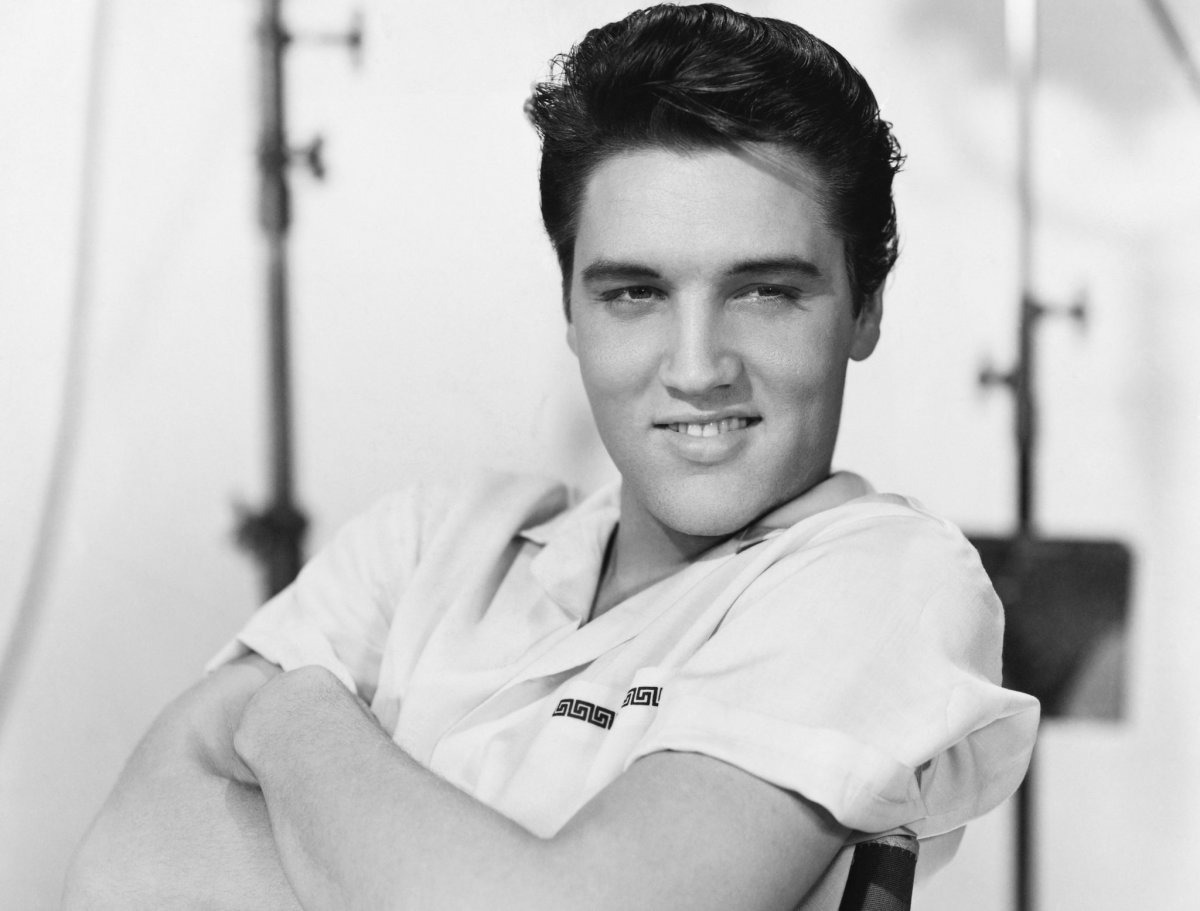
Contents — explore this biography
Tupelo, Memphis and a broad musical educationSun Records and the acceleration of celebrityCinema, military service and the recording studioThe television return and a renewed stage careerDeath, preservation and historical interpretationTupelo, Memphis and a broad musical education
Elvis Aaron Presley was born in Tupelo, Mississippi, in 1935 and moved with his parents to Memphis in 1948. His listening crossed musical boundaries: country, gospel, rhythm and blues, and popular ballads all contributed to the vocabulary of his singing. Memphis offered contact with recordings, radio and live musical traditions that overlapped without sharing equal access to commercial opportunity. This environment helps explain the flexibility of his performances. Presley could deliver an intimate ballad, a gospel number or an urgent dance record, using different vocal colours rather than maintaining one fixed emotional register.
Sun Records and the acceleration of celebrity
His commercial recording career began at Sun Records in 1954, where the small-group sound of his early sessions gave familiar material a different rhythmic character. RCA Victor acquired his contract in 1955, and the following year brought national television exposure, major hit records and extraordinary public attention. The speed of this transition mattered: a regional recording artist became a mass-media figure whose appearance and movement attracted commentary alongside his voice. His success helped expand the audience for rock and roll, while the music itself remained connected to the Black and white traditions from which it developed.
Cinema, military service and the recording studio
Presley’s career also developed through film, beginning with Love Me Tender in 1956. After serving in the United States Army from 1958 to 1960, he resumed recording and acting. Many subsequent films combined a recognizable star persona with musical performances, giving audiences another way to encounter him. The importance of this period cannot be measured by films alone. Studio recordings show his continuing interest in different kinds of song, including gospel, for which he received Grammy recognition. Film contracts, recording schedules and management decisions together shaped the balance between artistic opportunity and commercial repetition.
The television return and a renewed stage career
The 1968 television special commonly known as the comeback special restored the physical immediacy of Presley’s performing to the centre of his public image. Informal musical sequences and carefully staged numbers presented a singer who could command attention through phrasing and presence. The recordings that followed included In the Ghetto and Suspicious Minds, and a return to regular live performance brought major engagements in Las Vegas and extensive touring. These settings demanded another style of presentation, with a larger ensemble and arrangements designed to carry across expansive rooms rather than reproduce the intimacy of an early studio session.
Death, preservation and historical interpretation
Presley died at Graceland in Memphis in 1977, aged forty-two. His recordings, screen appearances and stage imagery subsequently became objects of collecting, exhibition and sustained public interest. He entered the Rock & Roll Hall of Fame in its inaugural 1986 class and the Country Music Hall of Fame in 1998. His historical importance involves both sound and distribution: radio, records, film and television magnified a distinctive performer across national boundaries. A considered account also recognizes the musicians, songwriters and earlier traditions behind the repertoire, placing individual celebrity within the wider musical world that made it possible.
Career timeline
Born in Tupelo, Mississippi.
Began his commercial recording career at Sun Records.
Achieved national prominence through recordings, television and film.
Returned to television with a major performance special.
Died at Graceland in Memphis.
Selected works & milestones
That's All Right
An early Sun recording with Scotty Moore and Bill Black.
Elvis Presley
His first RCA studio album.
Elvis television special
A defining filmed return to performance.
From Elvis in Memphis
An album associated with his renewed late-1960s recording work.
- Graceland — official biography
- Country Music Hall of Fame — Elvis Presley
- Rock & Roll Hall of Fame — Elvis Presley
- Recording Academy — awards record
Published 2026-11-07. Sources reviewed for this edition. Independent coverage of public professional activity.