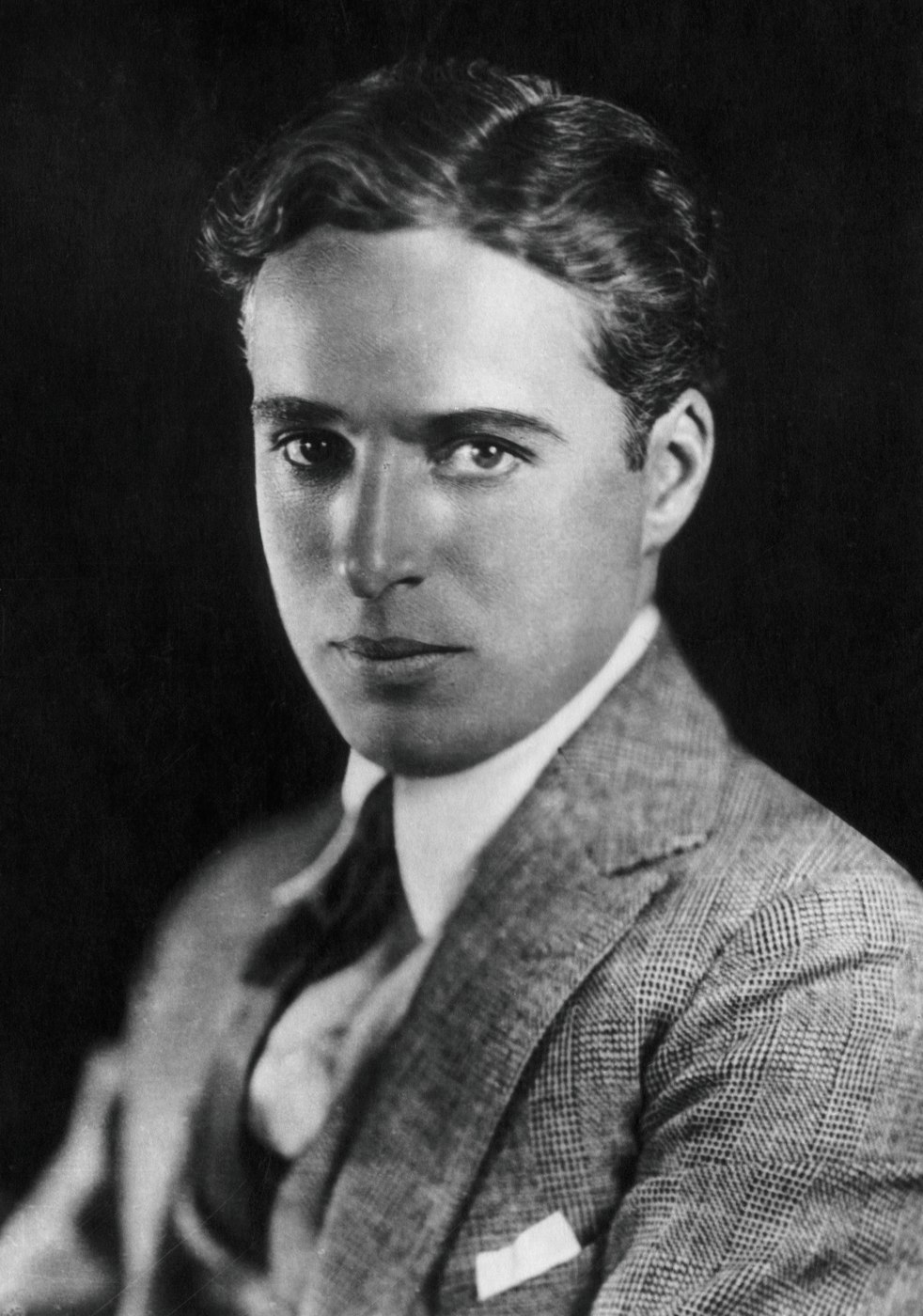
Contents — explore this biography
Music-hall origins and early hardshipThe Tramp and a recognisable visual languageControl over production and feature filmmakingSound, social criticism and political riskLater life and an evolving reputationMusic-hall origins and early hardship
Born in London in 1889, Charlie Chaplin grew up amid poverty and family instability. His parents worked in entertainment, and his own early experience included stage performance and touring. Employment with Fred Karno’s comedy company gave him a practical education in timing, gesture and ensemble work. Tours brought him to the United States, where film offered a new setting for skills developed before live audiences rather than through formal cinematic training.
The Tramp and a recognisable visual language
Chaplin entered motion pictures at Keystone in 1914 and quickly developed the character known as the Tramp. The small moustache, bowler hat, cane and ill-fitting clothes formed an immediately recognisable silhouette, but the character’s appeal depended on behaviour: pride surviving humiliation, ingenuity confronting authority and tenderness interrupting slapstick. Chaplin refined this language across short films while taking increasing responsibility for direction, story and editing. The Tramp became internationally legible in an era when silent cinema crossed linguistic borders.
Control over production and feature filmmaking
In 1919 Chaplin joined Mary Pickford, Douglas Fairbanks and D. W. Griffith in founding United Artists, an important effort to give established filmmakers greater control over distribution. The Kid combined comedy with an extended emotional narrative about a child and his protector. The Gold Rush and The Circus further demonstrated how physical invention could sustain feature-length storytelling. Chaplin’s unusually concentrated creative authority included performing, directing and shaping the rhythm of the finished film.
Sound, social criticism and political risk
Chaplin did not immediately abandon silent performance when talking pictures arrived. City Lights retained a largely silent narrative with a synchronized score, while Modern Times used sound selectively within its satire of industrial labour. The Great Dictator made a decisive move into spoken dialogue and openly confronted fascism. These films show that his relationship with technology was selective rather than simply resistant: he used new tools when they served a carefully developed expressive method.
Later life and an evolving reputation
Political controversy in the United States contributed to Chaplin settling in Switzerland after leaving America in 1952. Later films included A King in New York and A Countess from Hong Kong. He returned to the United States for an honorary Academy Award in 1972 and died in Switzerland in 1977. His achievement remains central to film history because visual comedy, emotional storytelling, music and social observation were integrated into a sustained body of work.
Career timeline
Born in London into a family connected with music hall.
Began film work at Keystone and introduced the Tramp.
Co-founded United Artists with three fellow film figures.
Released Modern Times.
Received an honorary Academy Award.
Selected works & milestones
The Kid
Feature combining slapstick and a child-centred emotional story.
City Lights
Silent-style romantic comedy with a synchronized score.
Modern Times
Comedy about mechanised work and precarious urban life.
The Great Dictator
Political satire opposing dictatorship and persecution.
- Official Chaplin archive — overview of his life
- PBS American Masters — biography
- Wikipedia — biographical reference
Published 2026-11-05. Sources reviewed for this edition. Independent coverage of public professional activity.