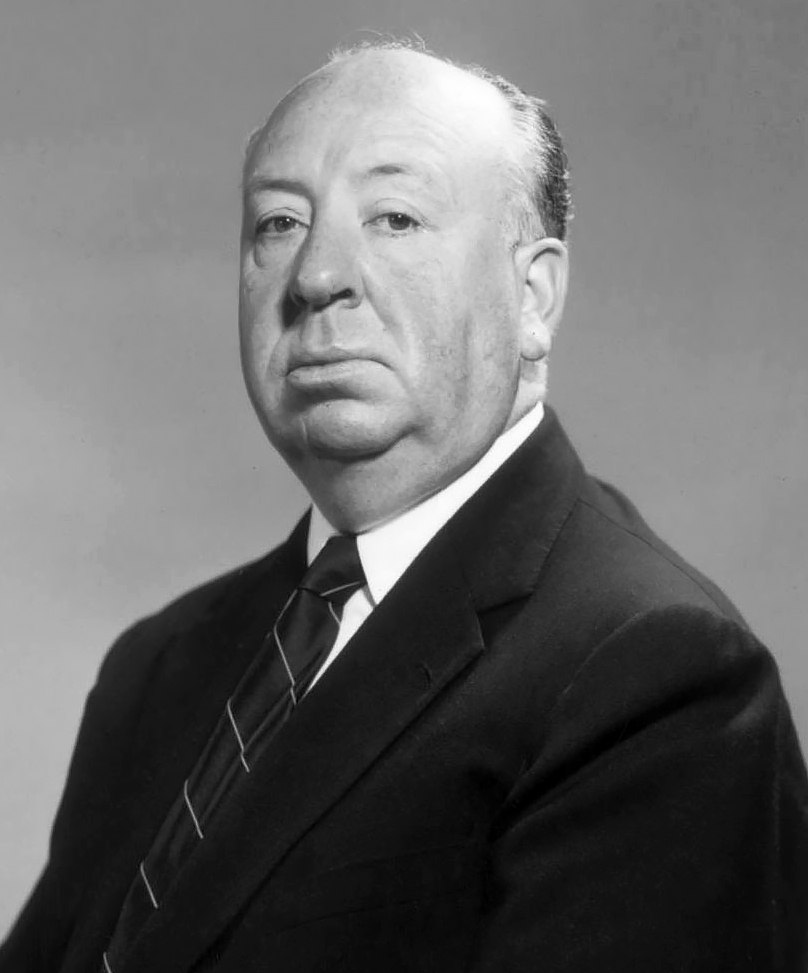
Contents — explore this biography
An apprenticeship in the British film industryEstablishing suspense as a cinematic methodHollywood and a broader production scaleA celebrated run of contrasting experimentsA public persona and a complicated legacyAn apprenticeship in the British film industry
Born in Leytonstone in 1899, Alfred Hitchcock entered filmmaking through work on title cards and progressed through production roles before directing features. This practical apprenticeship exposed him to design, editing and the organisation of visual information. His marriage to Alma Reville also began a lasting creative partnership; her experience as an editor and screenwriter contributed to the development and assessment of his work. His early career belongs to the collaborative institutions of British cinema.
Establishing suspense as a cinematic method
The Lodger helped establish Hitchcock’s reputation in silent film, and Blackmail became a landmark in Britain’s transition to sound. During the 1930s, films such as The 39 Steps and The Lady Vanishes connected ordinary social settings with conspiracy, mistaken identity and pursuit. His suspense frequently depended on a gap between what a character knew and what the audience could see. Editing, objects and spatial relationships could therefore carry dramatic weight before a threat was explicitly explained.
Hollywood and a broader production scale
Hitchcock moved to Hollywood to make Rebecca for producer David O. Selznick. The film won the Academy Award for best picture, though Hitchcock himself never won the competitive directing Oscar. Later projects included Shadow of a Doubt, Notorious and Strangers on a Train. Working within American studios expanded the resources available to him, while negotiations over scripts, stars and final form continued to shape how his distinctive methods reached the screen.
A celebrated run of contrasting experiments
Rear Window restricted its central character’s viewpoint and made looking itself part of the drama. Vertigo explored obsession through colour, repetition and unstable identification. North by Northwest turned pursuit into an expansive adventure, while Psycho disrupted expectations through its narrative structure and sharply controlled editing. These films differ greatly in tone and scale, yet each organises the viewer’s attention with unusual precision. Sound design and musical collaborators also played crucial roles in their effects.
A public persona and a complicated legacy
Television introductions and brief film appearances made Hitchcock recognisable beyond the cinema auditorium. He died in Los Angeles in 1980 after a career spanning silent pictures, sound features and television. His influence on thrillers is extensive, but critical discussion also examines the treatment of women in his stories and the power relationships behind their production. Understanding his achievement requires attention both to formal invention and to the collaborators whose performances and technical work made the films possible.
Career timeline
Born in Leytonstone, London.
The Lodger helped establish his directorial reputation.
Directed Blackmail during the transition to sound.
Rebecca marked his first American feature.
Released Psycho, a major departure in narrative expectation.
Selected works & milestones
Rear Window
Suspense built around restricted vision and observation.
Vertigo
A psychological drama of obsession and identity.
North by Northwest
An expansive mistaken-identity thriller.
Psycho
A suspense film shaped by disruptive narrative and editing choices.
Published 2026-11-05. Sources reviewed for this edition. Independent coverage of public professional activity.