Contents — explore this biography
Edinburgh and the discipline of observationMedical practice and literary beginningsSherlock Holmes and the magazine readershipHistorical fiction and Professor ChallengerNonfiction, belief and literary afterlifeEdinburgh and the discipline of observation
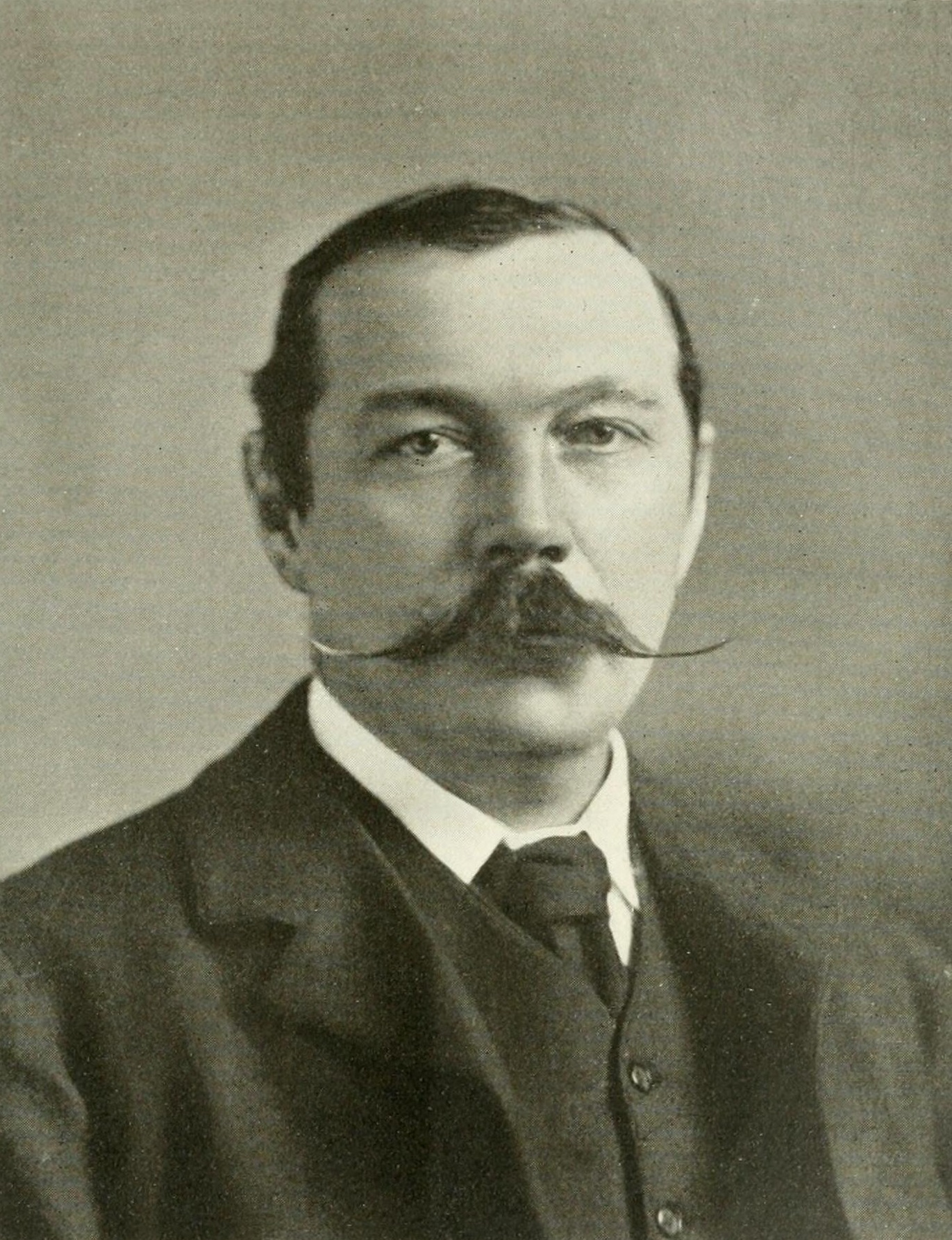
Arthur Conan Doyle was born in Edinburgh in 1859 and studied medicine at the University of Edinburgh. His training brought him into contact with Joseph Bell, whose close observation of patients became an important reference point for the methods later associated with Sherlock Holmes. Conan Doyle’s path to literature did not begin with an immediate departure from medicine. He wrote while studying and practising, drawing on the habits of investigation, the variety of people encountered in professional life and the practical difficulty of establishing himself in a career.
Medical practice and literary beginnings
After experience as a ship’s physician, Conan Doyle established a medical practice in Southsea in 1882. Writing provided both an additional occupation and a possible route to a wider audience. He later pursued ophthalmology and opened a practice in London, but the growing success of his fiction made full-time authorship possible. The relationship between the two careers remained visible in his work: Dr. Watson is a physician as well as a narrator, and the interpretation of symptoms offers a useful analogy for the interpretation of clues.
Sherlock Holmes and the magazine readership
A Study in Scarlet introduced Holmes and Watson in 1887, followed by The Sign of Four in 1890. Their popularity expanded sharply with the stories published in The Strand Magazine from 1891. The eventual Holmes canon comprises four novels and fifty-six short stories. Watson’s perspective allows readers to follow events closely while remaining uncertain about the detective’s conclusions. That arrangement makes the explanation at the end of a case a narrative event in itself. The partnership also provides continuity across stories with very different crimes, environments and emotional stakes.
Historical fiction and Professor Challenger
Conan Doyle’s writing extends well beyond Baker Street. His historical novels include The White Company, while the Brigadier Gerard stories combine adventure with humour. The Lost World, published in 1912, introduced Professor Challenger to readers and moved scientific curiosity into an expedition narrative. These works reveal an author interested in professional expertise, physical danger and the testing of confidence under unfamiliar conditions. Treating them as merely secondary to Holmes obscures the breadth of his ambitions and the different forms through which he addressed a mass reading public.
Nonfiction, belief and literary afterlife
Conan Doyle also wrote histories, public commentary, autobiography and works advocating spiritualism. This range complicates any simple identification of the author with the detached rationality of his most famous detective. Memories and Adventures appeared in 1924, and he died in 1930. His characters subsequently acquired long lives in theatre, film, television and new literary interpretations. The original stories remain a distinct achievement within that expanding cultural presence: carefully shaped encounters in which friendship, atmosphere and a delayed explanation make investigation accessible as entertainment.
Career timeline
Born in Edinburgh.
Established a medical practice in Southsea.
A Study in Scarlet introduced Sherlock Holmes and Dr. Watson.
The Lost World was published.
Died after a career in fiction, medicine and public writing.
Selected works & milestones
A Study in Scarlet
The first Holmes novel.
The Adventures of Sherlock Holmes
The first collection of Holmes short stories.
The Hound of the Baskervilles
A Holmes novel first serialized in 1901–1902.
The Lost World
An expedition adventure featuring Professor Challenger.
- University of Edinburgh — biography
- Conan Doyle Estate — medical career
- Conan Doyle Estate — writing and publications
Published 2026-11-05. Sources reviewed for this edition. Independent coverage of public professional activity.