Contents — explore this biography
Maine, early writing and workCarrie and the first published novelsCommunities under pressureWriting beyond a single genreAdaptation and a second public lifeOn Writing and the working authorMaine, early writing and work
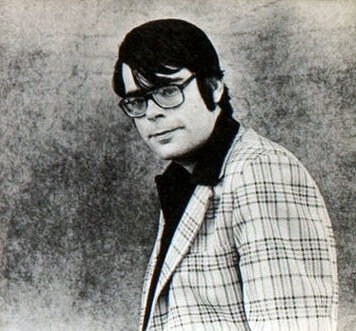
Stephen King was born in Portland, Maine, and developed an interest in storytelling while young. He studied at the University of Maine, wrote short fiction and worked in several jobs before becoming a full-time novelist. Teaching and family responsibilities formed part of those early years. The ordinary workplaces and communities of his fiction are therefore not simply backdrops; they belong to a social world he observed before literary success changed his professional life.
Carrie and the first published novels
Carrie appeared in 1974 and established King as a novelist. Its story connects adolescent humiliation, social exclusion and supernatural power, placing the extraordinary within a recognizable environment. Salem’s Lot and The Shining followed, expanding his audience. The novels differ in setting and structure, but each gives fear a human context: a threat becomes more convincing when readers first understand the people, habits and relationships that it is about to disrupt.
Communities under pressure
The Stand and It work on a larger scale, following groups whose relationships change under extreme pressure. King often gives supporting characters substantial histories, allowing a town or community to feel larger than the central plot. This method helps explain both the length of some novels and their attraction to readers. The supernatural is important, but much of the emotional investment comes from watching people respond to one another before the threat fully emerges.
Writing beyond a single genre
Different Seasons, published in 1982, demonstrated work beyond the conventional horror novel, with stories later adapted as Stand by Me and The Shawshank Redemption. Misery returned to confinement and terror through the relationship between a writer and a reader. The Dark Tower books connect fantasy, western and horror elements across a larger fictional structure. These projects show why the familiar King of Horror label describes only part of his work.
Adaptation and a second public life
Film and television adaptations have brought King’s stories to audiences who may never read the original books. The results vary in tone and fidelity, because adaptation involves other writers, directors and performers. A successful film does not reproduce every feature of a novel, and a famous screen image can alter public memory of a book. His career therefore has two related histories: the writing itself and the many later interpretations made from it.
On Writing and the working author
On Writing, published in 2000, combines memoir with reflections on craft, practice and language. It gives readers a direct account of work usually hidden behind the finished story. King’s larger contribution includes sustained popular readership, influence on other writers and formal recognition such as the National Book Foundation’s 2003 medal. Those different kinds of recognition need not be opposed: technical storytelling and a broad audience can be parts of the same literary career.
Career timeline
Publishes his first novel, Carrie.
Publishes The Shining.
Publishes the novella collection Different Seasons.
Publishes On Writing: A Memoir of the Craft.
Receives the National Book Foundation’s medal for contribution to American letters.
Selected works & milestones
Carrie
A debut joining adolescent social cruelty with supernatural power.
The Shining
A novel about a family, isolation and a threatening hotel environment.
It
A large-scale story connecting childhood, memory, a town and recurring terror.
On Writing
A combination of autobiographical narrative and practical reflection on the writer’s craft.
- Stephen King — biographical reference and cited sources
- Official author biography
- Simon & Schuster — author profile
- Official Carrie book record
Published 2026-10-31. Sources reviewed for this edition. Independent coverage of public professional activity.