Contents — explore this biography
An imaginative childhood and a first novelPoirot, Miss Marple and the management of cluesTravel, work and narrative varietyMary Westmacott and psychological fictionTheatre and a continuing literary presenceAn imaginative childhood and a first novel
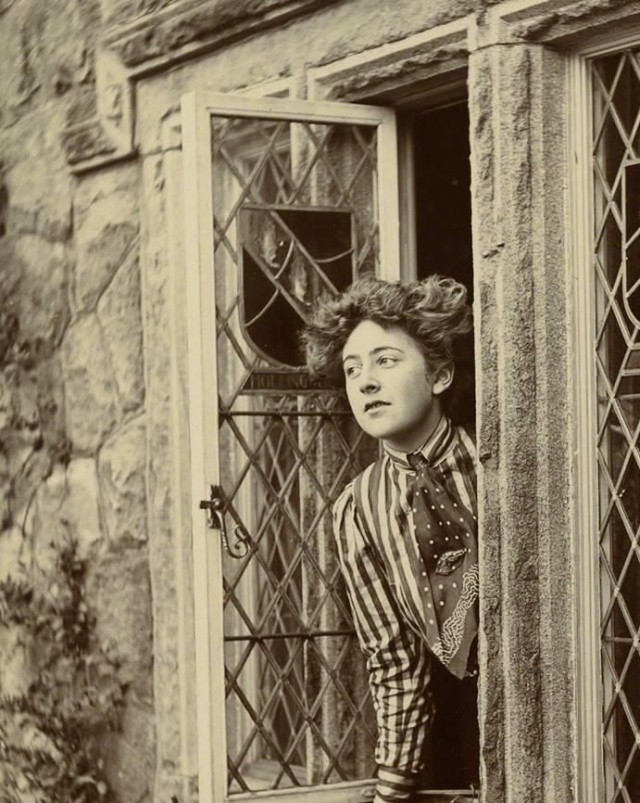
Agatha Christie was born in Torquay in 1890 and developed an early enthusiasm for stories. During the First World War she worked in a hospital setting and acquired practical knowledge of medicines, a background that later informed aspects of her detective fiction. Her first published novel, The Mysterious Affair at Styles, appeared in 1920 and introduced Hercule Poirot. The book established a recurring relationship between outwardly ordinary domestic arrangements and the concealed motives that can make those arrangements dangerous. It also began a remarkably sustained career in popular storytelling.
Poirot, Miss Marple and the management of clues
Christie’s detectives offered different methods of interpreting behaviour. Poirot emphasizes order, conversation and the reconstruction of motive, while Miss Marple draws on patterns observed in village life. The Murder at the Vicarage introduced Miss Marple in a novel in 1930. Across these series, Christie repeatedly changes what readers believe they know about a witness, a timetable or an apparently insignificant detail. The resulting pleasure depends on the placement and reinterpretation of evidence. Familiar social settings become stages on which certainty is carefully assembled and then disturbed.
Travel, work and narrative variety
Christie’s journeys and her marriage to archaeologist Max Mallowan brought her into contact with excavations and landscapes beyond Britain. Travel settings in her fiction widen the social range of the enclosed mystery, placing strangers together on trains, ships or journeys. Her output also includes short stories, stand-alone novels and several recurring investigators. A useful way to understand that range is to look beyond the final revelation: she varies narrative perspective, the composition of a group and the kinds of assumptions that make a convincing explanation seem available before it actually is.
Mary Westmacott and psychological fiction
Under the name Mary Westmacott, Christie published six novels beginning with Giant’s Bread in 1930. These books allowed her to develop relationships and emotional conflicts outside the expectations of a detective puzzle. Absent in the Spring, published in 1944, turns isolation and self-examination into the centre of its story. The separate name was therefore more than a marketing device. It marked a different arrangement of the reader’s attention, in which the crucial discovery could concern a person’s mistaken understanding of herself rather than the identity of a murderer.
Theatre and a continuing literary presence
The Mousetrap opened in London in 1952 after its initial tour and became an exceptional theatrical success. Its confined setting and ensemble of suspects show how Christie’s management of information could work through live performance as well as prose. She died in 1976, leaving novels, stories and plays that have continued to circulate through new editions and adaptations. Her legacy is not simply a large catalogue of ingenious endings. It is also a durable method of making readers reconsider appearances, social judgments and the stories people tell about their own conduct.
Career timeline
Born in Torquay.
The Mysterious Affair at Styles introduced Hercule Poirot.
The Murder at the Vicarage and the first Mary Westmacott novel appeared.
The Mousetrap opened in London.
Died after a career spanning novels, stories and theatre.
Selected works & milestones
The Mysterious Affair at Styles
The first published Poirot novel.
The Murder at the Vicarage
Miss Marple’s first novel.
Absent in the Spring
A psychological novel published as Mary Westmacott.
The Mousetrap
A mystery written for the stage.
- Agatha Christie — official biography
- Agatha Christie — The Mysterious Affair at Styles
- Agatha Christie — Mary Westmacott novels
- The Mousetrap — official production history
Published 2026-11-05. Sources reviewed for this edition. Independent coverage of public professional activity.