Contents — explore this biography
Education and early exposure to FidelityFrom analysis to operating responsibilitiesSuccession within a privately held institutionA business broader than mutual fundsLeadership through systems and customer relationshipsEducation and early exposure to Fidelity
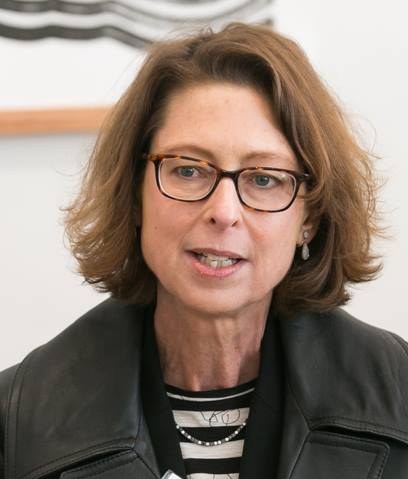
Abigail Johnson was born in Boston in 1961 into the family associated with Fidelity Investments. Her early experience included summer work handling customer requests in the company’s wire room. She studied art history at Hobart and William Smith Colleges, worked at Booz Allen Hamilton and earned an MBA from Harvard Business School in 1988. This combination of a humanities education, consulting experience and direct customer-service work preceded her move into investment analysis. Her family connection provided a context for the career, but does not describe the different professional responsibilities she subsequently held.
From analysis to operating responsibilities
Johnson joined Fidelity as an equity analyst and later managed funds before moving into broader executive positions. Her responsibilities came to encompass asset management, workplace investing and financial services. These are related but distinct activities: selecting securities differs from administering retirement plans, operating a brokerage platform or serving institutional clients. Her progression is consequently best understood as a movement from investment work toward oversight of an organization whose products and infrastructure reach many kinds of savers, employers and professional intermediaries.
Succession within a privately held institution
Johnson became chief executive of FMR in 2014 and chairman in 2016, representing the third generation of her family to lead Fidelity. The firm dates its founding to 1946, when Edward Johnson established Fidelity Management & Research. Private ownership distinguishes its governance from that of a listed competitor, but does not remove the obligations attached to managing customer assets. The succession combined continuity of family control with responsibility for a large professional organization operating in markets shaped by regulation, competition and changing investor preferences.
A business broader than mutual funds
Fidelity’s institutional history includes mutual funds, workplace retirement services, brokerage, advisory offerings and technology serving financial professionals. More recent initiatives have included low-cost index products and services involving digital assets. These developments should be understood as business choices made across the organization rather than personal investment recommendations by its chief executive. The strategic challenge is to preserve trust and operational reliability while changing products and delivery methods. Customer assets are also not equivalent to the company’s own wealth, an important distinction when describing the scale of any investment-services business.
Leadership through systems and customer relationships
Fidelity’s reviewed corporate materials identify Johnson as chairman and chief executive. Her public profile is less dependent on frequent market predictions than on oversight of the institution’s direction and service model. Her career illustrates how financial influence can arise through infrastructure: account systems, research, retirement administration, distribution and customer relationships. Assessing this work requires attention to fees, accessibility, product design and execution as well as investment results. It also requires separating the performance of particular funds from the responsibilities and decisions of the parent organization’s leadership.
Career timeline
Born in Boston.
Earned an MBA from Harvard Business School and entered Fidelity as an analyst.
Became president of FMR.
Became chief executive of FMR.
Became chairman of Fidelity’s parent organization.
Selected works & milestones
Investment research career
Began work as an equity analyst at Fidelity.
FMR chief executive
Assumed leadership of the diversified financial-services company.
Chairmanship
Added board leadership to executive responsibilities.
Harvard Business School Alumni Achievement Award
Recognized among the school’s distinguished graduates.
- Harvard Business School — career and education
- Fidelity — institutional history and business
- Fidelity — annual report and leadership
Published 2026-11-05. Sources reviewed for this edition. Independent coverage of public professional activity.