Contents — explore this biography
Education and experimental beginningsJarman and a distinctive screen presenceOrlando and international recognitionThrillers, fantasy and an Academy AwardInternational collaborations and changing formsA career beyond the familiar star modelEducation and experimental beginnings
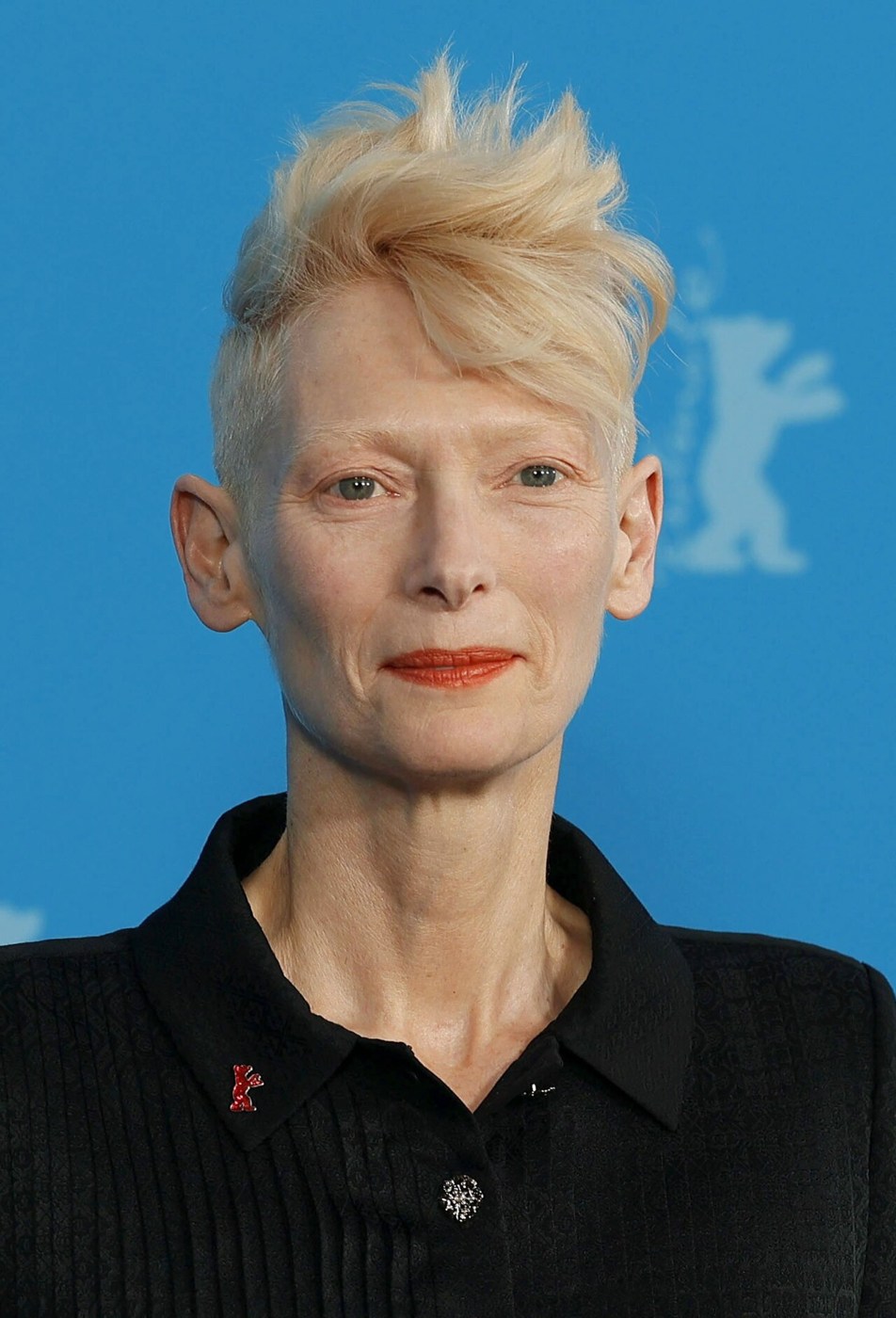
Tilda Swinton studied at Cambridge before developing her professional work in theatre and film. Her early screen career became closely associated with Derek Jarman, beginning with Caravaggio in 1986. Their collaborations placed her within an experimental tradition concerned with images, history and the possibilities of performance outside conventional storytelling. That foundation remains important even when later audiences encounter her through a large commercial production.
Jarman and a distinctive screen presence
Films including The Last of England, The Garden and Edward II gave Swinton different ways to work within Jarman’s visual and political cinema. Her performance in Edward II received the Venice best-actress prize in 1991. These projects did not depend on a standard progression toward mainstream stardom. They developed through recurring creative relationships, with a performer’s physical presence functioning as part of an overall composition as well as a representation of a character.
Orlando and international recognition
Sally Potter’s Orlando, released in 1992, adapted Virginia Woolf’s novel through a central character who crosses centuries and changes sex. Swinton’s performance connects the changing historical settings without treating identity as a stable explanation for everything the viewer sees. The role became a defining point of international recognition. It also demonstrates why casting can be central to an adaptation’s argument, not merely a practical choice made after the story has been interpreted.
Thrillers, fantasy and an Academy Award
The Deep End offered an intimate thriller, while The Chronicles of Narnia made Swinton familiar as the White Witch to a broad family audience. In Michael Clayton she played corporate lawyer Karen Crowder, winning the supporting-actress Oscar in 2008. The latter performance turns apparently authoritative behavior into something rehearsed and fragile. It is markedly different from the distant power of the White Witch, despite both characters occupying positions of influence.
International collaborations and changing forms
I Am Love, We Need to Talk About Kevin and Only Lovers Left Alive place Swinton within different approaches to family, responsibility and time. Work with Wes Anderson uses a more visibly designed comic ensemble, while Memoria requires extraordinary attention to stillness and listening. Such contrasts show the importance of the director-performer relationship in her career: the actor’s recognizable presence is continually reworked by a project’s specific formal language.
A career beyond the familiar star model
Swinton has also participated in performance and exhibition settings, extending an interest in the boundary between cinema and other arts. Her major studio appearances coexist with projects that ask audiences to accept uncertainty, slowness or visual abstraction. The coherence of the career is therefore not a single genre or character type. It is a sustained openness to collaboration and to the idea that acting may organize a viewer’s attention in more than one way.
Career timeline
Begins her film collaboration with Derek Jarman in Caravaggio.
Wins the Venice best-actress prize for Edward II.
Stars in Sally Potter’s adaptation of Orlando.
Wins the supporting-actress Oscar for Michael Clayton.
Leads Apichatpong Weerasethakul’s Memoria.
Selected works & milestones
Orlando
A literary adaptation built around a character moving through centuries and changing identities.
Michael Clayton
A corporate-thriller performance recognized with the supporting-actress Academy Award.
We Need to Talk About Kevin
A demanding role in a film examining motherhood, responsibility and memory.
Memoria
A performance shaped by listening, stillness and an unexplained sound.
- Tilda Swinton — biographical reference and cited sources
- Festival de Cannes — biography
- Onassis Foundation — professional profile
Published 2026-10-31. Sources reviewed for this edition. Independent coverage of public professional activity.