Contents — explore this biography
A musical life before international fameThe Police and a distinctive band soundA global audience and the end of a chapterThe solo transition and jazz collaborationSongs, storytelling and theatreAn extended musical vocabularyA musical life before international fame
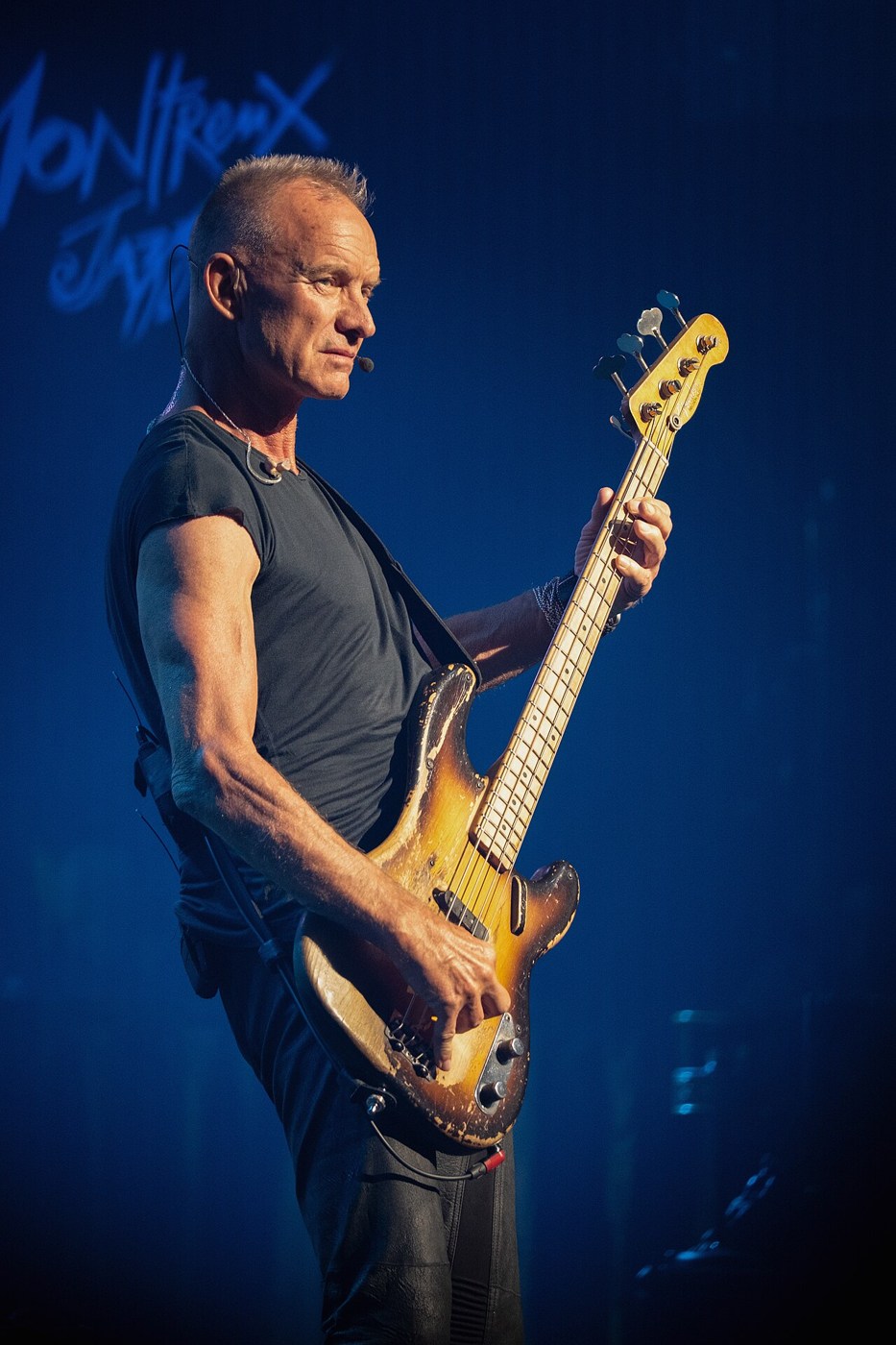
Sting was born Gordon Matthew Thomas Sumner in Wallsend, near Newcastle, and worked as a teacher before international success. Local bands and an interest in jazz helped shape his musical development. The bass guitar became central to his performance, placing rhythm and harmony directly under his singing. His later writing would repeatedly move between compact popular-song forms and more expansive arrangements drawing on other musical traditions.
The Police and a distinctive band sound
With the Police, Sting worked within a trio whose most familiar lineup also included Andy Summers and Stewart Copeland. Songs such as Roxanne and Message in a Bottle combined concise melodic writing with rhythmic ideas drawn partly from reggae and new wave. The small ensemble left musical space around the vocal line, making the interaction among bass, drums and guitar as important as the force of any individual part.
A global audience and the end of a chapter
Albums including Reggatta de Blanc, Ghost in the Machine and Synchronicity made the Police internationally successful. Every Breath You Take became an especially familiar song, although its language of surveillance and possession differs from the uncomplicated love-song interpretation it sometimes receives. The band’s success created a powerful public identity, but Sting’s next phase would depend on establishing a musical voice outside that particular group dynamic.
The solo transition and jazz collaboration
The Dream of the Blue Turtles appeared in 1985 with a band including prominent young jazz musicians. Instead of reproducing the Police’s exact sound, the record gave more space to flexible ensemble playing and different rhythmic textures. Later albums such as …Nothing Like the Sun and Ten Summoner’s Tales developed the solo identity further. The transition demonstrated that continuity in songwriting need not require continuity in instrumentation or arrangement.
Songs, storytelling and theatre
Fields of Gold and other later recordings show Sting’s interest in narrative detail and controlled melodic writing. The Last Ship brought material connected with shipbuilding and communities in northeast England into musical theatre. That work required songs to function within a collective story, rather than only express the persona of a recording artist. It also returned publicly to a landscape and social world present in his earliest life.
An extended musical vocabulary
Sting’s projects have included classical repertoire, collaborations across genres and public advocacy with Trudie Styler through the Rainforest Foundation. These activities vary in form and purpose, but musical curiosity provides a recurring thread. His career is best understood as an ongoing movement between the discipline of the popular song and a desire to place that song within new ensembles, traditions and storytelling settings.
Career timeline
Begins the Police period, later associated with Summers and Copeland.
The Police release Synchronicity.
Releases his first solo studio album, The Dream of the Blue Turtles.
Releases Ten Summoner’s Tales, including Fields of Gold.
The Last Ship opens on Broadway.
Selected works & milestones
Roxanne
An early Police song combining a direct vocal line with a spare band arrangement.
Synchronicity
The Police album that includes Every Breath You Take.
The Dream of the Blue Turtles
A solo debut developed with an ensemble of jazz musicians.
Ten Summoner’s Tales
A song-centered album balancing narrative writing and accomplished ensemble performance.
- Sting — biographical reference and cited sources
- Official biography
- Polar Music Prize — career profile
Published 2026-10-31. Sources reviewed for this edition. Independent coverage of public professional activity.