Contents — explore this biography
A young musician in the Motown environmentFrom youthful success to an individual studio languageThe sequence of landmark 1970s albumsSongwriting, collaboration and public commitmentsA legacy joining craft and emotional directnessA young musician in the Motown environment
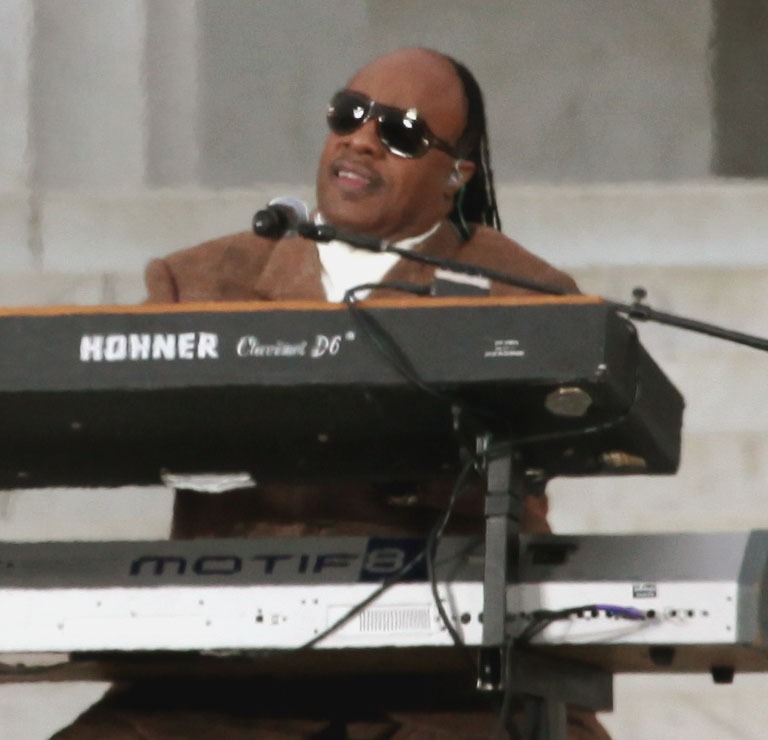
Stevie Wonder was born in Saginaw, Michigan, in 1950 and grew up in Detroit. Blind from infancy, he developed musical abilities that included singing, keyboards, harmonica and drums. Motown signed him as a child under the name Little Stevie Wonder, placing him within a company that joined songwriting, recording and performance through an organized network of specialists. Fingertips brought him major chart success in 1963, when he was thirteen. The record’s live energy announced a performer able to generate excitement through interaction, while the years that followed provided experience in the different disciplines behind a sustained recording career.
From youthful success to an individual studio language
As Wonder matured, his work increasingly displayed an integrated approach to songwriting, arrangement and production. The key change was not simply the addition of electronic instruments. Synthesizers and layered recordings gave him new ways to organize harmony and rhythm while keeping the human voice at the centre. Talking Book in 1972 included Superstition and You Are the Sunshine of My Life, two songs with markedly different rhythmic and emotional designs. Their coexistence illustrates the breadth of his developing language: dance, intimacy and melodic sophistication did not need to occupy separate artistic identities or separate audiences.
The sequence of landmark 1970s albums
Innervisions, Fulfillingness’ First Finale and Songs in the Key of Life extended Wonder’s range across the middle of the 1970s. These albums placed social observation beside personal feeling, moving between sharply defined grooves and more expansive musical structures. The recordings reward attention to small relationships: the position of a bass figure, the movement of inner harmonies and the timing of a sung phrase can carry as much meaning as an overtly dramatic climax. His sequence of Album of the Year Grammy victories recognized this work, but its continuing importance lies in the coherence with which complex arrangements remained connected to memorable songs.
Songwriting, collaboration and public commitments
Wonder’s later career included further albums, collaborations and music for film, including I Just Called to Say I Love You from The Woman in Red. His public activity also connected music with civic recognition and humanitarian causes. Support for the campaign to establish a United States holiday honouring Martin Luther King Jr. became a particularly visible part of that commitment. In 2009 he received the Library of Congress Gershwin Prize for Popular Song. These activities broaden the account of his career beyond the studio without making the songs mere illustrations of a public message: their musical construction remains central to their effect.
A legacy joining craft and emotional directness
Wonder entered the Rock & Roll Hall of Fame in 1989, and Songs in the Key of Life was added to the National Recording Registry in 2005. His influence crosses the boundaries commonly used to separate soul, pop, funk and jazz-informed songwriting. A listener can encounter a recording first as a direct expression of joy, anxiety or affection and later discover how carefully it is built. That relationship between accessibility and intricacy is a defining part of his achievement. It offers a model of musical ambition in which technical imagination serves communication rather than standing apart from the emotional experience of a song.
Career timeline
Born in Saginaw, Michigan.
Fingertips became a major hit during his early Motown career.
Released Talking Book.
Released the double album Songs in the Key of Life.
Received the Library of Congress Gershwin Prize for Popular Song.
Selected works & milestones
Talking Book
Includes Superstition and You Are the Sunshine of My Life.
Innervisions
An album combining social observation with personal reflection.
Fulfillingness’ First Finale
Continued his major sequence of 1970s studio albums.
Songs in the Key of Life
A double album added to the National Recording Registry in 2005.
- Library of Congress — Stevie Wonder biography
- Recording Academy — Stevie Wonder
- Rock & Roll Hall of Fame — Stevie Wonder
- Detroit Historical Society — Stevie Wonder
Published 2026-11-07. Sources reviewed for this edition. Independent coverage of public professional activity.