Contents — explore this biography
Study and intellectual independenceFiction as philosophical inquiryFreedom and its material conditionsThe Second SexNovels, memoirs and public engagementAn evolving receptionStudy and intellectual independence
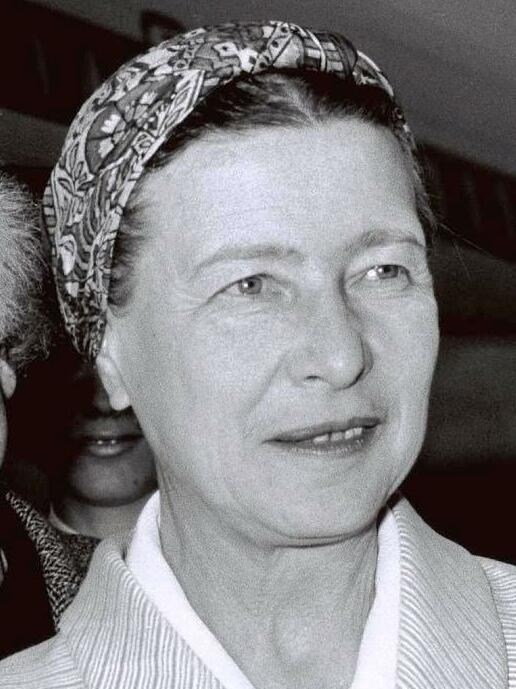
Beauvoir was born in Paris in 1908 and pursued an education in literature and philosophy before passing the philosophy agrégation in 1929. She subsequently taught while developing her writing. Her long intellectual and personal relationship with Jean-Paul Sartre became part of her public identity, but her work developed arguments that require examination in their own right. The relation between independence and actual social circumstances became one of her lasting concerns.
Fiction as philosophical inquiry
She Came to Stay, published in 1943, examined freedom, rivalry and the experience of other people through a novel’s intimate relationships. Later fiction continued to place ethical questions inside situations that resist a neat resolution. This method matters because a character’s uncertainty can reveal what an abstract definition of freedom leaves out. Beauvoir’s literary forms therefore participate in the development of her philosophy rather than merely providing personal background for it.
Freedom and its material conditions
The Ethics of Ambiguity, published in 1947, asked how people can act responsibly in a world without final guarantees. Freedom appears through relationships, commitments and the conditions that make action possible. An individual’s sense of being independent cannot erase another person’s deprivation or subordination. Her arguments connect the difficulty of moral judgment with a practical demand to consider whose possibilities an action expands and whose possibilities it restricts.
The Second Sex
Published in 1949, The Second Sex examined women’s position through history, literature, social analysis and lived experience. It challenged the treatment of a male standpoint as universal and women as secondary or derivative. The book became central to later feminist thought while also attracting sustained criticism and reinterpretation. Its significance involves the questions it opened about embodiment, dependency and social formation, rather than a claim that one analysis describes every woman’s circumstances.
Novels, memoirs and public engagement
The Mandarins won the Prix Goncourt in 1954. Her autobiographical writing, including Memoirs of a Dutiful Daughter, investigated the making of an intellectual life through family, education and relationships. She also addressed ageing in The Coming of Age and participated in feminist and anti-colonial campaigns. These different forms made public life and personal experience available for mutual examination, while leaving the author’s judgments open to criticism alongside her theories.
An evolving reception
Beauvoir died in Paris in 1986. Subsequent scholarship has increasingly examined her as an original philosopher as well as a novelist and feminist writer. The record includes continuing debate about her political commitments and personal conduct. Her enduring influence rests in a demanding question: how can people claim freedom while living through institutions, habits and relationships that distribute its practical conditions unequally? Her work keeps that question concrete and historically situated.
Career timeline
Qualifies in philosophy before a career combining teaching and writing.
Publishes the novel investigating freedom and relations with others.
Develops a situated account of ethical freedom.
Publishes the major study of women’s social and historical position.
Wins the Prix Goncourt for the novel of postwar intellectual life.
Selected works & milestones
She Came to Stay
Publishes the novel investigating freedom and relations with others.
The Ethics of Ambiguity
Develops a situated account of ethical freedom.
The Second Sex
Publishes the major study of women’s social and historical position.
The Mandarins
Wins the Prix Goncourt for the novel of postwar intellectual life.
- Stanford Encyclopedia of Philosophy — life, works and philosophical arguments
- Library of Congress — feminist history and research resources
- Simone de Beauvoir — biographical reference and bibliography
Published 2026-10-31. Sources reviewed for this edition. Independent coverage of public professional activity.