Contents — explore this biography
Medical training directed toward laboratory researchAn international career during political upheavalPolynucleotide phosphorylase and an experimental route to RNAThe genetic code and the collaborative character of discoveryInstitutions, mentorship and a Spanish scientific legacyMedical training directed toward laboratory research
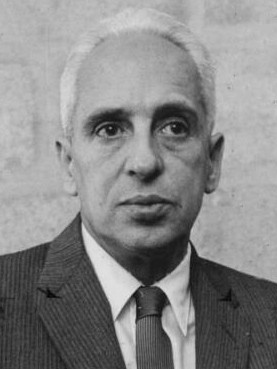
Severo Ochoa was born in Luarca, Spain, in 1905 and studied medicine in Madrid. His interests increasingly centred on experimental physiology and the chemical processes underlying life rather than on clinical practice. Training and research took him to laboratories in Germany and Britain, where he encountered influential approaches to metabolism and enzymology. That international education helped establish a characteristic method: isolate a biochemical process, identify the reactions involved and investigate how enzymes make those reactions possible. His later discoveries developed from this broad concern with cellular chemistry, not from an initial plan focused exclusively on the genetic code.
An international career during political upheaval
The Spanish Civil War and the wider political crises of Europe disrupted the conditions in which Ochoa could pursue research. His career included work with Otto Meyerhof and at Oxford before he moved to the United States. After a period at Washington University in St Louis, he joined New York University in 1942. There he built an influential enzymology laboratory and held successive academic and departmental roles. The continuity of his scientific questions contrasts with the repeated changes of institution. His biography illustrates how research traditions travelled through people, laboratories and collaborations during an exceptionally unsettled period in twentieth-century history.
Polynucleotide phosphorylase and an experimental route to RNA
In 1955 Ochoa and colleagues, including Marianne Grunberg-Manago, reported polynucleotide phosphorylase. The enzyme could be used to assemble polynucleotides outside living cells, giving researchers an important experimental route into RNA chemistry. Understanding the achievement requires distinguishing laboratory synthesis from a complete account of how a cell copies genetic information. The discovery supplied a powerful biochemical tool, while later work clarified the enzyme’s physiological roles. Ochoa shared the 1959 Nobel Prize in Physiology or Medicine with Arthur Kornberg, whose research concerned DNA synthesis. Their contributions were related through nucleic-acid chemistry but were not the same experimental discovery.
The genetic code and the collaborative character of discovery
Synthetic polynucleotides became useful in experiments connecting RNA sequences with protein production. Ochoa’s laboratory contributed to this larger effort alongside the work of Marshall Nirenberg, Har Gobind Khorana and many other researchers. The history is best understood as a sequence of methods, experiments and interpretations rather than a single moment in which one individual solved every part of the code. Ochoa also investigated the initiation and control of protein synthesis. These later interests maintained the connection between enzymology and gene expression, showing how a laboratory’s earlier technical strengths could support new questions as molecular biology developed.
Institutions, mentorship and a Spanish scientific legacy
Ochoa’s influence extended through the scientists he trained and through his support for the development of molecular biology in Spain. The Centro de Biología Molecular, established in 1975 as a joint institution of the Spanish National Research Council and the Autonomous University of Madrid, developed under his initiative and guidance. It brought together several active research groups and became associated with scientists including Margarita Salas. Ochoa died in Madrid in 1993. His legacy combines specific biochemical discoveries with the less easily measured work of sustaining a scientific community: sharing methods, supporting younger investigators and helping institutions create conditions for rigorous research.
Career timeline
Born in Luarca, Asturias.
Joined New York University.
Reported polynucleotide phosphorylase with colleagues.
Shared the Nobel Prize in Physiology or Medicine.
Died in Madrid after a career supporting molecular biology.
Selected works & milestones
Polynucleotide phosphorylase
Enzyme research that enabled the experimental synthesis of polynucleotides.
Nobel Prize in Physiology or Medicine
Shared with Arthur Kornberg for work on nucleic-acid synthesis.
Studies of the genetic code and protein synthesis
Collaborative experiments connecting RNA and protein production.
Centro de Biología Molecular
Supported the creation of a major Spanish research institution.
- Pontifical Academy of Sciences — Severo Ochoa
- NYU Langone — Ochoa lecture series and career
- NYU Medical Archives — Severo Ochoa
- Centro de Biología Molecular — institutional history
- National Science and Technology Medals Foundation — Ochoa
Published 2026-11-09. Sources reviewed for this edition. Independent coverage of public professional activity.