Contents — explore this biography
From Três Corações to SantosThe teenager who changed a World CupThree titles and the 1970 teamSantos, the Cosmos and football’s reachA global ambassador and historical legacyFrom Três Corações to Santos
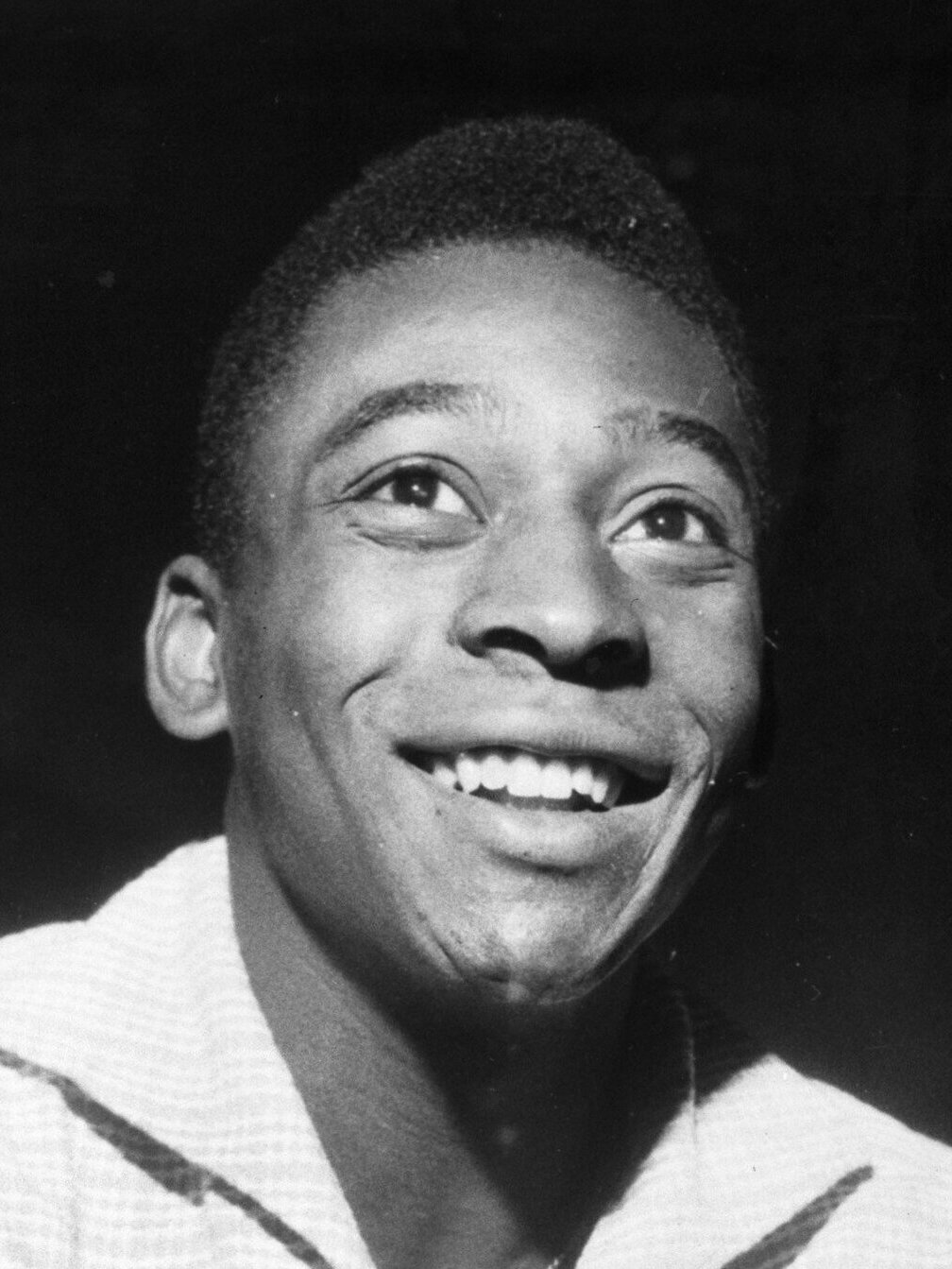
Edson Arantes do Nascimento, known worldwide as Pelé, was born in Três Corações in 1940 and grew up in Brazil. Football offered both a family connection and a demanding practical education. He joined Santos as a teenager and quickly became central to the club’s attack. His development took place before modern television and international transfer markets made European leagues the default destination for globally recognised players. Santos became the principal stage of his club career, demonstrating that a Brazilian team could sustain an international reputation around exceptional local talent.
The teenager who changed a World Cup
At the 1958 World Cup in Sweden, Pelé helped Brazil win its first title while still seventeen. His goals in the knockout rounds, including two in the final, brought a remarkably complete young forward to worldwide attention. He combined balance, close control, heading, acceleration and finishing with an understanding of teammates’ movement. The breakthrough was not simply a story of individual genius. It occurred within a gifted Brazilian side, and its significance came from the way his attacking imagination contributed to a collective style that captivated international audiences.
Three titles and the 1970 team
Pelé was part of Brazil’s victorious 1962 World Cup squad, although injury curtailed his participation during the tournament. In 1970 he returned to the centre of Brazil’s success in Mexico, scoring in the final against Italy and contributing to an attack remembered for coordinated movement and inventive passing. These three championship campaigns made him the only player to win three men’s World Cup titles. Distinguishing his different roles in the three tournaments is essential: his status rests on both extraordinary performances and membership of successful teams, rather than identical contributions in every edition.
Santos, the Cosmos and football’s reach
With Santos, Pelé won major domestic and international honours, including the Copa Libertadores and Intercontinental Cup. The club’s extensive touring helped turn his name into a global attraction. In 1975 he joined the New York Cosmos, bringing unusual visibility to professional football in the United States. He concluded his competitive club career in 1977 after the Cosmos won the North American Soccer League championship. The American chapter linked his sporting reputation to a broader experiment in building audiences, attracting established international players and presenting football as a major entertainment business.
A global ambassador and historical legacy
After retirement, Pelé remained closely identified with football’s international appeal through public appearances and ambassadorial work. He died in 2022, prompting tributes from players, clubs and sporting institutions across generations. His career also illustrates the difficulty of comparing athletes across eras: schedules, opposition, rules and the classification of friendly matches differed considerably. For that reason, discussions of his scoring should distinguish official competitive totals from broader career counts. His enduring importance is clearer in the evidence of three World Cup victories, Santos’s stature and the worldwide recognition attached to his name.
Career timeline
Born in Três Corações, Brazil.
Won his first World Cup with Brazil at seventeen.
Won a third World Cup in Mexico.
Joined the New York Cosmos.
Died, leaving a worldwide football legacy.
Selected works & milestones
World Cup breakthrough
Scored twice in Brazil’s final victory over Sweden.
International club success
Santos won the Copa Libertadores and Intercontinental Cup.
Third World Cup title
Helped Brazil defeat Italy in the final.
NASL championship
Finished his Cosmos career as a league champion.
Published 2026-11-05. Sources reviewed for this edition. Independent coverage of public professional activity.