Contents — explore this biography
Dois Riachos and an early professional careerClub development in SwedenBrazil and the 2007 World CupLongevity at major tournamentsIndividual awards and the club careerA public role within women’s footballDois Riachos and an early professional career
Marta Vieira da Silva grew up in Dois Riachos in northeastern Brazil and developed her football in an environment with limited opportunities for girls. She moved into organized club football while young, including a period at Vasco da Gama. The early career is important because her later global visibility emerged from a sport whose infrastructure and access were uneven. Talent had to be converted into an opportunity to train and compete regularly.
Club development in Sweden
A move to Umeå in Sweden in 2004 placed Marta within a strong European club environment. The team won the UEFA Women’s Cup that year. Her subsequent club career included further Swedish football and professional competition in the United States. Working across leagues required adaptation to teammates, styles and the changing structures of the women’s professional game, rather than progression within one stable club system.
Brazil and the 2007 World Cup
Marta helped Brazil reach the 2007 Women’s World Cup final and received the tournament’s Golden Ball and Golden Boot. Her performances combined close control, changes of direction and the ability to finish or create opportunities for others. Brazil did not win the final, making the distinction between individual recognition and team outcome essential. An outstanding player can shape a tournament without controlling all the conditions required to become its champion.
Longevity at major tournaments
Marta’s international career extended across several World Cups and Olympic Games. Brazil won Olympic silver in 2004, 2008 and 2024, with Marta part of those squads. Her seventeen Women’s World Cup goals became a landmark tournament record. These achievements show sustained presence across generations of teammates and opponents. Longevity in this setting requires adapting to changing physical demands and roles, not simply repeating the same style indefinitely.
Individual awards and the club career
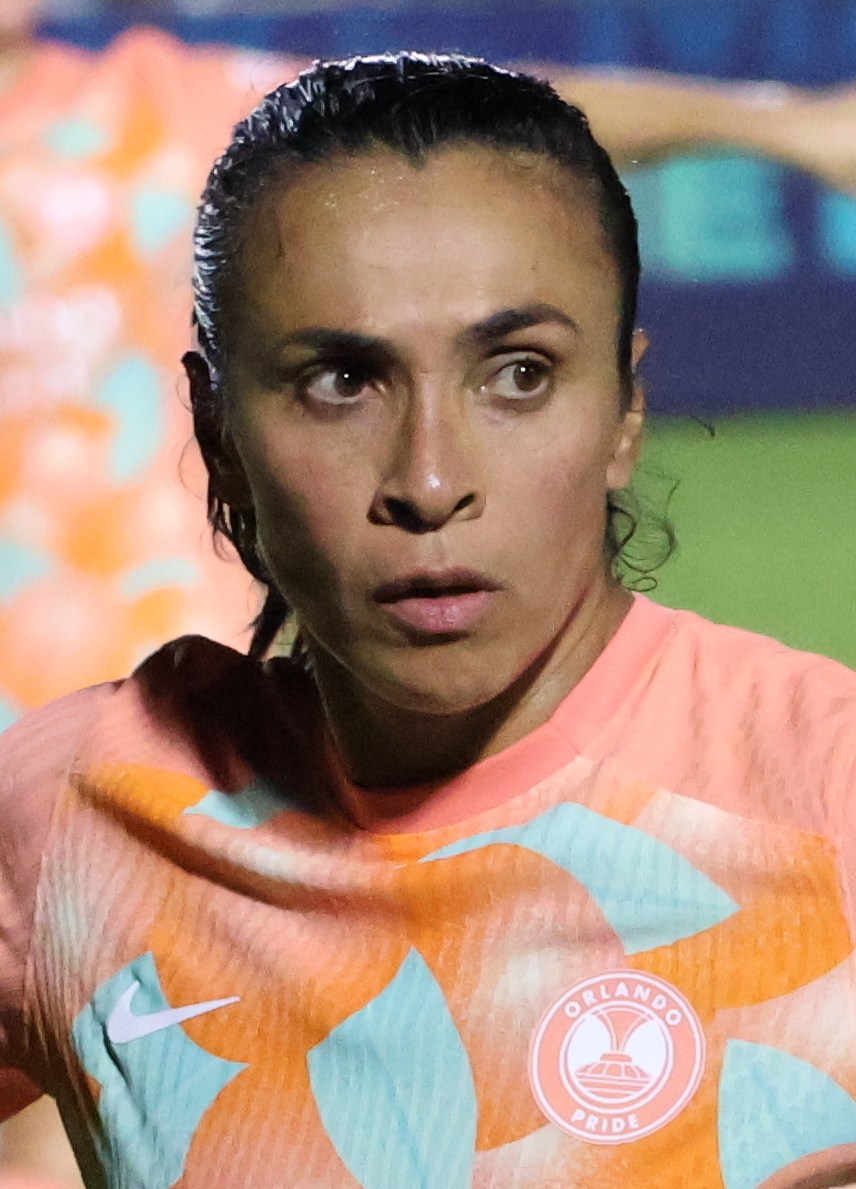
Marta received FIFA’s leading women’s player award five consecutive times from 2006 through 2010 and again in 2018. Her professional work also continued through changing leagues, including a long association with Orlando Pride and the club’s 2024 championship. Club football and international tournaments offer different measures of contribution: one is built across a season, the other concentrated into short periods with a national team.
A public role within women’s football
Marta’s visibility has included appeals for greater opportunity and recognition for women in sport. The force of that public role comes partly from the length and quality of her competitive record. Her legacy should therefore include both the individual moments that attracted spectators and the professional work that helped sustain the game. The attacking creativity is memorable; the career also records the challenges and possibilities of women’s football becoming more firmly established.
Career timeline
Joins Umeå and wins the UEFA Women’s Cup with the Swedish club.
Receives the first of five consecutive FIFA women’s player awards.
Leads Brazil to the World Cup final and wins the Golden Ball and Golden Boot.
Receives a sixth FIFA women’s player award.
Adds Olympic silver with Brazil and a club championship with Orlando Pride.
Selected works & milestones
UEFA Women’s Cup victory
An early major club title with Umeå in Sweden.
World Cup tournament awards
Receives both the Golden Ball and Golden Boot as Brazil reaches the final.
Sixth FIFA player award
A later individual honor following the five-award run of 2006–2010.
Orlando championship season
Contributes to Orlando Pride’s first NWSL championship.
Published 2026-10-31. Sources reviewed for this edition. Independent coverage of public professional activity.