Contents — explore this biography
Istanbul and an early artistic ambitionThe first published novelsThe city as a narrative worldMy Name Is Red and the problem of representationSnow and the Museum of InnocenceNobel recognition and a continuing body of workIstanbul and an early artistic ambition
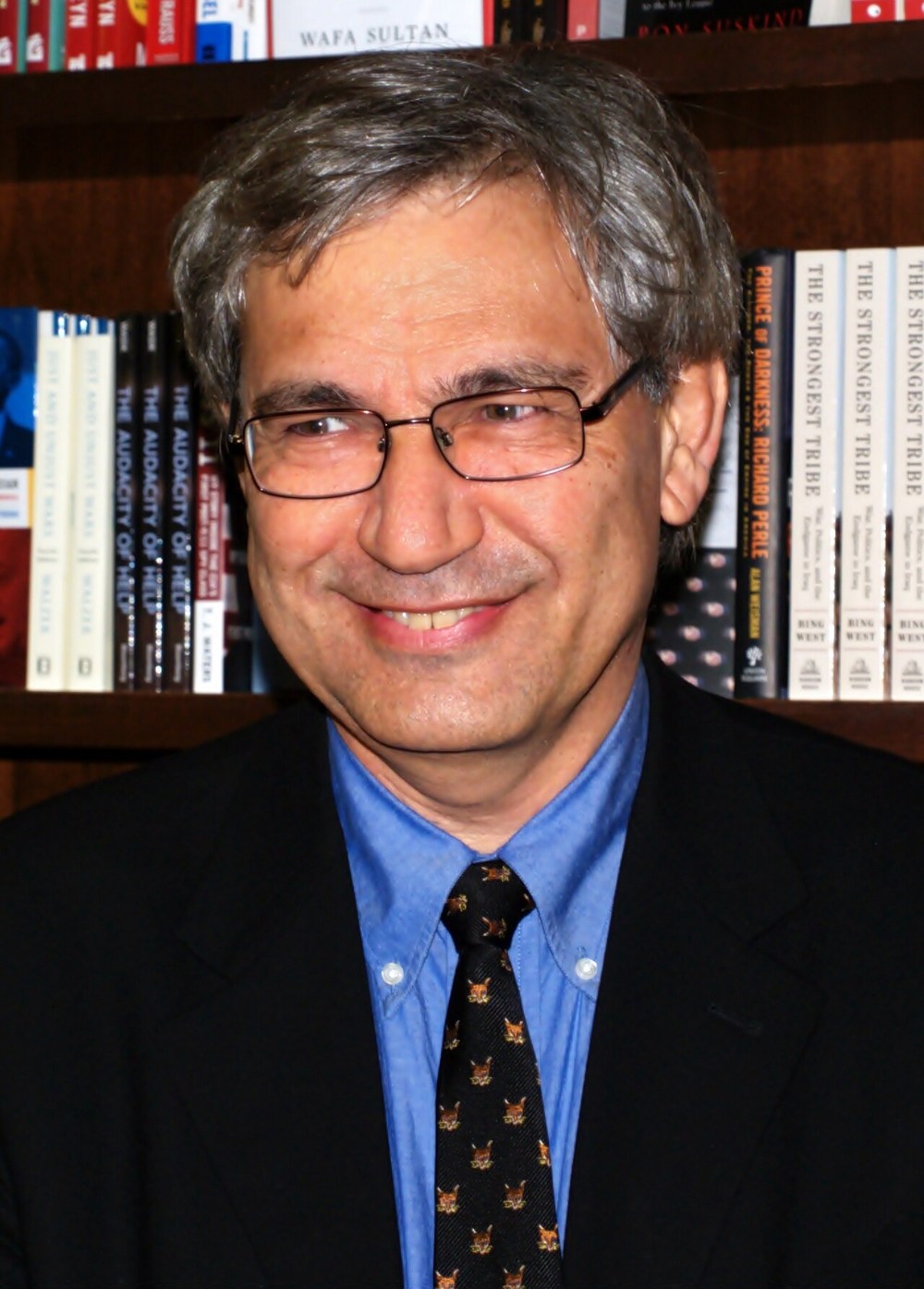
Orhan Pamuk grew up in Istanbul and initially imagined a future connected with painting. He studied architecture before changing direction and later completed a journalism degree. Writing eventually became his principal work. The visual interests did not disappear: images, objects and the act of looking recur throughout his fiction. Istanbul functions both as a physical place and as a changing store of family, cultural and historical memory.
The first published novels
Cevdet Bey and His Sons appeared in 1982, followed by Silent House. The early novels placed families and different generations within changing Turkish social conditions. The White Castle then used a historical setting and an exchange of identities to develop a more concentrated inquiry into selfhood and resemblance. These books established an author interested in how a person’s account of identity depends on inherited stories as well as individual experience.
The city as a narrative world
The Black Book made Istanbul central to a searching, layered story. Familiar streets become connected with uncertain identities, texts and cultural references. Pamuk’s later nonfiction Istanbul: Memories and the City approaches the place more directly through personal recollection and images. The two forms are related but not identical: one makes a city into a fictional maze, while the other considers how an individual’s memories are inseparable from a wider urban atmosphere.
My Name Is Red and the problem of representation
My Name Is Red places a murder mystery within the world of Ottoman miniature painters. Different voices and perspectives make the telling itself part of the subject. The novel asks how artistic conventions relate to belief, individual style and ways of seeing, rather than treating a cultural encounter as an uncomplicated contest between fixed opposites. The historical setting allows personal ambitions to emerge within a changing artistic and intellectual environment.
Snow and the Museum of Innocence
Snow uses a provincial city to explore political and religious tensions through individual lives and conflicting accounts. The Museum of Innocence later connects an intimate story with the accumulation of objects. A real museum associated with the novel opened in Istanbul in 2012. The project gives material form to an interest present across the fiction: ordinary things can acquire emotional meaning because of the stories, repetitions and losses attached to them.
Nobel recognition and a continuing body of work
Pamuk received the Nobel Prize in Literature in 2006. His fiction and essays have continued to examine the relation between personal experience, cultural inheritance and public life. The work resists a simple separation between a private romantic story and a historical argument. Characters inhabit both at once, interpreting themselves through a city, images and narratives that existed before them but are continually changed by the way they are remembered.
Career timeline
Publishes Cevdet Bey and His Sons.
Publishes The Black Book in Turkish.
Publishes My Name Is Red in Turkish.
Receives the Nobel Prize in Literature.
The Museum of Innocence opens in Istanbul.
Selected works & milestones
The White Castle
A historical novel exploring resemblance, identity and the stories people tell about themselves.
My Name Is Red
A multi-voiced historical mystery set among Ottoman miniature painters.
Snow
A novel connecting individual choices with political and religious conflict.
The Museum of Innocence
A novel about attachment and objects that also led to a real museum project.
- Orhan Pamuk — biographical reference and cited sources
- Nobel Prize — 2006 award announcement
- Official author biography
Published 2026-10-31. Sources reviewed for this edition. Independent coverage of public professional activity.