Contents — explore this biography
Ogidi, education and competing narrativesThings Fall ApartA wider fictional historyEditing and the literary infrastructureWar, criticism and teachingRecognition and the continuing argumentOgidi, education and competing narratives
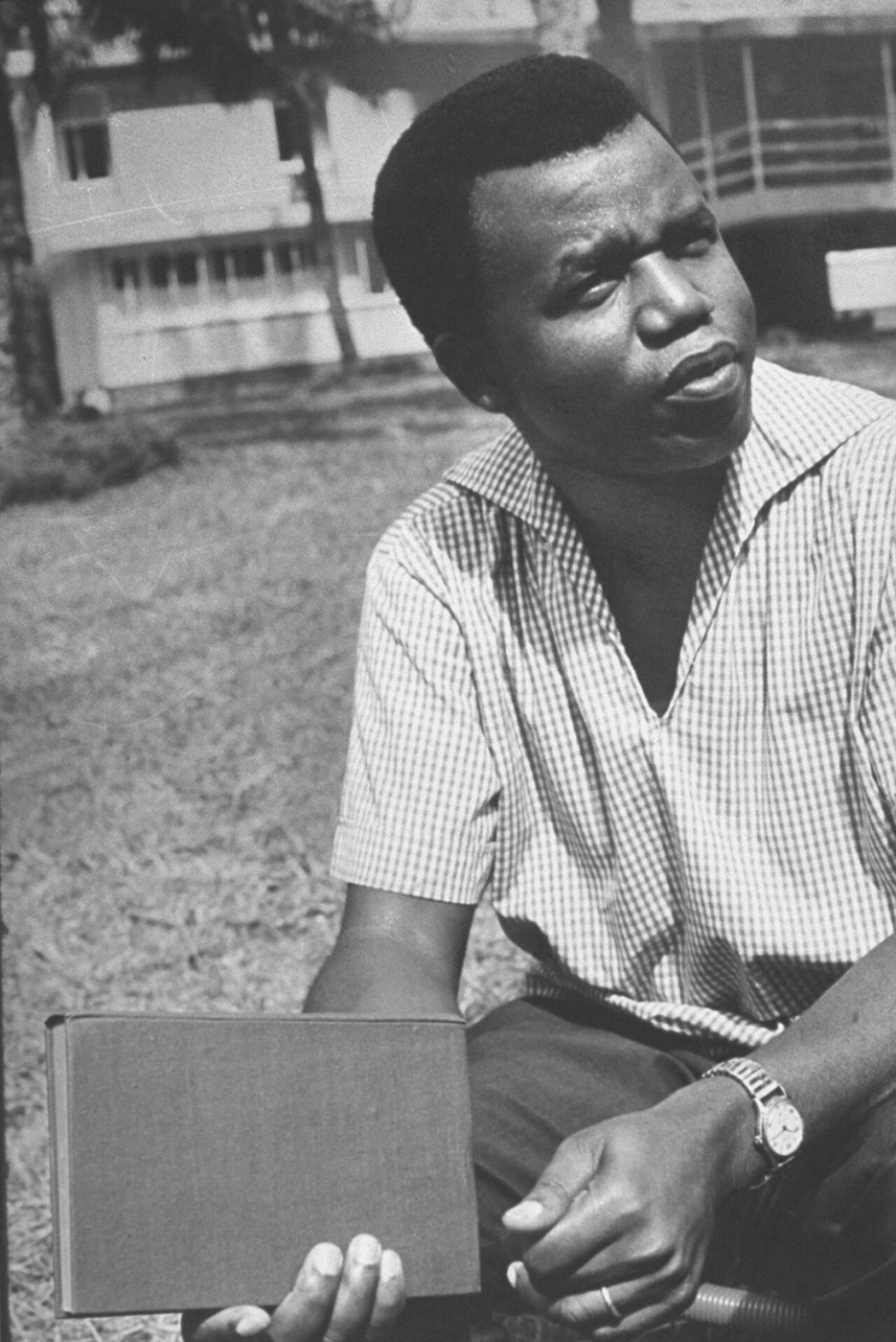
Achebe was born in Ogidi in 1930 and grew up amid Igbo cultural traditions and Christian missionary influence. He studied at University College, Ibadan, before working in broadcasting. Reading accounts of Africa by European writers sharpened his concern about who held the authority to describe a place. His literary formation drew from oral narrative, proverbs and English-language education, turning several traditions into resources for an independent fictional voice.
Things Fall Apart
Published in 1958, Things Fall Apart follows Okonkwo within an Igbo community facing internal tensions and colonial intrusion. Its power comes partly from presenting social institutions and conflicts before the arrival of a European explanatory frame. The community is neither a simple idyll nor an empty background for another civilization’s adventure. Readers encounter a society with its own arguments, hierarchies, beliefs and capacity for change.
A wider fictional history
No Longer at Ease, published in 1960, examines education, administration and compromised expectations in a different historical setting. Arrow of God, published in 1964, returns to religious authority and colonial pressure. A Man of the People and Anthills of the Savannah investigate political ambition and the failure of leadership. The changing settings allow Achebe to ask how responsibility is negotiated across colonial and postcolonial arrangements of power.
Editing and the literary infrastructure
Achebe helped shape the African Writers Series as its founding editorial adviser, beginning in 1962. That publishing role mattered beyond his own bibliography: books require editors, distribution and routes into classrooms as well as authors. His influence therefore includes an institutional contribution to the circulation of African writing. The series made a range of voices available, without implying that any one writer could represent an entire continent’s languages and literary traditions.
War, criticism and teaching
The Nigerian civil war and the experience of Biafra entered his poetry, essays and later memoir. His criticism questioned racial assumptions in established literary works, most famously in his discussion of Joseph Conrad. He taught at several institutions and joined Brown University in 2009. The public intellectual and the novelist remained connected: arguments about representation and power developed through teaching, historical experience and the detailed construction of fictional lives.
Recognition and the continuing argument
Achebe received the Man Booker International Prize in 2007 and died in 2013. His work helped change both the production of literature and the terms on which it is read internationally. Later writers, including Chimamanda Ngozi Adichie, entered a field his novels and editorial activity had helped reshape. His legacy is not a demand to replace one uniform story with another, but an insistence that cultural authority must make room for complexity and multiple perspectives.
Career timeline
Publishes the first novel, placing Igbo community life at its centre.
Begins a major editorial role in the international circulation of African writing.
Publishes the novel of religious leadership and colonial pressure.
Publishes a later novel examining power and responsibility.
Receives recognition for his overall contribution to fiction.
Selected works & milestones
African Writers Series
Begins a major editorial role in the international circulation of African writing.
Arrow of God
Publishes the novel of religious leadership and colonial pressure.
Anthills of the Savannah
Publishes a later novel examining power and responsibility.
Man Booker International Prize
Receives recognition for his overall contribution to fiction.
- Brown University — life, teaching and literary contribution
- Booker Prize — author and award record
- Poetry Foundation — poetry, criticism and bibliography
- Chinua Achebe — biographical reference and bibliography
Published 2026-10-31. Sources reviewed for this edition. Independent coverage of public professional activity.