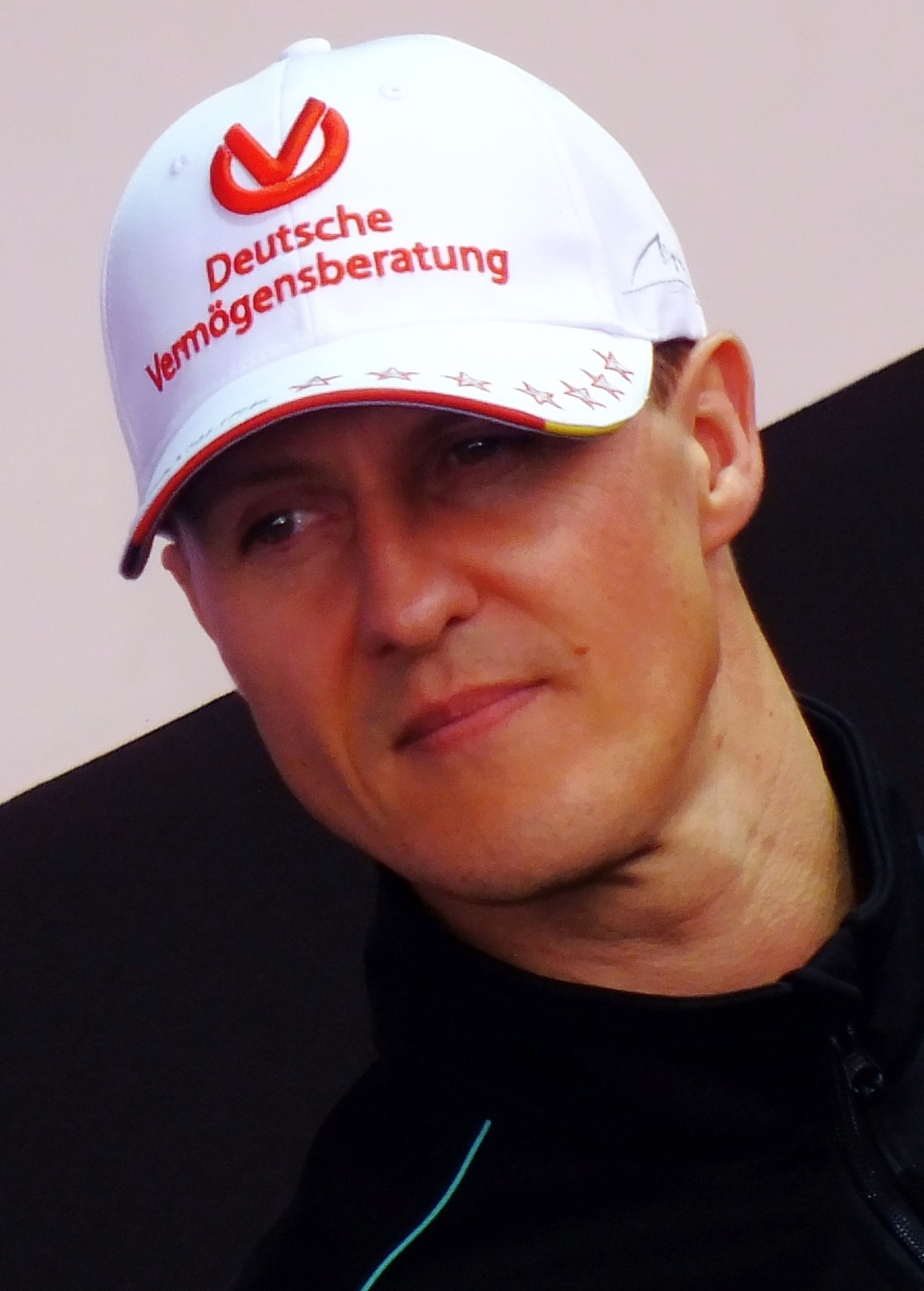
Contents — explore this biography
Karting, junior racing and a sudden Formula 1 arrivalBenetton titles and the competitive edgeFerrari and the construction of a championship teamRecords, discipline and difficult judgmentsTwo retirements and the enduring racing legacyKarting, junior racing and a sudden Formula 1 arrival
Michael Schumacher was born in Germany in 1969 and developed through karting before progressing into professional motor racing. His junior career included the German Formula Three championship and sportscar competition with Mercedes. In 1991 he made his Formula 1 debut with Jordan at the Belgian Grand Prix, attracting attention through his qualifying performance at Spa. A move to Benetton followed quickly. That progression joined an established technical education through racing with the sudden demands of the highest international category. His first Grand Prix victory came at Spa in 1992, beginning a long association with the demanding Belgian circuit.
Benetton titles and the competitive edge
Schumacher won the drivers’ world championship with Benetton in 1994 and again in 1995. The first championship was accompanied by controversy, including the collision with Damon Hill at the deciding Australian Grand Prix. His second title established that the earlier result was not an isolated success. The period also revealed the combination of speed, physical preparation and detailed work with engineers that became central to his reputation. A complete account retains the disputed incidents alongside the performance record. Treating those elements together makes it possible to understand both the scale of his ability and the competitive conduct that generated criticism.
Ferrari and the construction of a championship team
He joined Ferrari in 1996, beginning a project that required sustained development before it delivered the drivers’ championship. Schumacher won the title in 2000, Ferrari’s first drivers’ crown since 1979, and retained it in each of the next four seasons. The five consecutive championships from 2000 through 2004 became the defining sequence of his career. The achievement combined his driving with technical leadership, engineering development and coordinated race operations. His contribution was therefore inseparable from an organization capable of converting repeated improvements into reliable performance, while his feedback and preparation helped shape the conditions in which that organization worked.
Records, discipline and difficult judgments
His Formula 1 record includes seven world championships and ninety-one Grand Prix victories. Those figures describe an extraordinary competitive span, but they do not eliminate the need to examine particular seasons and decisions. In 1997 he was removed from the championship classification following the final-round collision with Jacques Villeneuve. The incident remains part of the historical assessment of his career. At the same time, his most successful Ferrari seasons demonstrated remarkable consistency, race pace and attention to preparation. The biography of a dominant athlete becomes more precise when statistical achievement and the rules governing competition are considered within the same account.
Two retirements and the enduring racing legacy
Schumacher first retired from Formula 1 after the 2006 season, then returned with Mercedes in 2010. His three-season comeback ended in 2012 and did not reproduce the championship success of his earlier career. It nevertheless formed part of Mercedes’ development as a returning works team and extended his experience into another generation of cars and rivals. His sporting legacy continues through official archives, championship cars and the standards of preparation associated with his name. Those public records show how his influence extended beyond individual lap times into the organization of a team and the preparation expected of a championship driver. They also preserve the differences between the dominant Ferrari period and the more demanding circumstances of his later return.
Career timeline
Born in Germany.
Made his Formula 1 debut at the Belgian Grand Prix.
Won consecutive drivers’ championships with Benetton.
Won five consecutive championships with Ferrari.
Completed his final Formula 1 season after returning with Mercedes in 2010.
Selected works & milestones
First Grand Prix victory
Won the Belgian Grand Prix at Spa.
Benetton world championships
Secured his first two drivers’ titles.
Ferrari championship sequence
Won five consecutive drivers’ championships.
Formula 1 career record
Finished with seven world titles and ninety-one Grand Prix victories.
- Formula 1 — Michael Schumacher Hall of Fame
- Michael Schumacher — official racing archive
- Michael Schumacher — official 2004 season record
- FIA — career recognition
Published 2026-11-09. Sources reviewed for this edition. Independent coverage of public professional activity.