Contents — explore this biography
Canada, reading and a varied literary beginningEarly novels and Canadian perspectivesThe Handmaid’s Tale and the problem of powerHistory, memory and narrative uncertaintySpeculative fiction and return to GileadAn author across formsCanada, reading and a varied literary beginning
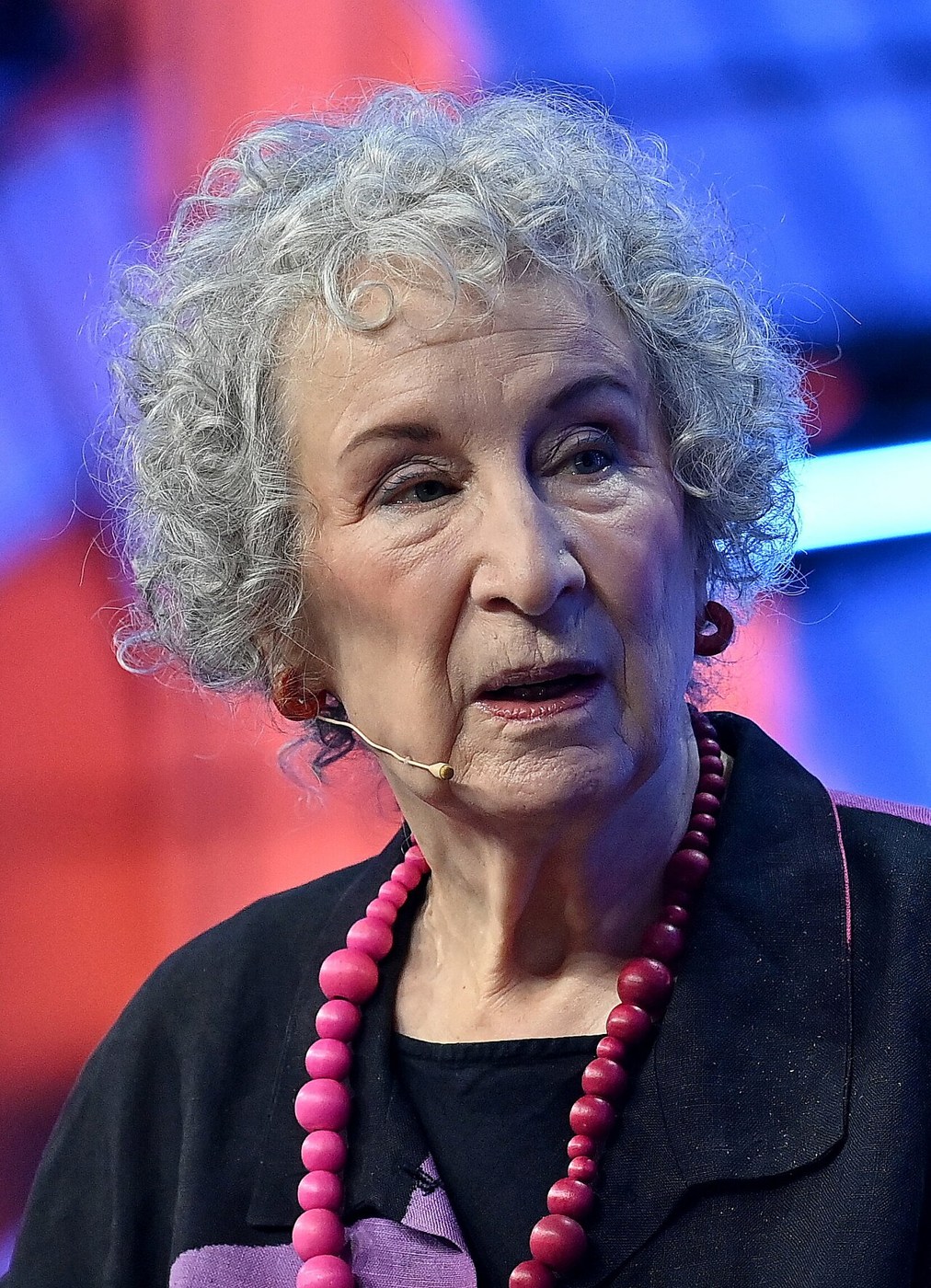
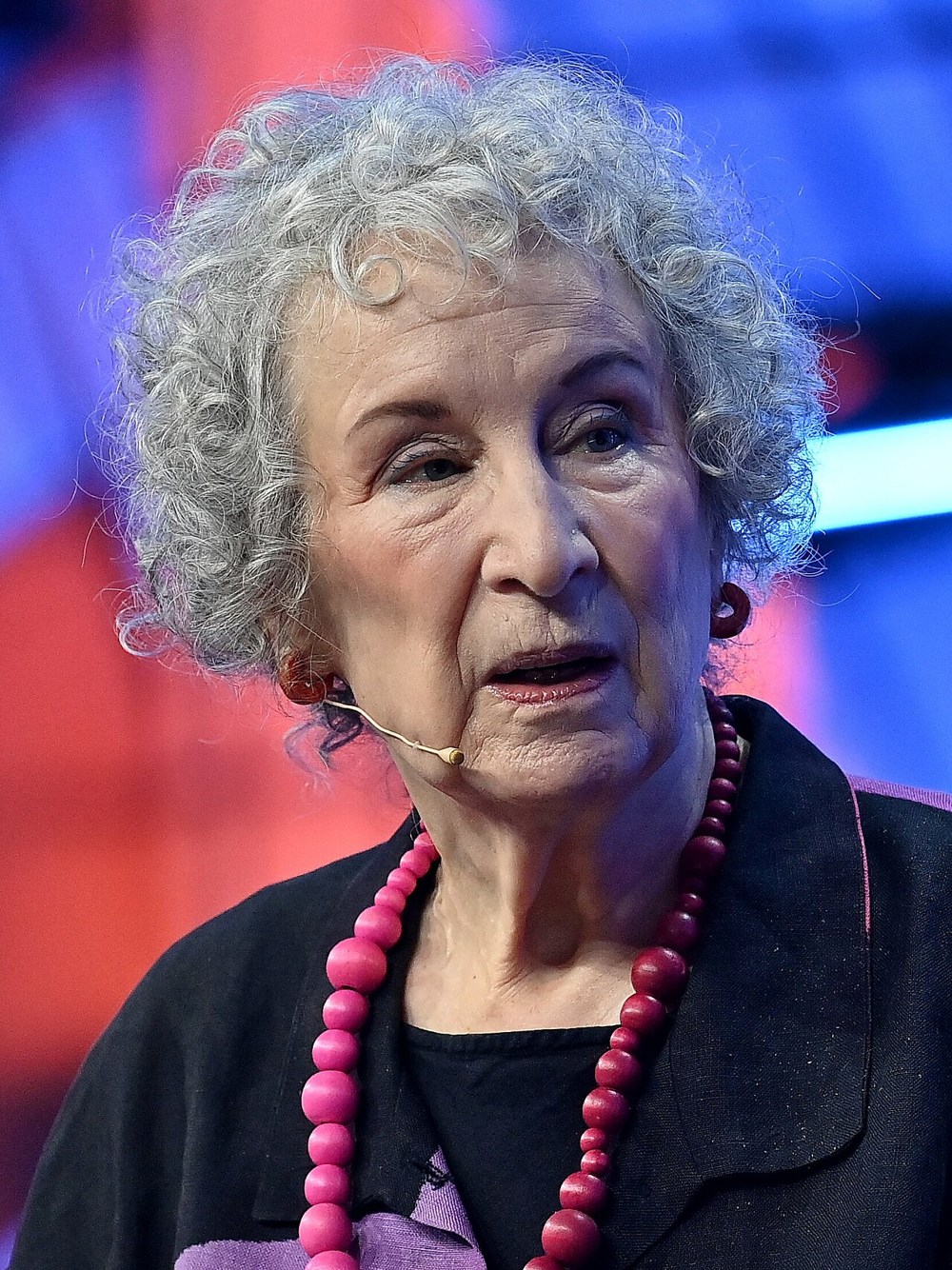
Margaret Atwood was born in Ottawa and spent part of her childhood in environments shaped by her father’s work as an entomologist. She studied at the University of Toronto and at Radcliffe College. Poetry was central to her early publishing life, beginning with Double Persephone in 1961. The later international reputation as a novelist should not obscure this foundation in language, compressed imagery and an interest in how stories are formed.
Early novels and Canadian perspectives
The Edible Woman and Surfacing established Atwood’s fiction before The Handmaid’s Tale. The books approach identity through bodily experience, social expectations and an uncertain relation to the surrounding world. Her critical writing also considered Canadian literature and cultural self-definition. These concerns connect the early work to later novels without making the career a single argument repeated in different plots: changes of narrator and form continually alter the reader’s position.
The Handmaid’s Tale and the problem of power
Published in 1985, The Handmaid’s Tale imagines a regime that organizes women’s lives through coercive social roles. Its first-person narrative makes political control visible through restricted language, memory and everyday conduct. The novel’s force does not depend only on the invention of an oppressive system. It also asks how an individual tells a story within that system, including what cannot be known and what survives only through recollection.
History, memory and narrative uncertainty
Alias Grace approaches a historical crime through competing accounts, while The Blind Assassin builds a layered structure around memory and authorship. The latter won the Booker Prize in 2000. These novels reward attention to who is speaking and how a version of events is assembled. They show a writer interested not only in the events themselves but in the authority claimed by the person presenting them to a reader.
Speculative fiction and return to Gilead
Oryx and Crake began the sequence later known as the MaddAddam trilogy, bringing biotechnology, commerce and environmental vulnerability into speculative fiction. The Testaments returned to the world of The Handmaid’s Tale in 2019 and shared that year’s Booker Prize. Its multiple perspectives create a different structure from the earlier novel. Returning to a fictional setting therefore becomes an opportunity to change the narrative questions rather than merely continue a familiar voice.
An author across forms
Atwood’s work includes poetry, essays, stories and children’s writing as well as novels. Television adaptations have enlarged her public audience, but the books retain formal features that a screen version handles differently. Her literary significance combines strong storytelling with attention to the mechanisms of storytelling itself. Readers encounter social systems and intimate relationships together, repeatedly asked to examine what a narrator reveals, conceals or may not fully understand.
Career timeline
Publishes the poetry collection Double Persephone.
Publishes her first novel, The Edible Woman.
Publishes The Handmaid’s Tale.
Wins the Booker Prize for The Blind Assassin.
Publishes The Testaments, a joint winner of the Booker Prize.
Selected works & milestones
The Handmaid’s Tale
A dystopian narrative about coercion, memory and the survival of a personal voice.
Alias Grace
A historical novel built around crime, testimony and competing interpretations.
The Blind Assassin
A layered novel of memory and authorship recognized with the Booker Prize.
The Testaments
A return to Gilead through a new set of narrators and perspectives.
- Margaret Atwood — biographical reference and cited sources
- Official author biography
- Library of Congress — author biography
- Booker Prize — The Testaments
Published 2026-10-31. Sources reviewed for this edition. Independent coverage of public professional activity.