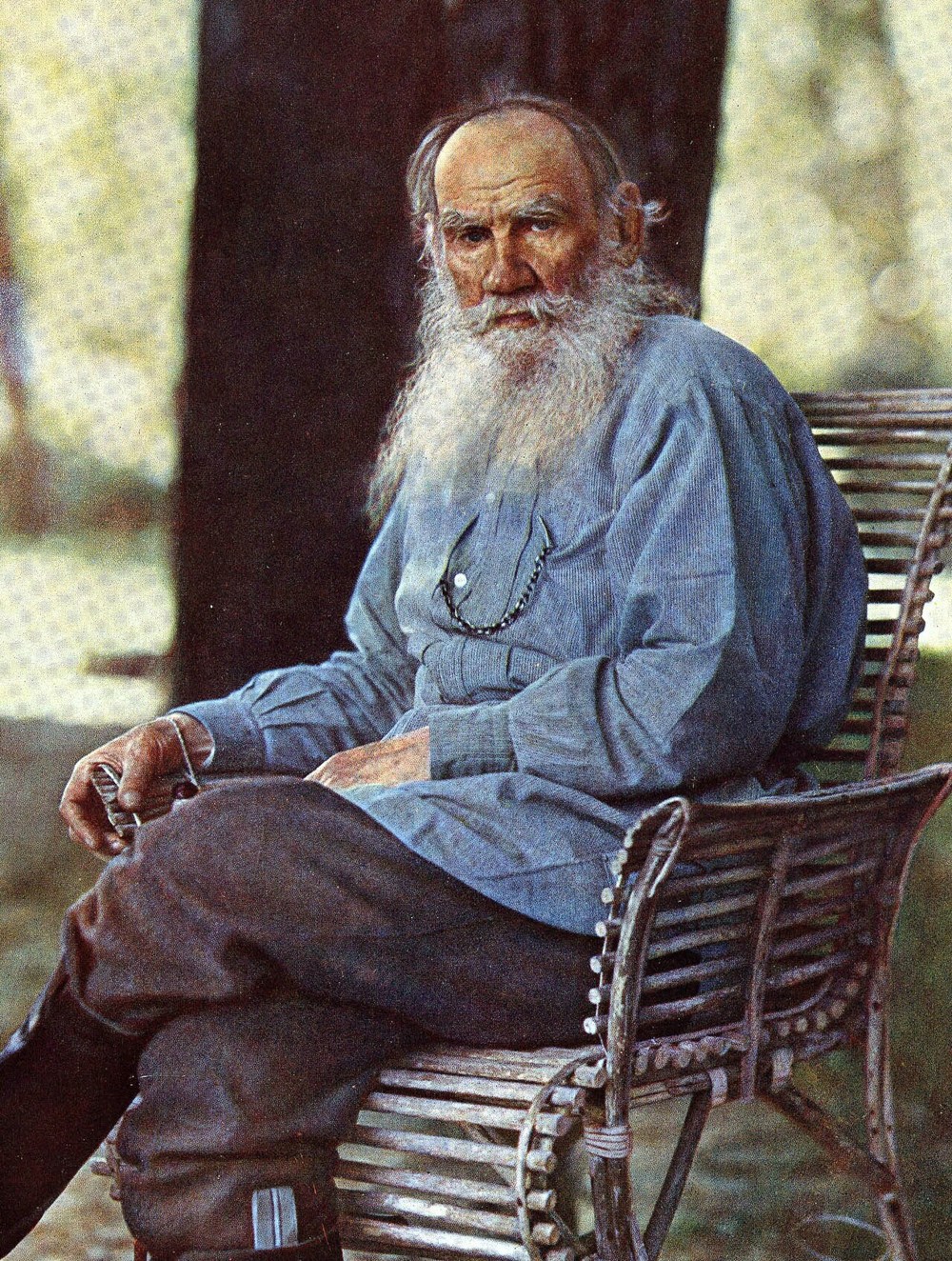
Contents — explore this biography
An aristocratic beginningSoldiering and early publicationWar and Peace and historical scaleAnna Karenina and social judgmentA crisis of belief and later writingArchives and continuing influenceAn aristocratic beginning
Tolstoy was born at Yasnaya Polyana in 1828 into a landed aristocratic family. This entry uses 9 September in the Gregorian calendar, equivalent to 28 August in the Julian calendar then used in Russia. Orphaned while young, he experienced education, family guardianship and estate life before entering university at Kazan. He left without a degree, and his subsequent formation came through reading, observation and experience.
Soldiering and early publication
Military service in the Caucasus and during the Crimean War gave Tolstoy material for writing about danger, self-image and the distance between heroic language and lived events. Childhood appeared in 1852, followed by further autobiographical fiction and the Sevastopol sketches. These early works already connect individual perception with social judgment, while resisting the assumption that an autobiographical narrative is a transparent factual record.
War and Peace and historical scale
War and Peace developed during the 1860s, combining family experience with the upheavals of the Napoleonic wars. Its battles and domestic scenes repeatedly undermine a simple account of history as the intention of commanding individuals. Pierre, Andrei and Natasha encounter events that exceed their plans. The novel’s formal range includes philosophical argument as well as narrative, making it more than a panoramic military story.
Anna Karenina and social judgment
Serialized in the 1870s, Anna Karenina juxtaposes Anna’s relationship with Vronsky and Levin’s search for meaningful work and family life. Marriage, desire and reputation operate through unequal social expectations. Tolstoy’s attention to small gestures and shifting consciousness gives moral situations their difficulty. The book does not become adequately explained by extracting a single lesson about romance or treating a character as merely a vehicle for the author.
A crisis of belief and later writing
In later life Tolstoy reassessed property, established religion and violence, developing an influential account of Christian ethics and nonresistance. These convictions appear in essays as well as fiction, including The Death of Ivan Ilyich and Resurrection. His ideas could challenge institutions and family arrangements alike. The tensions between his social position, household life and stated principles remain part of the biography rather than exceptions to be hidden.
Archives and continuing influence
Tolstoy died in 1910 after leaving Yasnaya Polyana; the estate later became a museum. The survival of manuscripts and household records also reflects work by his wife Sophia and other family members. His legacy connects psychological narration with arguments about authority and conscience. Those strands influenced very different readers, but their importance should not turn every fictional scene into a direct expression of a single late-life doctrine.
Career timeline
His early autobiographical fiction appears in print.
Serialization begins for the novel of families and the Napoleonic era.
Serialization of the novel reaches its conclusion.
Publishes the concentrated story of mortality and self-examination.
Publishes the late novel examining institutions, punishment and responsibility.
Selected works & milestones
War and Peace
Serialization begins for the novel of families and the Napoleonic era.
Anna Karenina
Serialization of the novel reaches its conclusion.
The Death of Ivan Ilyich
Publishes the concentrated story of mortality and self-examination.
Resurrection
Publishes the late novel examining institutions, punishment and responsibility.
- Yasnaya Polyana Museum — estate, family and archive history
- Tolstoy literary portal — biographical chronology
- Leo Tolstoy Archive — life chronology
- Leo Tolstoy — biographical reference and bibliography
Published 2026-10-31. Sources reviewed for this edition. Independent coverage of public professional activity.