Contents — explore this biography
Moscow and the path to writingImprisonment and returnAn underground voiceCrime, punishment and competing explanationsWork, partnership and the final novelReception and an unsettled legacyMoscow and the path to writing
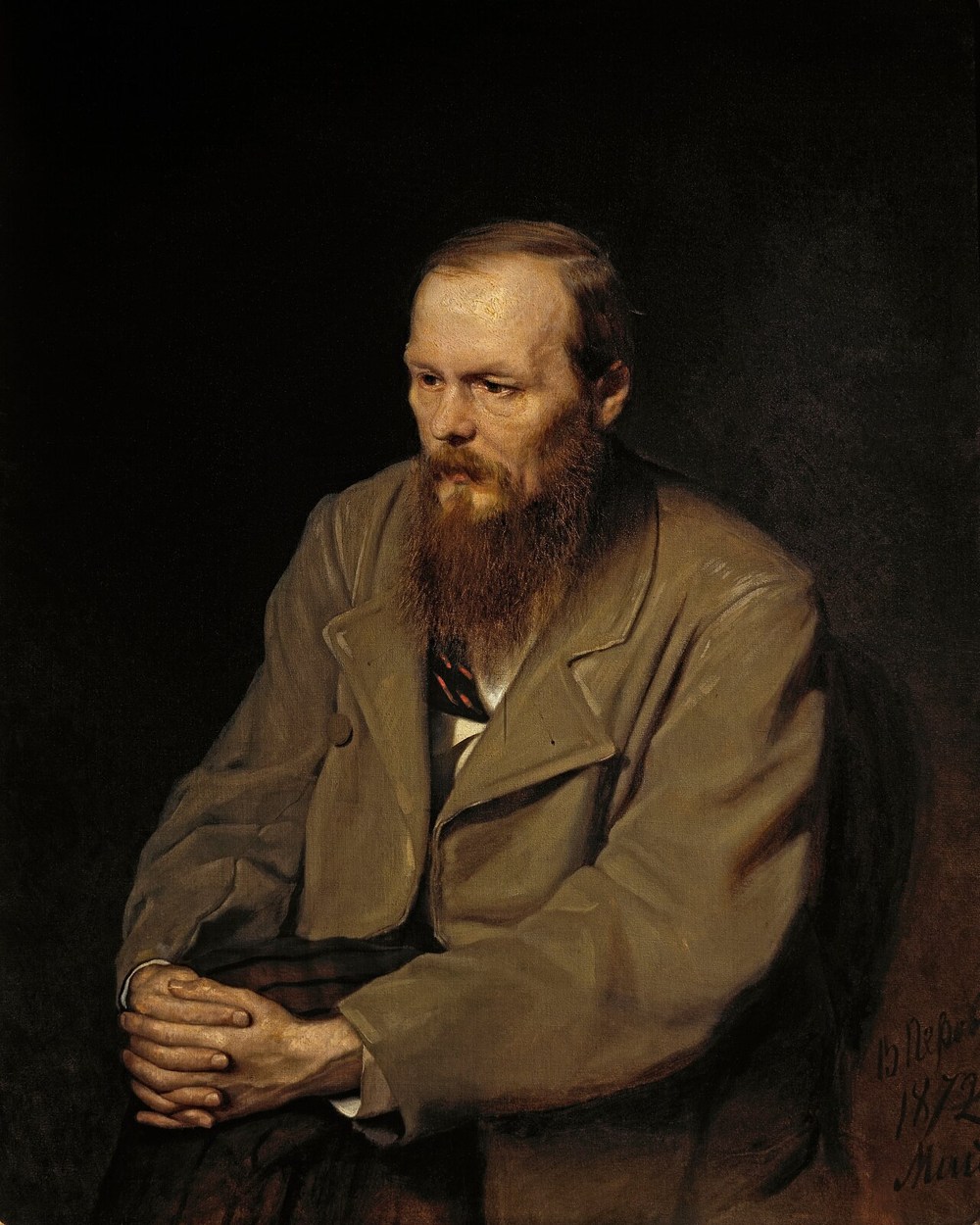
Dostoevsky was born in Moscow in 1821. The Gregorian date used here, 11 November, corresponds to 30 October in the Julian calendar of contemporary Russian records. He trained at the military engineering school in Saint Petersburg before committing himself to literature. Poor Folk, published in 1846, brought attention to a young writer interested in vulnerable people and the injuries produced by social hierarchy.
Imprisonment and return
His involvement in the Petrashevsky circle led to arrest in 1849. A death sentence was commuted after a staged execution, followed by penal imprisonment in Siberia and military service. This experience later informed Notes from a Dead House. It marked a major biographical rupture, but an account of the novels still requires attention to their form, intellectual arguments and imaginative construction rather than reducing everything to a prison experience.
An underground voice
Notes from Underground appeared in 1864, presenting a narrator whose reasoning repeatedly turns against itself. The work challenges neat explanations of human behaviour as rational self-interest. Its hostility, self-exposure and contradictory address to an imagined audience are part of the literary design. The narrator’s claims cannot simply be accepted as Dostoevsky’s own philosophical conclusions, because the text makes the reliability of that voice a central question.
Crime, punishment and competing explanations
Crime and Punishment, serialized in 1866, follows Raskolnikov’s murder and the efforts to explain, conceal and confront it. Money, humiliation, ideology and compassion remain entangled. Later novels including The Idiot and Demons widen the conflicts among conviction, social action and destructive certainty. Dostoevsky gives ideas consequences through encounters among people, rather than setting out an abstract argument with characters attached as illustrations.
Work, partnership and the final novel
Financial pressure, journalism and demanding publication schedules accompanied his career. Anna Grigoryevna Snitkina first worked with him as a stenographer and became his wife, later playing a major role in the management and preservation of his work. The Brothers Karamazov, completed in 1880, joins a family murder plot with arguments about faith, judgment, freedom and the responsibility one person bears toward another.
Reception and an unsettled legacy
Dostoevsky died in Saint Petersburg in 1881. His fiction influenced novelists, philosophers and critics interested in conscience and divided identity. His public journalism also contains nationalist and prejudiced positions that should be distinguished from uncritical admiration of the novels. A serious literary biography can recognize the force of his artistic achievement while preserving the differences among his narrators, characters, political commitments and later interpreters.
Career timeline
His debut novel establishes him within Russian literary discussion.
The prison narrative develops from his Siberian experience.
Publishes the challenging first-person examination of freedom and resentment.
The novel appears in serialization.
Completes the final major novel before his death the next year.
Selected works & milestones
Notes from a Dead House
The prison narrative develops from his Siberian experience.
Notes from Underground
Publishes the challenging first-person examination of freedom and resentment.
Crime and Punishment
The novel appears in serialization.
The Brothers Karamazov
Completes the final major novel before his death the next year.
- Dostoevsky Museum — chronology of life and work
- Project Gutenberg — Crime and Punishment, primary literary text
- Project Gutenberg — Notes from the Underground, primary literary text
- Fyodor Dostoevsky — biographical reference and bibliography
Published 2026-10-31. Sources reviewed for this edition. Independent coverage of public professional activity.