Contents — explore this biography
An international childhood and a direct route to the NBABuilding a championship team in Los AngelesScoring achievement and a second championship eraOlympic competition, longevity and retirementDeath, remembrance and the meaning of influenceAn international childhood and a direct route to the NBA
Kobe Bryant was born in Philadelphia in 1978 and spent part of his childhood in Italy, where his father played professional basketball. Returning to the United States, he developed into a leading high-school player at Lower Merion in Pennsylvania. He entered the NBA directly from high school in 1996, joining the Los Angeles Lakers after being selected by Charlotte and traded. This route meant learning the professional game while still a teenager. His development involved adapting to stronger opponents, a demanding schedule and a team whose established players had immediate championship ambitions.
Building a championship team in Los Angeles
Bryant became a central figure in the Lakers’ championship teams of 2000, 2001 and 2002 alongside Shaquille O’Neal. Their partnership combined contrasting strengths: a dominant interior presence and an increasingly accomplished perimeter scorer. Bryant’s importance also extended to defence, preparation and the willingness to take difficult shots when possessions became restricted. These titles were collective achievements shaped by teammates and coaching, including Phil Jackson’s system. Understanding the period requires attention to both the productive basketball relationship and the tensions that accompanied the concentration of talent and responsibility on a highly visible team.
Scoring achievement and a second championship era
An 81-point performance against Toronto in January 2006 became one of Bryant’s defining individual achievements. Yet his career cannot be reduced to an exceptional scoring night. He received the NBA’s regular-season Most Valuable Player award for 2007–08 and later led the Lakers to championships in 2009 and 2010, earning Finals MVP recognition in both years. The later teams, including Pau Gasol, required a different distribution of responsibility from the earlier championship group. Bryant’s footwork, post play and shot creation allowed him to operate across several areas of the court rather than depending only on speed or long-range shooting.
Olympic competition, longevity and retirement
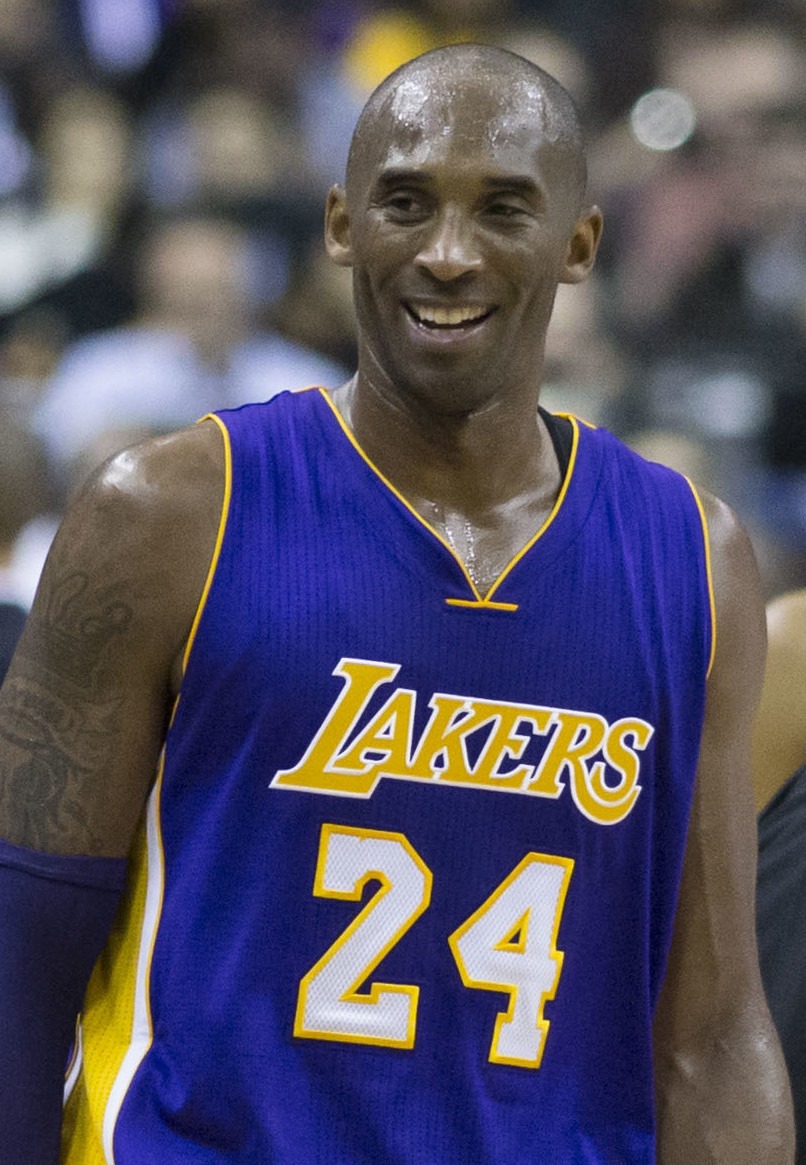
Bryant won Olympic gold with the United States in Beijing in 2008 and London in 2012. International competition placed his experience within a roster of other leading players and required a role different from carrying a club’s scoring burden every night. He spent his entire twenty-season NBA playing career with the Lakers, with injuries affecting the final phase. His last game in April 2016 brought sixty points against Utah, an unusually theatrical conclusion to a long professional career. The Lakers subsequently retired both numbers he had worn, eight and twenty-four, recognizing two connected periods of his playing identity.
Death, remembrance and the meaning of influence
Bryant died in a helicopter crash in January 2020 alongside his daughter Gianna and seven other people. He was elected to the Naismith Memorial Basketball Hall of Fame’s class of 2020, with the induction ceremony held in 2021. His continuing influence is visible in players’ study of movement, shooting technique and preparation. The public language of relentless work associated with him is most useful when connected to the specific practice behind a skill. It should not obscure the importance of physical limits, collaboration and circumstance in a career whose achievements depended on far more than determination alone.
Career timeline
Born in Philadelphia.
Entered the NBA and joined the Los Angeles Lakers.
Won regular-season MVP and Olympic gold.
Retired after twenty NBA seasons with the Lakers.
Died in a helicopter crash; elected to the Hall of Fame class of 2020.
Selected works & milestones
Three consecutive NBA championships
Won three titles with the Lakers during the Shaquille O’Neal era.
81-point game
Scored 81 against Toronto on January 22.
NBA championships and Finals MVP awards
Won his fourth and fifth NBA titles.
Olympic gold medals
Represented the United States on two gold-medal teams.
- Naismith Memorial Basketball Hall of Fame — Kobe Bryant
- USA Basketball — Kobe Bryant
- NBA — jersey retirement by the numbers
- NBA — Most Valuable Player award history
- Kobe Bryant — official memorial
Published 2026-11-07. Sources reviewed for this edition. Independent coverage of public professional activity.