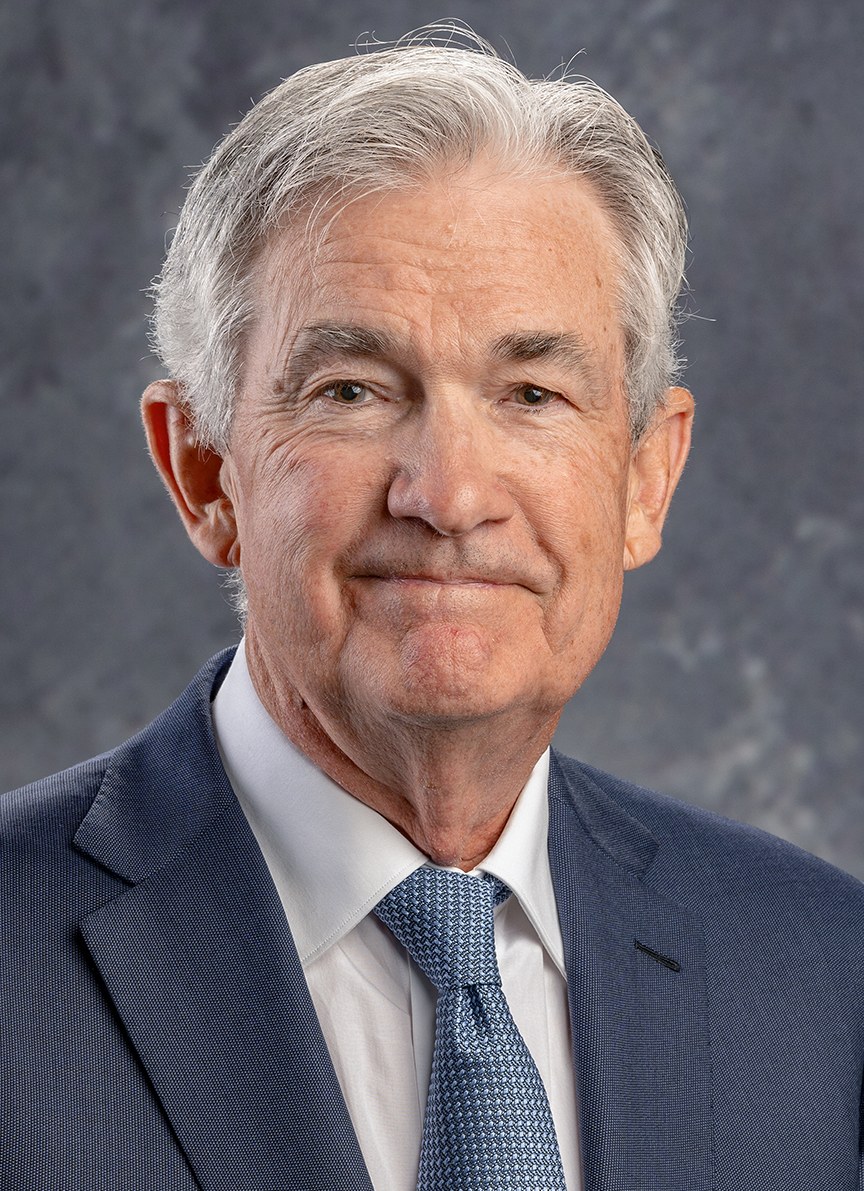
Contents — explore this biography
Law, finance and public serviceTreasury experience and the Federal Reserve BoardThe extraordinary disruption of 2020Inflation, tightening and public explanationA completed chairmanship and an institutional legacyLaw, finance and public service
Jerome Powell was born in Washington, D.C., in 1953 and studied politics at Princeton before earning a law degree at Georgetown. His route into central banking differed from that of many academic economists: it passed through legal practice, investment banking and public administration. This combination gave him direct exposure to financial institutions and the practical organization of markets. It also shaped a career in which legal authority, institutional relationships and the functioning of credit markets were recurring concerns rather than purely theoretical questions.
Treasury experience and the Federal Reserve Board
Powell served in the United States Treasury under President George H. W. Bush, working on financial institutions and government debt markets. He later became a partner at the Carlyle Group and a visiting scholar at the Bipartisan Policy Center. He joined the Federal Reserve Board in 2012 and became chair in February 2018. The chair leads an institution with a statutory mandate and a committee-based policy process; interest-rate decisions are made by the Federal Open Market Committee, rather than by one person acting alone.
The extraordinary disruption of 2020
The pandemic confronted the central bank with a sudden contraction in economic activity and severe market stress. During Powell’s chairmanship, the Fed lowered its policy rate, purchased securities and established emergency lending facilities, several with Treasury support. These measures addressed different problems: monetary accommodation supported aggregate activity, while market facilities sought to keep credit channels functioning. Powell’s congressional testimony also distinguished central-bank lending from government spending, an important boundary when interpreting the scale and purpose of the response.
Inflation, tightening and public explanation
The subsequent inflation surge required a substantial change in policy. The Fed initially expected many pandemic-related price pressures to fade, but inflation became broader and more persistent. Beginning in March 2022, the FOMC raised rates rapidly and later reduced securities holdings. Powell’s public speeches emphasized the costs of allowing high inflation to become established, while acknowledging that restoring price stability could weaken growth and employment. The episode illustrates the difficulty of adapting policy when supply disruptions, demand and expectations change together.
A completed chairmanship and an institutional legacy
Official Federal Reserve records identify Powell’s chairmanship as running from February 5, 2018, to May 22, 2026. His separate appointment to the Board was for a term ending in January 2028, a distinction between the chair’s office and a governor’s seat. His record encompasses emergency stabilization, the subsequent inflation response and extensive public communication. Assessing that record requires separating individual leadership from committee decisions, fiscal policy and global conditions; no single official controls all the forces that determine an economy’s path.
Career timeline
Born in Washington, D.C.
Joined the Federal Reserve Board of Governors.
Became Federal Reserve chair.
Led the institution through the pandemic emergency response.
Completed his chairmanship on May 22.
Selected works & milestones
Federal Reserve chairmanship
Leadership across a pandemic, recovery and inflation cycle.
Emergency lending response
Facilities sought to support credit and market functioning.
Monetary tightening
The FOMC began a rapid series of interest-rate increases.
Chairmanship transition
Official records distinguish the chair term from Board membership.
- Federal Reserve — official biography
- Federal Reserve — pandemic response testimony
- Federal Reserve — monetary policy and price stability
- St. Louis Fed — chair timeline
Published 2026-11-05. Sources reviewed for this edition. Independent coverage of public professional activity.