Contents — explore this biography
A childhood between countriesChile, displacement and the first novelFamily history and the extraordinaryWomen, migration and expanding fictional settingsMemoir and the place of personal lossA public literary lifeA childhood between countries
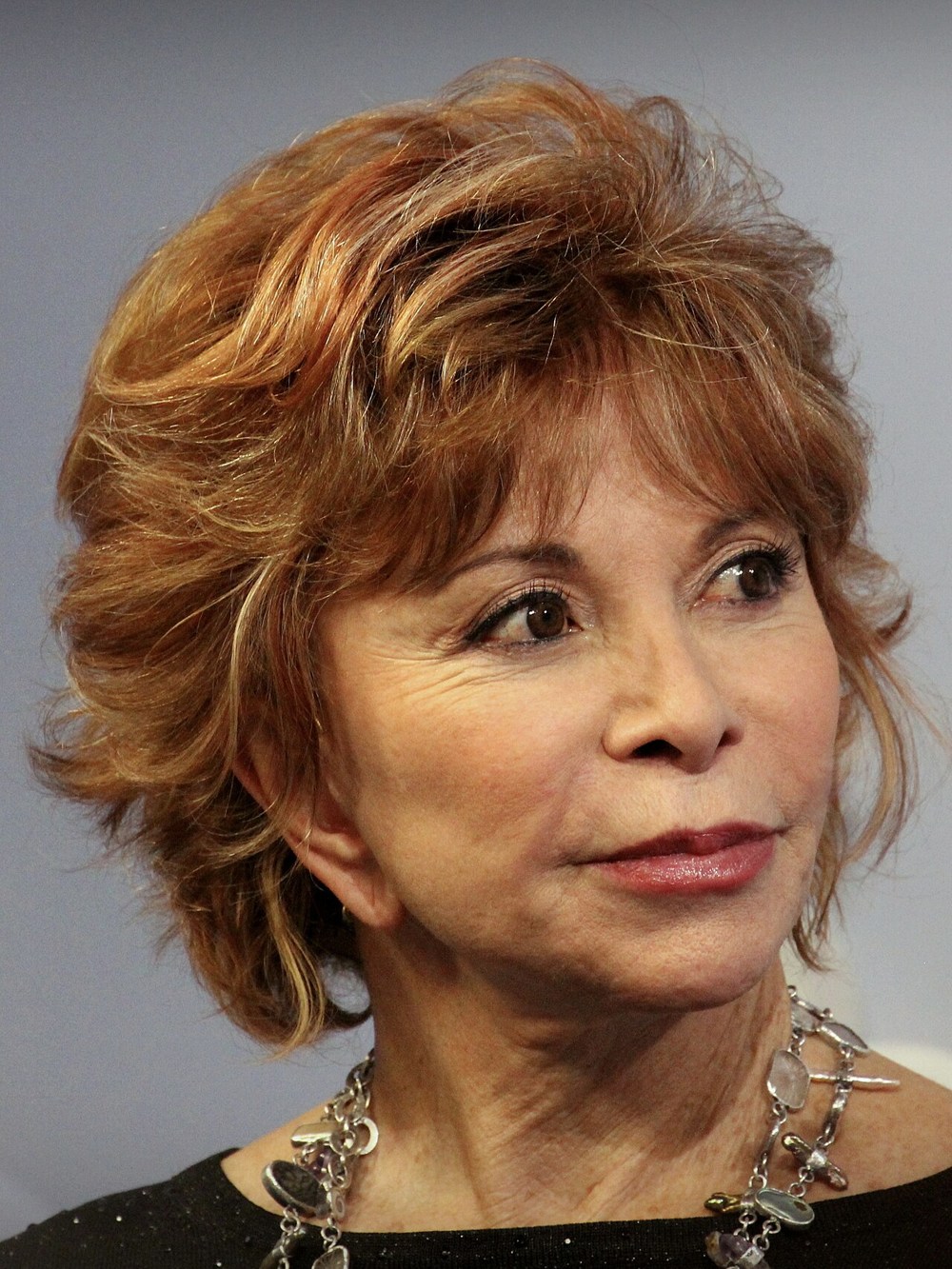
Isabel Allende was born in Lima, where her Chilean father worked in diplomacy, and grew up with experiences across countries. Journalism and other professional writing preceded her career as a novelist. That background provided experience in observing public events and finding a narrative shape for them. Her later fiction would connect large historical changes with the intimate details of families, households and the memories carried by people who leave home.
Chile, displacement and the first novel
The political upheaval following Chile’s 1973 military coup changed Allende’s life, and she later lived in Venezuela. The House of the Spirits began from a letter to her grandfather and became her first published novel in 1982. The book’s family world connects personal relationships with a country’s turbulent history. Its international reception established her literary career while giving a form to experiences of separation, memory and a threatened sense of continuity.
Family history and the extraordinary
The House of the Spirits brings spirits, premonitions and unusual events into a multigenerational family saga. These elements are often discussed through magical realism, but the classification is not the whole achievement. The emotional and political conflicts remain grounded in relationships, property, class and loyalty. Extraordinary experiences become part of how characters understand their world, rather than removing that world from material circumstances or historical consequence.
Women, migration and expanding fictional settings
Novels such as Of Love and Shadows and Eva Luna developed Allende’s interests in storytelling, political violence and women’s agency. Later books expanded the historical and geographical range of her fiction. Across different settings, migration is not simply movement on a map: it changes the language of belonging, the stories a family preserves and the choices available to people whose past cannot be carried into a new country unchanged.
Memoir and the place of personal loss
Paula, published in Spanish in 1994, grew from the illness and death of Allende’s daughter. The book combines a direct address to Paula with family history and reflection. It differs from a novel because its relation to a real person and a lived loss is explicit. At the same time, it shows the importance of narrative continuity in her work: telling a life becomes a way of holding relationships and memories together.
A public literary life
Allende received Chile’s National Literature Prize in 2010 and the United States Presidential Medal of Freedom in 2014. Her foundation supports work connected with the rights and empowerment of women and girls. These public activities sit alongside a writing career conducted primarily in Spanish and read internationally through translation. Her significance rests on the books’ capacity to connect expansive historical storytelling with characters whose private lives remain at the center of the reader’s attention.
Career timeline
Publishes The House of the Spirits.
Publishes Eva Luna.
Publishes Paula in Spanish.
Receives Chile’s National Literature Prize.
Receives the United States Presidential Medal of Freedom.
Selected works & milestones
The House of the Spirits
A multigenerational family narrative linking private life and political history.
Of Love and Shadows
A novel that connects love, investigation and political violence.
Eva Luna
A novel organized around a woman’s life and the power of storytelling.
Paula
A memoir joining family history with a direct response to personal loss.
- Isabel Allende — biographical reference and cited sources
- Official biography
- Official career timeline
- Penguin Random House — author record
Published 2026-10-31. Sources reviewed for this edition. Independent coverage of public professional activity.