Contents — explore this biography
From electronic music to dramatic storytellingRain Man and the establishment of a film careerCollaborations and the architecture of tensionDune and the search for unfamiliar musical identitiesThe film score as a public concert experienceFrom electronic music to dramatic storytelling
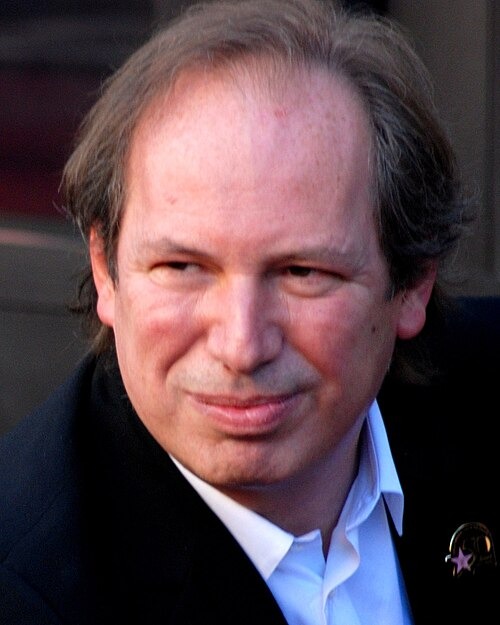
Hans Zimmer was born in Frankfurt in 1957 and developed his career through the musical worlds of Germany and Britain before becoming a major Hollywood composer. His background included keyboards, electronic instruments and work with bands, rather than a single conventional route through orchestral training. This experience helped make the studio an instrument in its own right. Sound could be programmed, recorded, layered and reshaped as part of composition. His later film work drew on that practical understanding of production while increasingly involving orchestras, individual instrumentalists and extensive collaboration with filmmakers and other musicians.
Rain Man and the establishment of a film career
Zimmer’s score for Barry Levinson’s Rain Man, released in 1988, brought him his first Academy Award nomination. The film gave a wider audience an example of his ability to establish an emotional environment through distinctive sound rather than relying only on familiar symphonic conventions. Subsequent projects expanded the scale and range of his work. The Lion King, released in 1994, became a particularly visible achievement, with Zimmer receiving the original-score Oscar at the 1995 ceremony. Its success should be understood within a larger musical collaboration involving songs, performers, arrangers and the film’s production team.
Collaborations and the architecture of tension
Long working relationships have been central to Zimmer’s development. His scores for films including Gladiator, the Dark Knight trilogy, Inception and Interstellar belong to different dramatic settings, yet all show an interest in building large musical structures from relatively concentrated materials. Repetition, changing texture and the relationship between a sustained sound and a decisive accent can organize a viewer’s sense of time. The result is not simply an accompaniment added after the story is complete. Music participates in the construction of suspense, momentum and emotional scale, working alongside editing, sound design, performance and visual composition.
Dune and the search for unfamiliar musical identities
For Denis Villeneuve’s Dune, released in 2021, Zimmer developed a score in which voices, electronic processing and instrumental colour help construct a world that is meant to feel culturally and geographically unfamiliar. The music received the original-score Academy Award at the 2022 ceremony. Dune: Part Two extended that collaboration in a later film. These projects make the relation between research, invention and production especially visible. A fictional world does not come with an inherited musical tradition that can simply be reproduced. Its sound must be built through choices about performance, texture and the meanings audiences attach to particular musical gestures.
The film score as a public concert experience
Zimmer’s concert productions have brought his screen music to audiences as a live performance involving musicians, singers and substantial visual presentation. This work changes the listening conditions: music originally shaped around a film’s images must sustain attention across a concert programme. His career consequently links composition with the organization of collaborative production on several scales. Recognition through film awards is one measure of that influence, but the continued performance and discussion of individual scores also matter. An account of his work is strongest when it distinguishes his own compositional identity from the many credited collaborators who help realize each project.
Career timeline
Born in Frankfurt am Main.
Rain Man brought his first Academy Award nomination.
Received the original-score Oscar for the 1994 film The Lion King.
Inception became a major collaboration with Christopher Nolan.
Received the original-score Oscar for the 2021 film Dune.
Selected works & milestones
Rain Man
A breakthrough Hollywood score directed by Barry Levinson.
The Lion King
Original score recognized at the 1995 Academy Awards.
Interstellar
A major score developed with Christopher Nolan.
Dune
Original score recognized at the 2022 Academy Awards.
- Hans Zimmer Live — official career overview
- D23 — Hans Zimmer and The Lion King
- Academy — 2022 original-score award
- Golden Globes — Hans Zimmer record
Published 2026-11-09. Sources reviewed for this edition. Independent coverage of public professional activity.