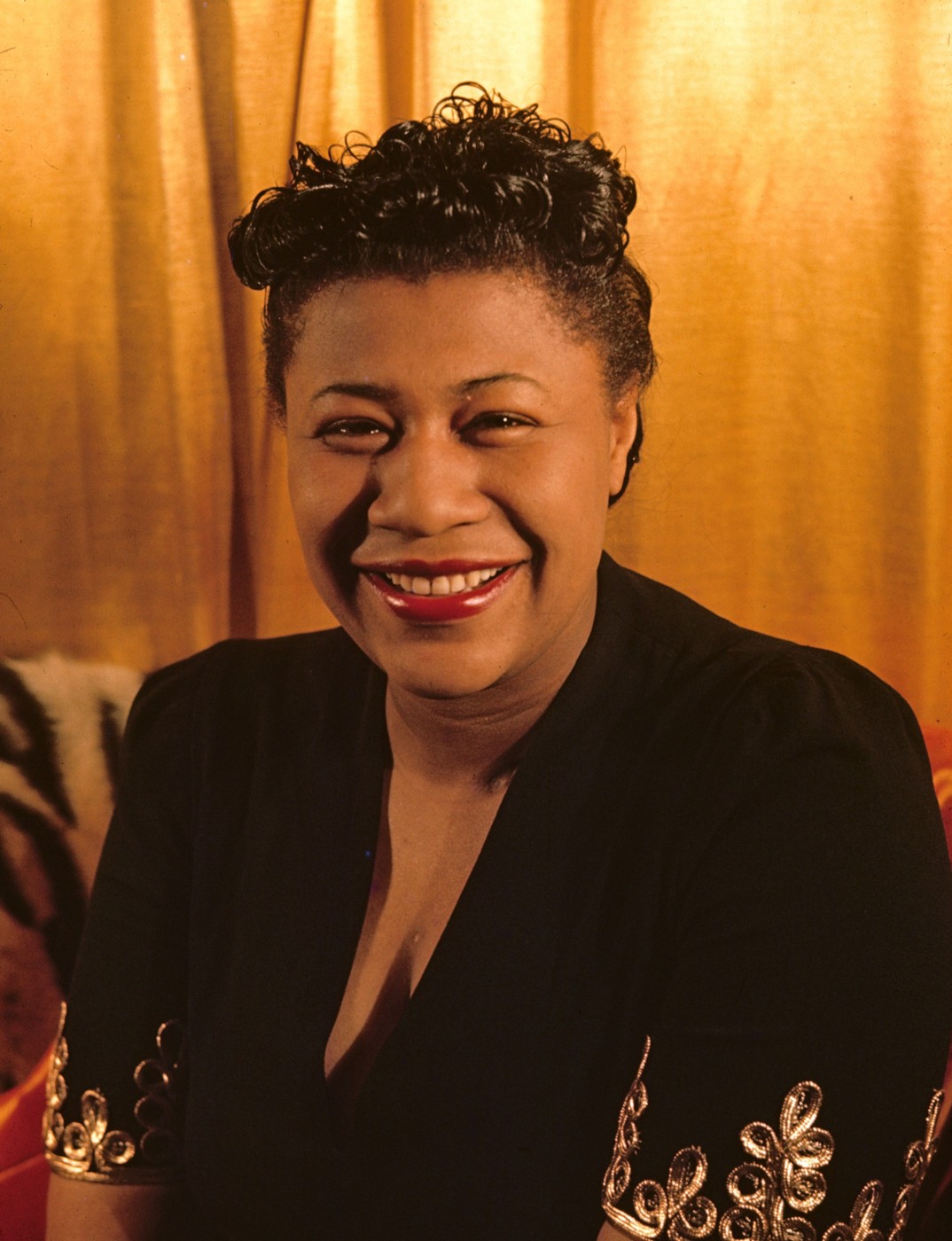
Contents — explore this biography
An early opening at the ApolloLearning within Chick Webb’s orchestraThe voice as an improvising instrumentSong Books and artistic partnershipsRecognition and a continuing repertoryAn early opening at the Apollo
Born in Newport News and raised in Yonkers, Ella Fitzgerald experienced serious hardship after her mother’s death. Music and dancing remained important outlets. In 1934 she entered the Apollo Theater’s amateur competition and chose to sing. The appearance helped open a route into professional entertainment at a time when access depended on live auditions, personal recommendations and the ability to hold a demanding audience’s attention.
Learning within Chick Webb’s orchestra
Fitzgerald joined drummer Chick Webb’s orchestra in 1935. The ensemble’s performances at Harlem’s Savoy Ballroom gave her a practical education in swing, pacing and communication with dancers. A-Tisket, A-Tasket became a major success in 1938. When Webb died the following year, Fitzgerald led the orchestra for a period before developing a solo career. This early responsibility complicates the picture of her as simply a gifted vocalist discovered by others.
The voice as an improvising instrument
Her technical identity rested on accurate pitch, a supple sense of time and the capacity to move between lyrical directness and elaborate improvisation. Scat passages drew on the vocabulary of instrumental jazz rather than functioning only as decoration. Fitzgerald could reshape familiar material in performance while keeping its underlying structure intelligible. Recordings of How High the Moon and her Berlin performances illustrate the inventive decisions that distinguished her concerts from straightforward repetitions of studio arrangements.
Song Books and artistic partnerships
Producer and manager Norman Granz became a central collaborator, connecting Fitzgerald with concert tours and recording opportunities. Beginning in the 1950s, the Song Book projects examined composers including Cole Porter, Duke Ellington and George and Ira Gershwin. These albums presented popular songwriting as a repertoire deserving sustained interpretation. Collaborations with Louis Armstrong offered a different intimacy: contrasting vocal textures, shared rhythmic understanding and an ease that concealed considerable musical discipline.
Recognition and a continuing repertory
Fitzgerald toured internationally over several decades and worked with ensembles ranging from small rhythm sections to large orchestras. She became an NEA Jazz Master in 1985 and received the National Medal of Arts in 1987. She died in 1996. Her legacy lies both in the individual performances and in the standards of preparation they demonstrate: clear articulation, attentive listening and improvisation supported by a detailed knowledge of a song’s harmony and shape.
Career timeline
Born in Newport News, Virginia.
Won an amateur competition at the Apollo Theater.
Joined Chick Webb’s orchestra.
Released the Cole Porter Song Book and Ella and Louis.
Received an NEA Jazz Masters Fellowship.
Selected works & milestones
A-Tisket, A-Tasket
A breakthrough recording with Chick Webb’s orchestra.
Ella Fitzgerald Sings the Cole Porter Song Book
A major opening chapter in the Song Book series.
Ella and Louis
A collaborative album with Louis Armstrong.
Ella in Berlin
A live album documenting vocal improvisation and concert spontaneity.
- Ella Fitzgerald Charitable Foundation — biography
- National Endowment for the Arts — Jazz Master profile
- Library of Congress — Ella Fitzgerald collection
Published 2026-11-05. Sources reviewed for this edition. Independent coverage of public professional activity.