Contents — explore this biography
An education in observationReading the light of starsThe Harvard classification sequenceCatalogues, expertise and delayed recognitionAn enduring infrastructure for astronomyAn education in observation
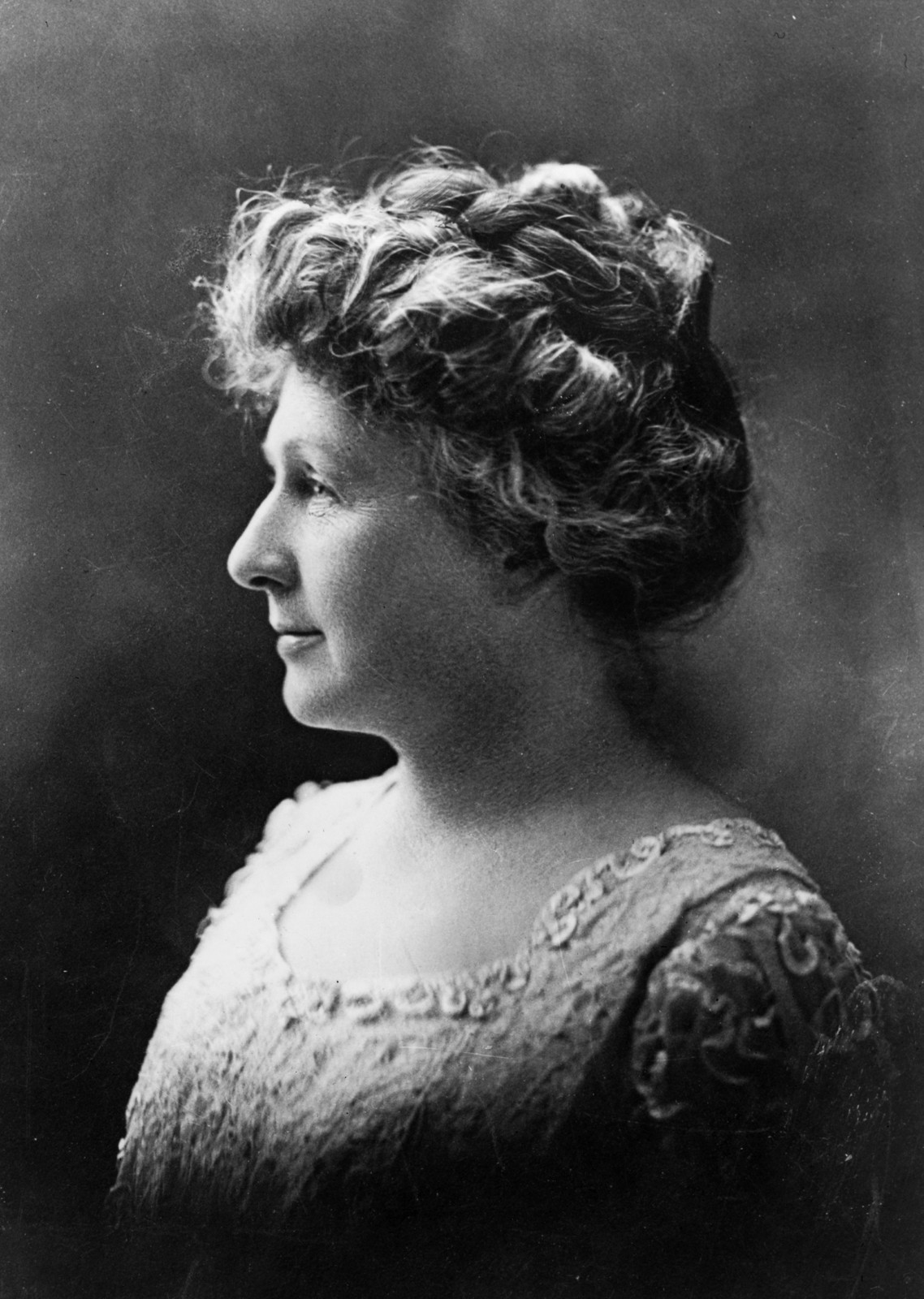
Annie Jump Cannon was born in Dover, Delaware, in 1863. She studied physics and astronomy at Wellesley College, graduating in 1884, and developed an interest in photography that later connected directly with her research. After a period away from professional astronomy, she returned to scientific study and joined Harvard College Observatory in 1896. Her route into the field combined formal education with practical familiarity with images and instruments. These were valuable skills in an era when photographic plates were transforming the quantity of astronomical evidence available for examination.
Reading the light of stars
Cannon’s principal material was the stellar spectrum: light spread into a pattern whose lines provide evidence about the source. Working with photographic plates, she compared those patterns and assigned stars to classes. The process demanded consistency across enormous numbers of observations. It was neither a casual visual impression nor a simple exercise in naming. Classification made it possible to compare objects observed at different times and positions in the sky. A reliable system could turn a growing archive of photographs into an organized basis for asking physical questions about stars.
The Harvard classification sequence
Building on earlier work at the observatory, including Williamina Fleming’s classifications, Cannon refined the sequence of spectral types associated with the letters O, B, A, F, G, K and M. Subdivisions made the scheme more precise. The relationship between spectral differences and stellar temperature gave the classification physical significance, although understanding stellar spectra developed through the work of multiple researchers. Cannon’s contribution was especially powerful in establishing an extensive and usable observational framework. The system’s adoption beyond Harvard demonstrated how careful standardization could support research across institutions rather than only within one collection.
Catalogues, expertise and delayed recognition
Cannon’s work was central to the Henry Draper Catalogue, issued in nine volumes from 1918 to 1924, and to subsequent extensions. She became curator of astronomical photographs at Harvard in 1911. Despite the scale and influence of her contribution, a regular Harvard appointment as William C. Bond Astronomer came only in 1938. She also received substantial professional honours, including an honorary doctorate from Oxford in 1925. These distinctions reveal both recognition of outstanding expertise and the slow pace at which women could gain secure institutional standing in scientific organizations.
An enduring infrastructure for astronomy
Cannon died in 1941, leaving catalogues, notebooks and a classification practice that shaped later astronomical work. Her deafness is part of her biography, but it should not eclipse the particular skills and achievements documented in her research. Her legacy also includes support for younger women in astronomy, commemorated by the award bearing her name. More broadly, her career demonstrates the scientific importance of organizing evidence. Discoveries often depend on the less theatrical work of making observations consistent, comparable and accessible enough that another researcher can recognize a pattern and test an explanation.
Career timeline
Born in Dover, Delaware.
Graduated from Wellesley College.
Joined Harvard College Observatory.
Henry Draper Catalogue volumes were published.
Died on April 13, after a long career in stellar classification.
Selected works & milestones
First spectral catalogue
Published an early catalogue using her refined classification approach.
Curator of astronomical photographs
Assumed responsibility for a major Harvard research collection.
Henry Draper Catalogue
A foundational large-scale catalogue of stellar spectra.
William C. Bond Astronomer
Received a regular Harvard appointment late in her career.
- Harvard Wolbach Library — Annie Jump Cannon
- Harvard Wolbach Library — astronomy and spectroscopy
- American Academy of Arts and Sciences — Cannon
- American Astronomical Society — Cannon Award
Published 2026-11-07. Sources reviewed for this edition. Independent coverage of public professional activity.