Contents — explore this biography
A childhood shaped by performanceParis and a professional musical languageAn international solo careerReinterpretation and musical exchangeA continuing dialogue with younger artistsA childhood shaped by performance
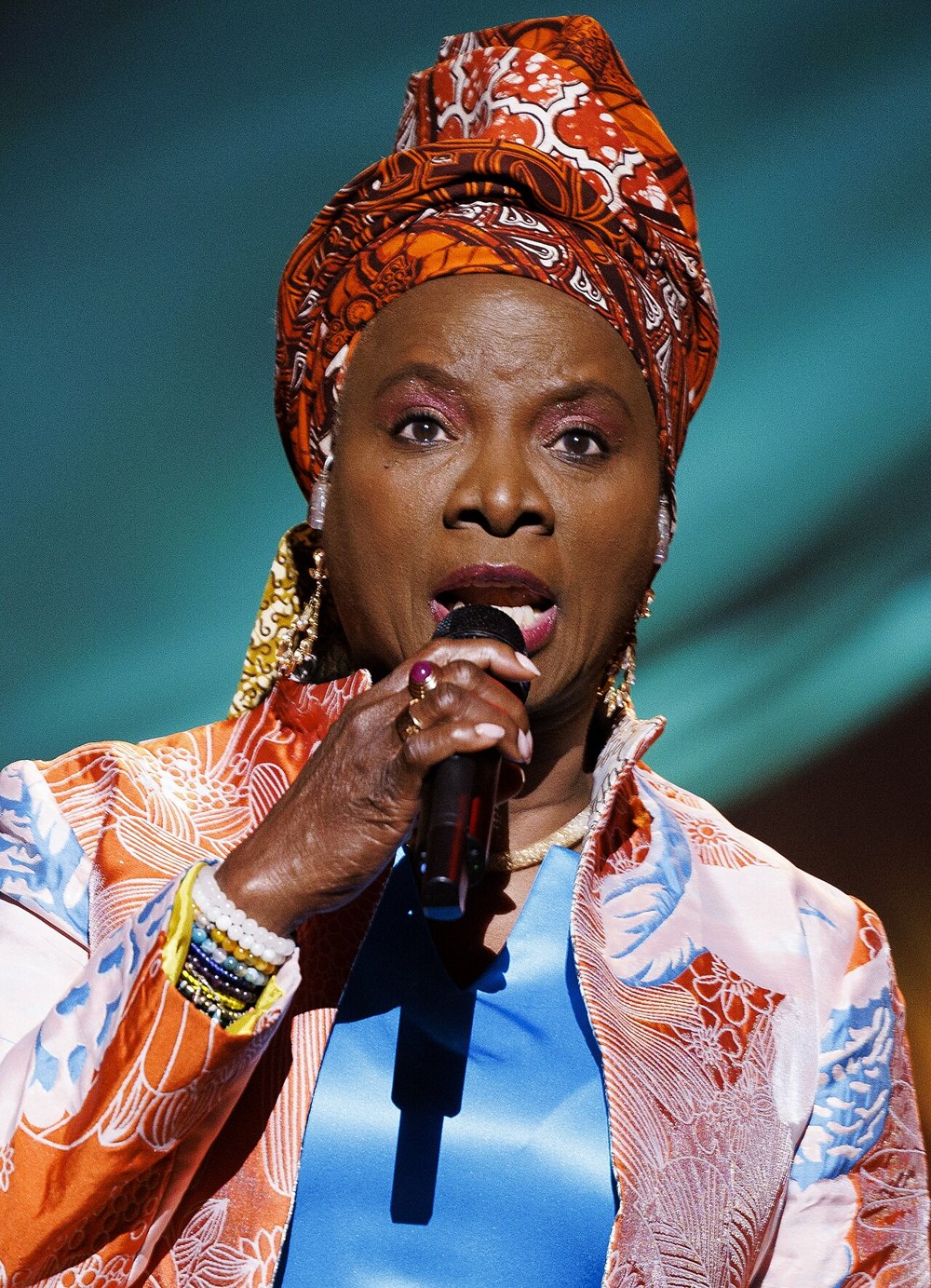
Angélique Kidjo grew up in Ouidah in a family involved in music and theatre. Her mother’s performance work and her father’s musical interests helped introduce her to the stage while young. Beninese and Yoruba traditions were part of a wider listening world that also included African international stars and American popular music, creating the foundations for her later cross-cultural recordings.
Paris and a professional musical language
Kidjo moved to Paris in 1983, studied music and worked within the city’s live scene. Singing with the group Pili Pili gave her experience in a setting that combined European jazz and African musical ideas. Solo recordings and an association with Island Records then widened her audience. Her emergence involved both formal musical development and the practical experience of regular performance.
An international solo career
Albums including Logozo and Ayé established Kidjo as a recording artist able to combine dance rhythms, a powerful vocal identity and multilingual writing. Rather than treating African music as a single style, her recordings draw attention to connections between distinct traditions. Her performances frequently shift between languages, with rhythm and vocal phrasing providing continuity for listeners who do not understand every lyric.
Reinterpretation and musical exchange
Djin Djin brought collaborations with international musicians, while Eve foregrounded women’s voices and Beninese musical connections. Later projects included a reworking of Talking Heads’ Remain in Light and Celia, an exploration of the African roots of Celia Cruz’s music. These albums approach interpretation as a form of musical conversation, connecting artists and histories rather than simply reproducing familiar songs.
A continuing dialogue with younger artists
Mother Nature, released in 2021, brought Kidjo together with younger performers from across African and diasporic music. Her recording career also sits alongside public advocacy, including work with UNICEF and the Batonga Foundation. The relationship between music and public life is visible throughout her career, but her artistic identity remains grounded in specific songs, arrangements and a distinctive live voice.
Career timeline
Moves to Paris and develops her professional music career.
Releases Logozo, an important international breakthrough.
Releases Djin Djin, later recognized with a Grammy.
Releases Celia, reinterpreting the music of Celia Cruz.
Releases Mother Nature with a younger generation of collaborators.
Selected works & milestones
Logozo
A defining early album in the development of her international solo career.
Djin Djin
A collaborative recording connecting her musical language with a wide range of guests.
Celia
An exploration of African connections within the repertoire of Celia Cruz.
Mother Nature
Original songs developed through collaborations across African and diasporic music.
- Angélique Kidjo — biographical reference and cited sources
- Official biography
- Official Mother Nature album notes
Published 2026-10-31. Sources reviewed for this edition. Independent coverage of public professional activity.