Contents — explore this biography
From Villers-Cotterêts to the Paris theatreDrama, pace and the possibilities of popular fictionCollaboration and the serialized novelMonte Cristo, injustice and the limits of revengeA career larger than the adventure novelFrom Villers-Cotterêts to the Paris theatre
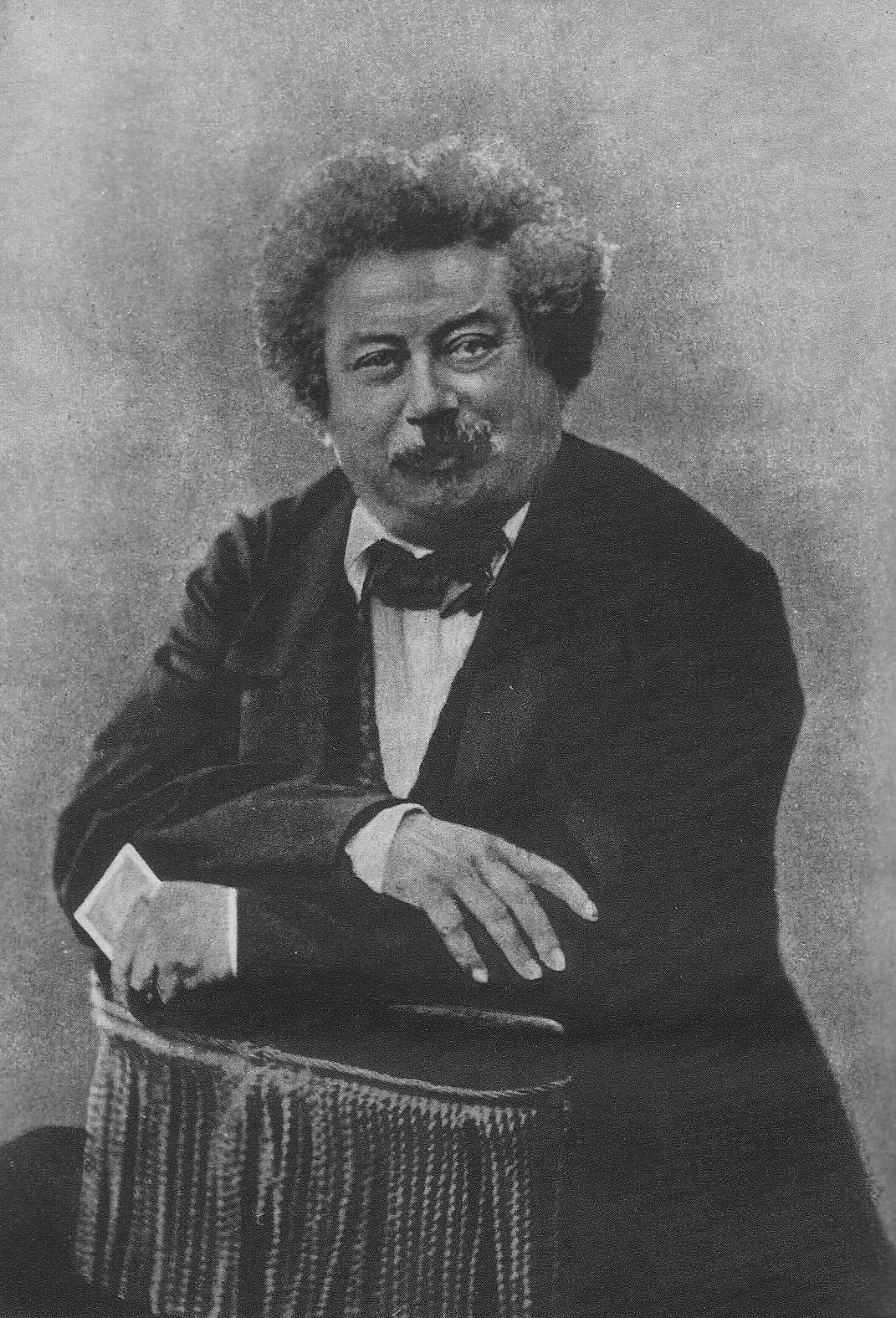
Alexandre Dumas was born in Villers-Cotterêts in 1802, the son of General Thomas-Alexandre Dumas and Marie-Louise Labouret. His father’s family history connected France with Saint-Domingue, now Haiti, and with the violence and hierarchy of the colonial world. Dumas moved to Paris as a young man and worked as a clerk while pursuing literary ambitions. Theatre supplied his first decisive opportunity. Henri III et sa cour became a major success in 1829, establishing him in the Romantic generation before the adventure novels that later came to dominate his international reputation.
Drama, pace and the possibilities of popular fiction
Dumas learned to organize scenes around confrontation, reversals and the pressure of unfinished action. Those dramatic skills became central to his fiction. In The Three Musketeers, first published in 1844, the young d’Artagnan enters a world where friendship, personal ambition and political intrigue continually collide. Historical figures share the narrative with invented protagonists, creating a recognizable past animated by the freedoms of romance. The book invites readers into questions of loyalty without turning its characters into flawless embodiments of virtue. Their mistakes and divided obligations are part of the energy that keeps the adventure moving.
Collaboration and the serialized novel
The scale of Dumas’s writing depended on both extraordinary productivity and literary collaboration, particularly with Auguste Maquet. Maquet contributed historical research, narrative plans and drafts, while Dumas reshaped material through dialogue, characterization and dramatic expansion. Acknowledging that relationship gives a more accurate picture of authorship than imagining every book emerging in isolation. The expanding newspaper market also shaped the work. Serialization rewarded sustained momentum, memorable returns and endings that encouraged readers to seek the next instalment. Dumas developed an art suited to those conditions, making commercial publication and imaginative construction inseparable parts of his achievement.
Monte Cristo, injustice and the limits of revenge
The Count of Monte Cristo began appearing in 1844 and completed its newspaper serialization in 1846. Edmond Dantès’s imprisonment and reinvention give the novel a structure that moves from powerlessness to apparently unlimited power. Yet the consequences of revenge extend beyond the guilty people whom its hero intends to punish. The narrative therefore examines the danger of treating another person’s suffering as something that can be precisely administered. The Château d’If became internationally associated with this invented prisoner. Its literary identity illustrates how fiction can transform the public meaning of an actual historical place.
A career larger than the adventure novel
Dumas also wrote journalism, travel narratives, memoirs and works for the stage, while involving himself in political causes, including support for Garibaldi. His Château de Monte-Cristo embodied the conspicuous success and expense of his literary life. He died in 1870, and his remains were transferred to the Panthéon in 2002. The continuing adaptations of his books testify to their narrative resources, but they should not replace the original texts. Reading Dumas reveals the relationship between popular entertainment, historical invention and the institutions that carried stories to a mass readership across borders and generations.
Career timeline
Born in Villers-Cotterêts.
Henri III et sa cour established his theatrical reputation.
The Three Musketeers appeared and Monte Cristo began serialization.
Died at Puys near Dieppe.
His remains were transferred to the Panthéon.
Selected works & milestones
Henri III et sa cour
A breakthrough Romantic historical drama.
The Three Musketeers
Historical adventure built around friendship and intrigue.
The Count of Monte Cristo
A serialized narrative of imprisonment, reinvention and revenge.
La Reine Margot
Historical fiction set amid the conflicts of sixteenth-century France.
- Château de Monte-Cristo — Alexandre Dumas
- Institut de France — Dumas and the serialized novel
- Centre des monuments nationaux — Dumas and the Château d’If
Published 2026-11-07. Sources reviewed for this edition. Independent coverage of public professional activity.