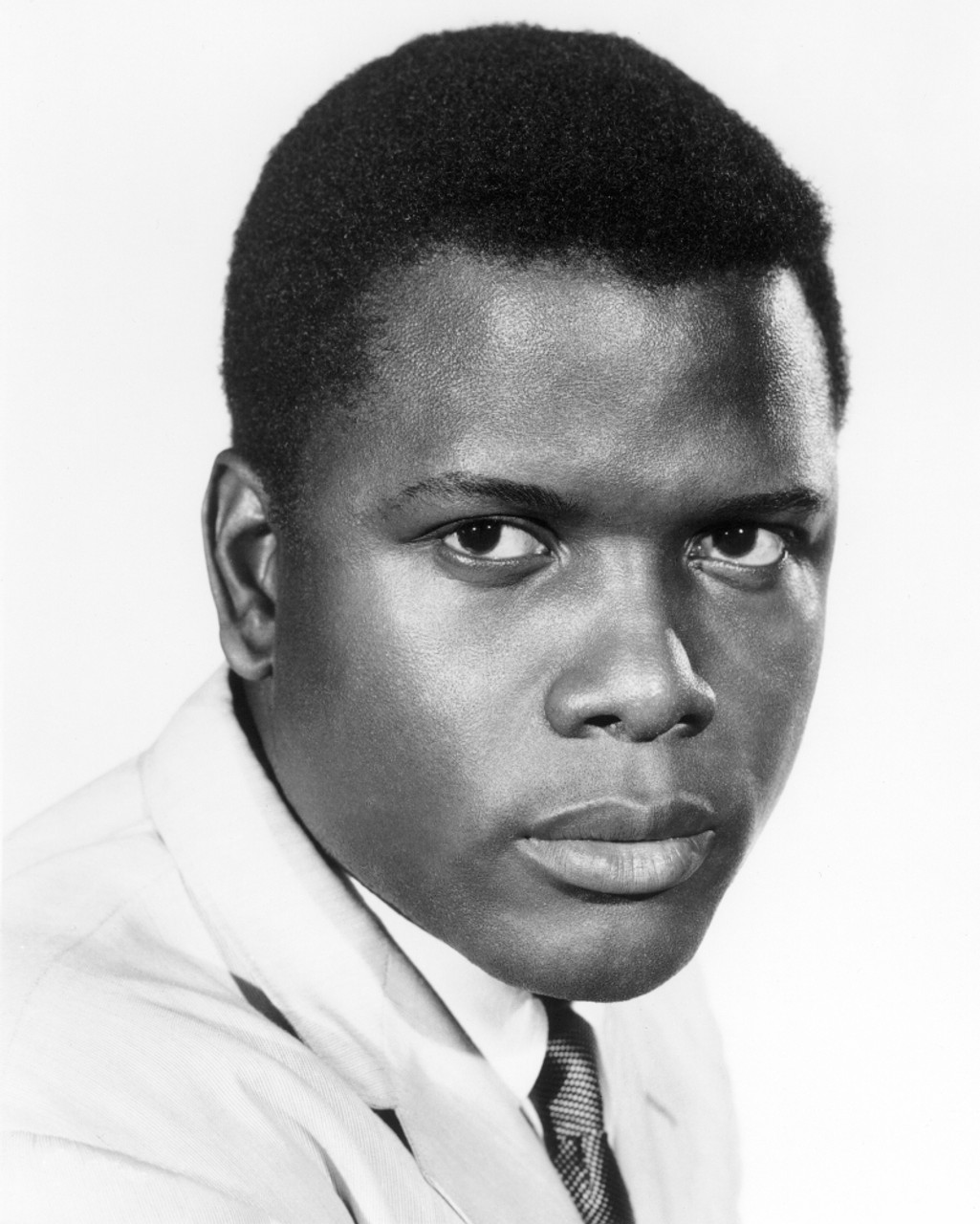
Contents — explore this biography
A Bahamian childhood and a New York apprenticeshipBuilding a screen careerA historic Academy AwardThe landmark films of 1967Directing and an enduring professional legacyA Bahamian childhood and a New York apprenticeship
Sidney Poitier was born in Miami in 1927 while his Bahamian parents were visiting the United States, and he grew up in the Bahamas. He moved to the United States as a teenager and later developed his acting through theater in New York. The journey gave his career a perspective that cannot be reduced to Hollywood alone. Language, work and adaptation were practical challenges before stardom. His emergence as a performer also occurred within an industry that offered Black actors a narrow range of roles and rarely allowed them the authority of a leading man.
Building a screen career
Poitier’s screen work included No Way Out, Blackboard Jungle and The Defiant Ones, each placing his characters within conflicts shaped by prejudice or unequal power. His performance opposite Tony Curtis in The Defiant Ones brought a best-actor Oscar nomination. In A Raisin in the Sun he carried his stage role into the film adaptation, giving ambition and disappointment a force that extended beyond a simple message about tolerance. His technique combined precision of speech, stillness and carefully released emotion. Those choices allowed the audience to register anger and vulnerability without reducing the character to either one.
A historic Academy Award
For Lilies of the Field, released in 1963, Poitier won the Academy Award for best actor at the 1964 ceremony, becoming the first Black man to receive that award. He played Homer Smith, a traveling worker who helps a group of nuns build a chapel. The achievement was both a recognition of a specific performance and a change in the visible possibilities of screen stardom. It did not remove the industry’s barriers, but it gave later performers an important precedent. Poitier’s significance rests on the craft within the role as well as the history surrounding the prize.
The landmark films of 1967
Three films released in 1967 placed Poitier at the center of widely seen stories about authority and race: To Sir, with Love, In the Heat of the Night and Guess Who’s Coming to Dinner. The roles differ, but each requires him to negotiate assumptions imposed by others. As detective Virgil Tibbs, professional competence becomes a direct challenge to racial hierarchy. These films also reveal the pressure placed on one star to represent broader social progress. Reading them today means attending both to their breakthroughs and to the limits of the situations commercial cinema then made available.
Directing and an enduring professional legacy
Poitier began directing features with Buck and the Preacher in 1972 and later made comedies including Uptown Saturday Night and Stir Crazy. The work behind the camera broadens a career often summarized through his early dramatic performances. Later television roles included portrayals of Thurgood Marshall and Nelson Mandela, and the Academy honored his wider contribution with an honorary award. Poitier died in 2022. His legacy combines expanded opportunity with a distinctive professional standard: characters were to possess agency, intelligence and an inner life, even when the surrounding culture tried to deny them those qualities.
Career timeline
Born in Miami and raised in the Bahamas.
The Defiant Ones brought a best-actor Oscar nomination.
Became the first Black man to win the best-actor Oscar.
Made his feature directing debut with Buck and the Preacher.
Died after a career spanning film, television and directing.
Selected works & milestones
The Defiant Ones
A drama of two escaped prisoners bound together.
A Raisin in the Sun
A screen adaptation retaining his stage role.
Lilies of the Field
The performance that earned his historic best-actor Oscar.
In the Heat of the Night
Played detective Virgil Tibbs in a landmark crime drama.
- American Film Institute — career tribute
- Television Academy — biography
- Academy — collection highlights
- CNC — career remembrance
Published 2026-11-05. Sources reviewed for this edition. Independent coverage of public professional activity.