Contents — explore this biography
A multilingual literary formationPoetry and the cityThe invention of a compact fictionThe Aleph and changing formsInstitutions, blindness and recognitionInfluence and critical perspectiveA multilingual literary formation
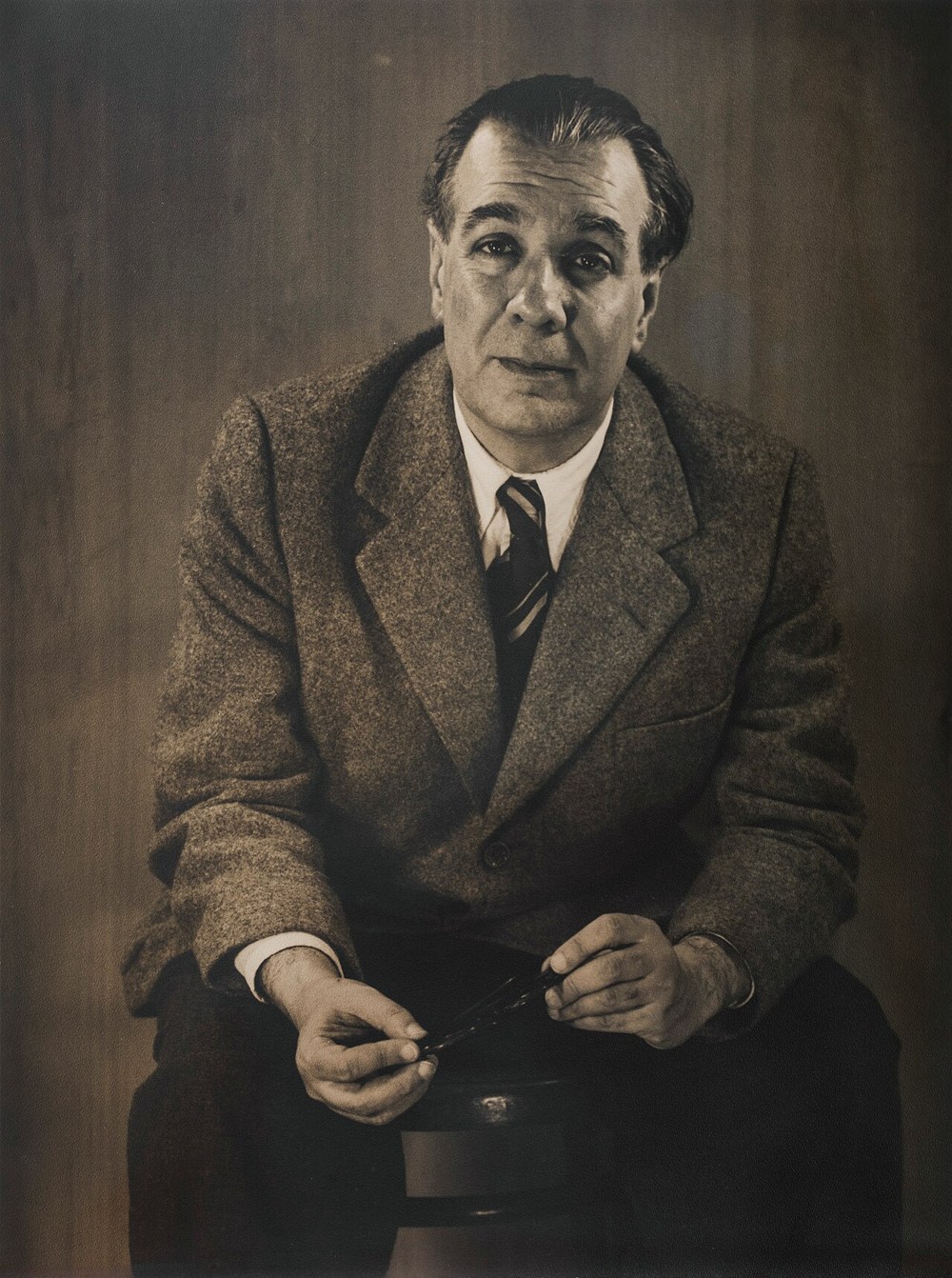
Borges was born in Buenos Aires in 1899 and grew up in a household strongly connected to books and family history. His education and European travels exposed him to several literary traditions before his return to Argentina in 1921. Spanish was his principal literary language, while English and other traditions remained active presences. His later cosmopolitanism developed alongside a sustained fascination with the streets and stories of Buenos Aires.
Poetry and the city
Fervor de Buenos Aires, published in 1923, established an early poetic engagement with the city. During the following decade he worked across poetry, essays, translation and literary journalism. This range matters because his famous stories grew from reading and criticism as well as conventional storytelling. An invented review or scholarly note could become a narrative device, making the boundary between commentary and creative writing unusually productive.
The invention of a compact fiction
Ficciones, published in 1944, gathered stories that place intellectual puzzles inside sharply controlled narrative forms. The Garden of Forking Paths connects a detective plot with branching time; other stories imagine impossible libraries, secret authorships and fabricated systems of belief. These are not merely philosophical propositions decorated with characters. Their narrators, documents and discoveries make uncertainty something the reader experiences while trying to follow an apparently precise account.
The Aleph and changing forms
The Aleph, the collection published in 1949, extended this exploration of infinity, memory, identity and the limits of representation. Borges also collaborated with Adolfo Bioy Casares and continued to publish essays and poems. The interplay of erudition and invention gives the work its distinctive tension: a convincing reference can lead into an imaginary source, while an impossible premise exposes assumptions embedded in ordinary ways of reading.
Institutions, blindness and recognition
Borges became director of Argentina’s National Library in 1955 and taught English literature at the University of Buenos Aires. His progressive loss of sight affected how he worked, including the use of dictation and remembered forms. In 1961 he shared the Formentor recognition with Samuel Beckett; he later received the Cervantes Prize. These distinctions helped expand an international readership already developing through translation and literary exchange.
Influence and critical perspective
He died in Geneva in 1986. Later writers have drawn on his unreliable scholarship, compressed fictional worlds and experiments with authorship. His political statements remain part of a contested public record, separate from the analytical interest of particular stories. Reading Borges closely requires attention to the movement of a sentence and the status of its evidence: who claims to know something, through which document, and with what possible mistake.
Career timeline
Publishes the first poetry collection.
Brings major short fictions together in a defining collection.
Publishes a further collection exploring memory, infinity and identity.
Becomes director of Argentina’s National Library.
Receives the major Spanish-language literary distinction.
Selected works & milestones
Ficciones
Brings major short fictions together in a defining collection.
The Aleph
Publishes a further collection exploring memory, infinity and identity.
National Library
Becomes director of Argentina’s National Library.
Cervantes Prize
Receives the major Spanish-language literary distinction.
- Instituto Cervantes — biography and bibliography
- Harry Ransom Center — manuscripts and collection history
- Academy of American Poets — poetry and literary career
- Jorge Luis Borges — biographical reference and bibliography
Published 2026-10-31. Sources reviewed for this edition. Independent coverage of public professional activity.