Contents — explore this biography
A childhood within the studio systemAdult roles and emotional confrontationTwo Academy Awards and an unusually public careerCommerce, image and the use of celebrityHIV/AIDS advocacy and institutional legacyA childhood within the studio system
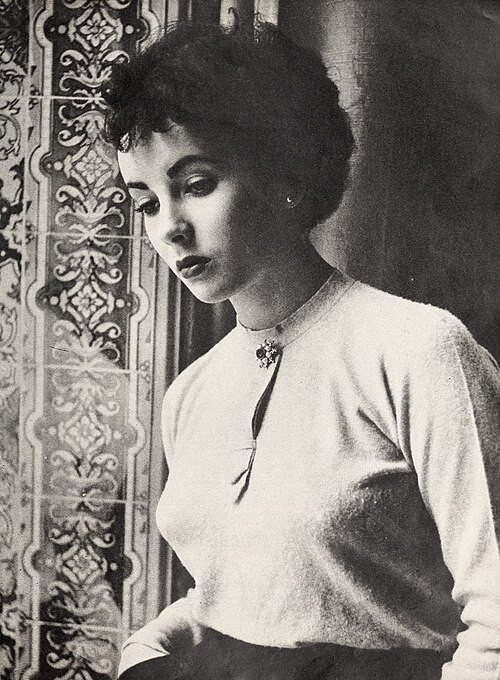
Elizabeth Taylor was born in London in 1932 and moved with her family to California before establishing a career in American films. National Velvet, released in 1944, made her a major young star. Her development as a performer therefore took place inside a studio system that organized education, publicity, casting and work around a child’s marketable image. The transition to adult roles was not automatic. It required audiences and producers to see more than the figure they already recognized, while Taylor herself developed the dramatic resources necessary to portray characters whose desires and compromises differed sharply from childhood adventure.
Adult roles and emotional confrontation
A Place in the Sun, Giant and adaptations of Tennessee Williams helped establish Taylor’s adult dramatic reputation. Her performances could combine social assurance with exposed emotional need, making a character’s public display part of the drama rather than a barrier to it. In Cat on a Hot Tin Roof and Suddenly, Last Summer, conflict depends on what a family is willing to acknowledge and what it tries to suppress. The interest of these roles lies in the pressure beneath their polished surfaces. Taylor’s visibility as a star gave that pressure an additional charge, but the scenes still depended on timing, concentration and interaction with other actors.
Two Academy Awards and an unusually public career
Taylor won Best Actress at the 1961 Academy Awards for BUtterfield 8, a film released the previous year. A second Best Actress Oscar followed at the 1967 ceremony for Who’s Afraid of Virginia Woolf?, released in 1966. The latter performance required a deliberately abrasive, physically altered portrayal of Martha within an exhausting cycle of marriage, accusation and humiliation. Between those achievements, Cleopatra made Taylor’s professional and personal life the subject of extraordinary international attention. A sound biography separates the film’s production and release history from the simplified mythology that publicity later built around its stars.
Commerce, image and the use of celebrity
Taylor also participated in the commercial development of her name, particularly through fragrance. This dimension of her career belongs to the broader history of stars turning public recognition into an enduring business identity. It should not be confused with the acting work itself, even though both relied on audience familiarity and expectations. Her public image was unusually resilient because it could accommodate glamour, vulnerability, self-presentation and contradiction. Examining the commercial career alongside the films helps explain how celebrity continued to operate when the volume and kind of screen roles available to her changed.
HIV/AIDS advocacy and institutional legacy
Taylor became a prominent public advocate during the HIV/AIDS crisis, using her fame to challenge silence and stigma. She helped establish amfAR and created The Elizabeth Taylor AIDS Foundation in 1991 to support direct services. These activities connected fundraising with public pressure, insisting that people living with HIV deserved practical care and dignity. She died in 2011, but the organizations and archival work associated with her name preserve more than a catalogue of famous appearances. Her legacy joins performance and public action: the attention generated by stardom became a resource that she directed toward a cause facing profound discrimination.
Career timeline
Born in London.
Became a major young star through National Velvet.
Won Best Actress for BUtterfield 8 at the Academy Awards.
Established The Elizabeth Taylor AIDS Foundation.
Died after a career in film, business and advocacy.
Selected works & milestones
National Velvet
A defining childhood performance.
Giant
A major adult role in a multigenerational drama.
Cleopatra
An internationally prominent historical production.
Who’s Afraid of Virginia Woolf?
Martha performance recognized with the 1967 Best Actress Oscar.
- House of Taylor — filmography
- AFI — Elizabeth Taylor
- Academy — 1961 ceremony
- Academy — 1967 ceremony
- Elizabeth Taylor AIDS Foundation — organizational history
- amfAR — Dame Elizabeth Taylor
Published 2026-11-09. Sources reviewed for this edition. Independent coverage of public professional activity.